
 한국어
한국어 English
 日本語
日本語 中文(简体)
 Viewing now
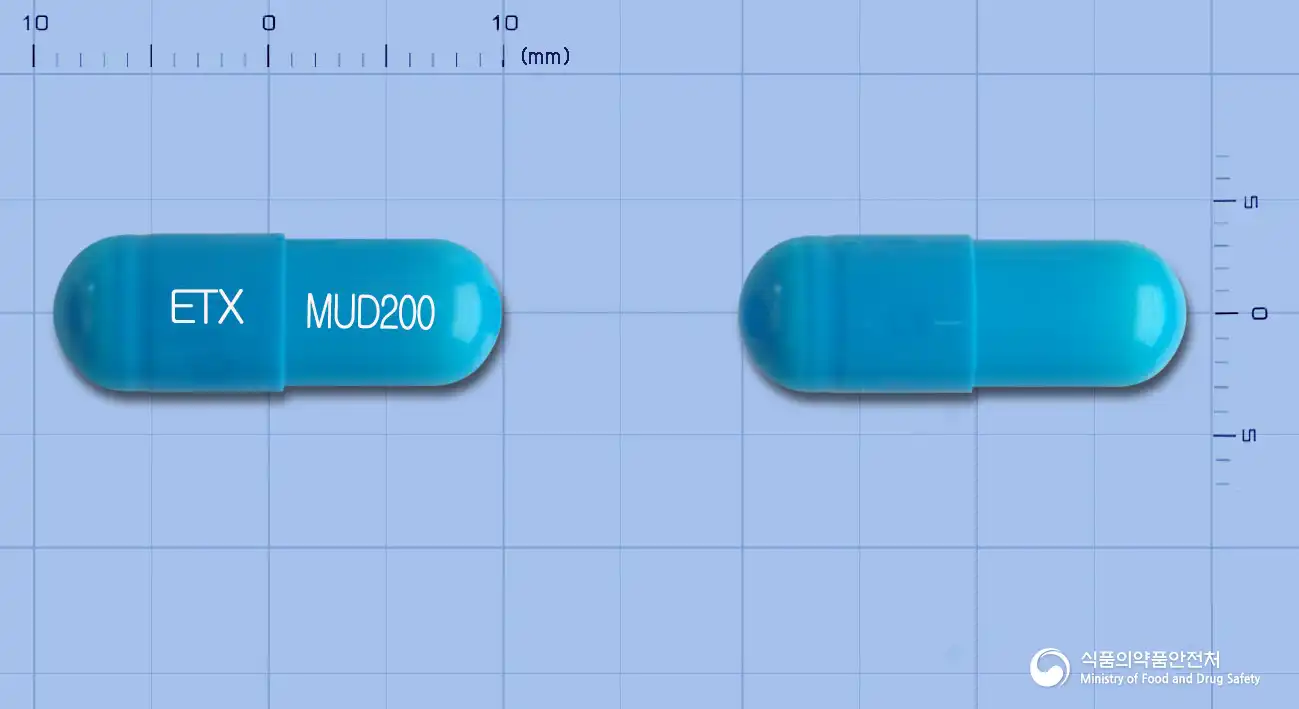
Mucodyne Capsule 200 mg (Acetylcysteine)
Acetylcysteine 200mg
Hard capsule · OTC medication
Teragen Etex Co., Ltd.
MFDS item code 200308774 · Notified 2003.05.01 · Insurance code 698501880
Relief of difficulty in expectoration of phlegm associated with respiratory diseases such as acute and chronic bronchitis and bronchial asthma
This medication is used when expectoration of phlegm is difficult or troublesome in respiratory diseases such as acute and chronic bronchitis, bronchial asthma, laryngitis, sinusitis, and cystic fibrosis.
For acute conditions, take 200 mg once, three times daily with a small amount of water before meals. For chronic conditions, take 200 mg once, twice daily with a small amount of water before meals.
For acute conditions, children aged 6 to 14 years should take 200 mg once, twice daily with a small amount of water before meals. For chronic conditions, children aged 6 to 14 years should take 100 mg once, three times daily.
This medication should not be taken by individuals with an allergy to this medication or any of its components. Patients with ulcers in the stomach or duodenum should also avoid using this medication. Additionally, children under 2 years old should not take this medication. This medication contains lactose, so individuals with genetic disorders that prevent lactose digestion should not take it. Women who are pregnant or may become pregnant should consult a doctor before taking this medication. Breastfeeding women should also consult with a professional before use, as it is uncertain whether this medication passes into breast milk. If gastrointestinal symptoms such as nausea, vomiting, mouth inflammation, heartburn, or diarrhea occur while taking, discontinue use and consult a doctor immediately. If allergic reactions such as hives, itching, rash, headaches, tinnitus, or bronchospasm in asthma patients occur, discontinue use and consult a professional. There may also be rare occurrences of rapid heartbeat or elevated blood pressure, so caution is advised. When taking this medication with other oral antibiotics, it is recommended to take them at least 2 hours apart as it may reduce the effectiveness of the antibiotics. It is advisable not to mix other medications with the liquid form of this medication. Finally, this medication should be stored in a safe place, out of the reach of children, and kept in its original container to prevent degradation or misuse.
Not everyone experiences these, and they can vary from person to person.
This medication should be taken at least 2 hours apart when taken with oral antibiotics (amoxicillin, cefuroxime, doxycycline, erythromycin, thiamphenicol).
This medication must be stored in a tightly closed container to protect it from air and moisture. It is also recommended to store it at room temperature between 1 degree and 30 degrees Celsius. This will help maintain the efficacy of the medication for a longer time.
[For domestic use, export type 1] Hard blue capsules containing white contents [Export type 2] Hard blue capsules filled with white powder
Domestic use - 10 capsules/box [(10 capsules/PTPX1)], Domestic use - 90 capsules/box [(10 capsules/PTPX9)], Domestic use - 180 capsules/box [(90 capsules/box((10 capsules/PTPX9)X2)], Domestic use - 30 capsules/bottle, Domestic use - 500 capsules/bottle, Export - 100 capsules/box [(10 capsules/PTPX10)]
Even with the same ingredient, strength, dosage form and how it is taken can differ.
Viewing nowAcetylcysteine 200mg
Hard capsule · OTC medication
Teragen Etex Co., Ltd.
Acetylcysteine 200mg
Solution · OTC medication
(Co., Ltd.) Celltrion Pharm
Acetylcysteine 20g
OTC medication
Boryeong Co., Ltd.
Acetylcysteine 200mg
OTC medication
Hanwha Pharmaceutical Co., Ltd.
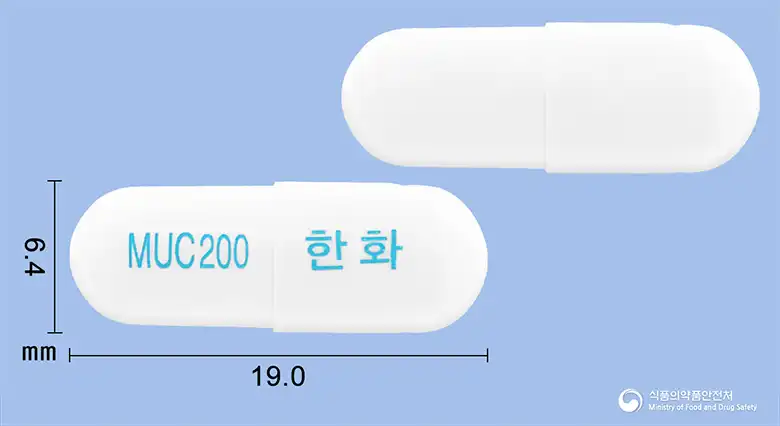
Acetylcysteine 200mg
Hard capsule · OTC medication
Hanwha Pharmaceutical Co., Ltd.
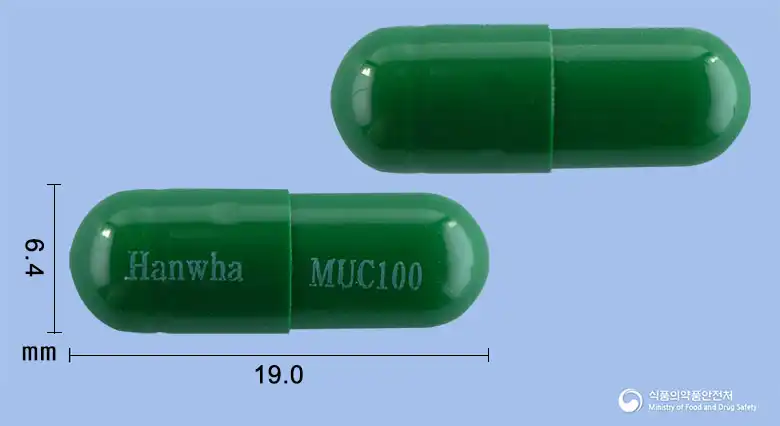
Acetylcysteine 100mg
Hard capsule · OTC medication
Hanwha Pharmaceutical Co., Ltd.
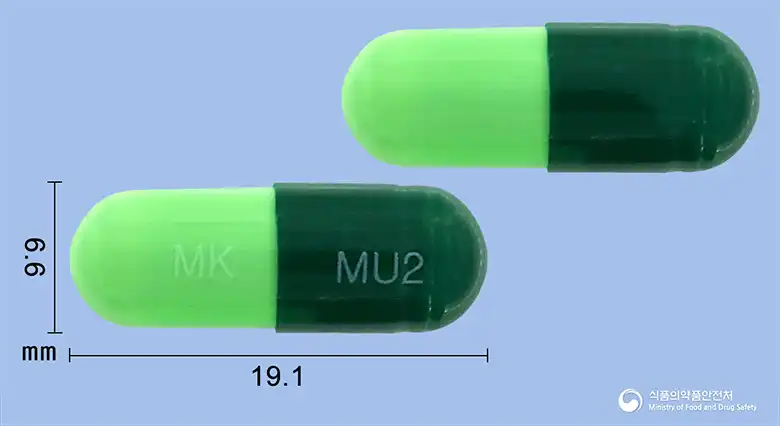
Acetylcysteine 200mg
Hard capsule · OTC medication
(Medica Korea Co., Ltd.)
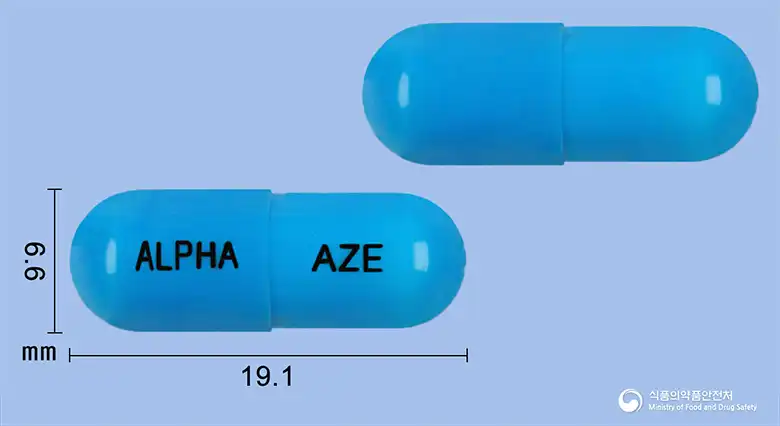
Acetylcysteine 200mg
Hard capsule · OTC medication
Alpha Pharmaceutical Co., Ltd.
Even with the same ingredient, the dose and directions can differ by strength and dosage form. Talk to a doctor or pharmacist before switching from a medication you are already taking.
No questions yet.
For anything that needs medical judgment, consult a doctor or pharmacist.
This drug information is based on data provided by the Korea Ministry of Food and Drug Safety.
Consult a doctor or pharmacist for accurate dosage, administration, and usage instructions.