
 한국어
 English
 日本語
 中文(简体)
Summary
- Main use
- Treatment of primary hyperlipidemia (e.g., hypercholesterolemia and hypertriglyceridemia)
- Who takes it
- Adults · Children
- Adult dose
- ○ Adults: Administer 160 mg of fenofibrate orally once daily immediately after a meal. Fenofibrate must be administered in conjunction with dietary therapy. This medicine may be less well absorbed on an empty stomach; therefore, administer it immediately after a meal (except for the 145 mg formulation). ○ Older adults: Dose reduction is generally not necessary if renal function is not impaired. ○ Patients with renal impairment: Do not administer this medicine to patients with moderate to severe renal impairment (serum creatinine level of 2.5 mg/dL or higher).
- Child dose
- ○ Children: Clinical data on the use of this medicine in children are not yet available.
Ingredients
- Importer
- Abbott Korea
Efficacy & effects
Treatment of primary hyperlipidemia (e.g., hypercholesterolemia and hypertriglyceridemia)
- Hypercholesterolemia
- hypertriglyceridemia
View approved original textHide original text
This medication is primarily used for primary dyslipidemia, specifically for hypercholesterolemia (Type IIa), mixed hypercholesterolemia and hypertriglyceridemia (Type IIb), and hypertriglyceridemia (Type IV).
How to take
Adult dose
○ Adults: Administer 160 mg of fenofibrate orally once daily immediately after a meal. Fenofibrate must be administered in conjunction with dietary therapy. This medicine may be less well absorbed on an empty stomach; therefore, administer it immediately after a meal (except for the 145 mg formulation). ○ Older adults: Dose reduction is generally not necessary if renal function is not impaired. ○ Patients with renal impairment: Do not administer this medicine to patients with moderate to severe renal impairment (serum creatinine level of 2.5 mg/dL or higher).
Child dose
○ Children: Clinical data on the use of this medicine in children are not yet available.
Precautions
This drug should not be used in patients with poor liver function. Administration should be avoided in patients with moderate or severe impairment of kidney function, especially in the presence of high serum creatinine levels, due to the risk of rhabdomyolysis, a serious muscle injury. Women who are pregnant or may become pregnant and those who are breastfeeding should not use this medication. Patients who have had allergic reactions to this drug or its components should not be administered this medication. Caution is also necessary for patients with gallbladder disease or those who have experienced photosensitivity reactions while taking similar substances. This drug is not to be administered to children, and patients with biliary sclerosis or pancreatitis should also avoid using this medication. Patients with genetic lactose intolerance should not receive this drug. Patients with mild renal impairment or liver dysfunction, hypoalbuminemia, a history of gallstones, those on anticoagulants, and elderly patients should use this drug with caution. Regular monitoring of liver function tests and blood lipid levels is required during treatment, with adjustments to dosage or discontinuation considered if abnormalities are found. This medication may cause a variety of side effects, including skin rash, itching, photosensitivity reactions, myalgia, dizziness, headache, and gastrointestinal disorders; symptoms should be reported to a physician immediately. Particular caution is warranted if severe myalgia or weakness occurs due to the risk of muscle damage. Drug interactions may arise; particularly patients taking anticoagulants, statins, antidiabetics, and immunosuppressants should consult their physician. Use during pregnancy or lactation should be avoided as it may pose risks to the fetus or newborn. Elderly patients are more likely to have reduced liver and kidney function; hence, they should be monitored frequently through blood tests. There is no specific antidote for overdose, making accurate dosage adherence critical. This drug should be kept out of the reach of children and should not be transferred to other containers.
Side effects
- Elevation of serum aminotransferases
- hepatomegaly
- cholestatic hepatitis
- gallstones
- rash
- itching
- photosensitivity reactions
- hair loss
- weakness
- hyperthermia
Show 48 moreCollapse
- dizziness
- headache
- peripheral neuropathy
- thromboembolism
- elevation of creatine kinase
- myalgia
- muscle cramps
- arthralgia
- rhabdomyolysis
- urticaria
- phototoxic dermatitis
- phototoxicity
- anaphylactic reactions
- gastrointestinal disturbances
- abdominal pain
- nausea
- vomiting
- diarrhea
- abdominal bloating
- pancreatitis
- interstitial lung disease
- decreased hemoglobin
- leukopenia
- eosinophilia
- elevation of serum creatinine
- increased urea
- eosinophilic pneumonia
- ventricular arrhythmia
- fatigue
- sexual dysfunction
- weight gain
- increased plasma homocysteine levels
- skin and mucous membrane syndrome
- toxic epidermal necrolysis
- skin rash
- angioedema
- DRESS syndrome
- exfoliative dermatitis
- fever
- systemic organ involvement
- thrombocytopenia
- agranulocytosis
- myopathy
- muscle tenderness
- lethargy
- fever
- pulmonary embolism
- deep vein thrombosis
Not everyone experiences these, and they can vary from person to person.
Storage
This medication is sensitive to air and moisture, so it must be stored in a tightly closed container. Moreover, it should be stored at room temperature, ideally between 1 and 30 degrees Celsius, ensuring it is not too hot or too cold.
Appearance and packaging
Appearance
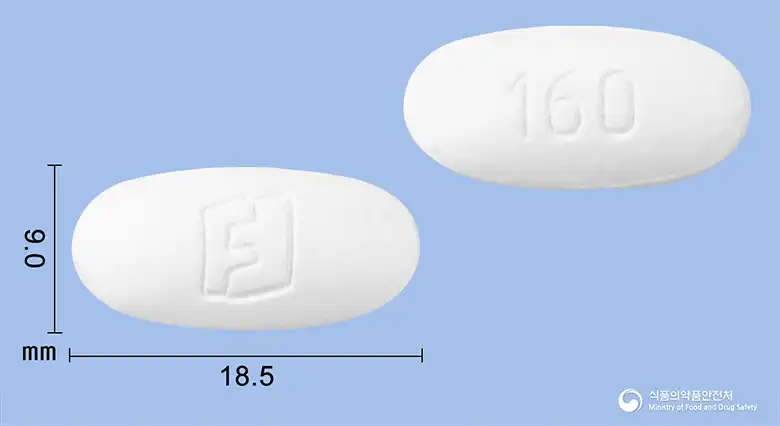
White, oval, controlled-release film-coated tablets. One side is engraved with '160' and the other side has the Fournier logo.
Package unit
30 tablets (10 tablets/PTP × 3)
Questions about this medicine
No questions yet.
For anything that needs medical judgment, consult a doctor or pharmacist.