한국어
한국어 English
 日本語
日本語 中文(简体)
 Viewing now
Hygroton Tablet 25 mg (Chlorthalidone)
Chlorthalidone 25mg
Tablet · Prescription medication
Hanlim Pharmaceutical Co., Ltd.
MFDS item code 200302309 · Notified 2003.09.01 · Insurance code 645302230
Improvement of hypertension (essential, renal, systolic) and chronic stable heart failure, reduction of edema
This medication helps control various forms of hypertension, such as essential hypertension, renal hypertension, and systolic hypertension. It is also used in patients with mild to moderate chronic stable heart failure to improve heart function. Additionally, it is effective in reducing edema caused by cirrhosis or kidney disease. This medication is used for blood pressure control, heart failure treatment, and edema improvement.
This medication is administered orally and is recommended to be taken once in the morning. 1. Hypertension: The initial recommended dose is 25 mg per day. While the maximum effect can be obtained at a dose of 25 mg, it can be increased up to 50 mg per day if insufficient. 2. Chronic stable heart failure: The initial recommended dose is between 25 to 50 mg per day. In severe cases, the dose can be increased to between 100 to 200 mg per day, commonly taking 25 mg per day.
Administer the minimum effective dose. The initial dose is 0.5 to 1 mg/kg/48 hr, with a maximum dose of 1.7 mg/kg/48 hr.
This medication should be used with caution in patients with impaired liver function or progressive liver disease as it may cause hepatic coma. In patients with severe kidney disease, this medication may cause azotemia and there is a risk of accumulation in the body, so it should be administered carefully. Patients with anuria or severe liver failure or renal failure should not use this medication. Patients with allergies to this medication, its components, or similar drugs should not be administered this medication. Use should be avoided in patients with hypokalemia, hyponatremia, hypercalcemia, symptomatic hyperuricemia, and it is also safest for pregnant or nursing women not to use it. This medication is contraindicated in untreated patients with Addison’s disease, patients undergoing lithium treatment, and those taking certain heart-related medications. Patients with lactose intolerance or specific genetic disorders should not take this medication. Patients with impaired liver function, arteriosclerosis, a family history of gout or diabetes, or those with diarrhea or vomiting should use this medication with caution. This medication may cause electrolyte imbalances, so particular care should be taken with hypokalemia and hyponatremia, and potassium supplements may be used if necessary. Metabolic anomalies such as hyperglycemia, increased blood lipid levels, and exacerbation of gout may also occur, so regular testing is needed. Dizziness or orthostatic hypotension may occur while taking this medication, so caution should be exercised while driving or operating machinery. This medication may interact with other drugs, so it is essential to inform about any medications being taken, particularly when used with antihypertensives, antidiabetics, lithium, or NSAIDs. If pregnant or breastfeeding, the use should be avoided as it may affect the fetus and newborn, and it is recommended to discontinue breastfeeding while using this medication. Elderly patients or infants are at higher risk for electrolyte imbalances, so it is advisable to start with a small dose and closely monitor their condition. In cases of overdose, symptoms such as low blood pressure, electrolyte abnormalities, and consciousness disturbances may occur, and immediate medical attention should be sought. This medication should be stored in a closed container to avoid exposure to air or moisture, and it should be kept in a cool place away from direct sunlight and out of reach of children.
Urticaria, pulmonary edema, pancreatitis, agranulocytosis, acute renal failure, toxic epidermal necrolysis (Lyell's syndrome), intrahepatic cholestasis or jaundice, severe edema, increased blood pressure, thrombocytopenia, leukopenia, agranulosis, purpura, jaundice, specific lung edema, severe allergic reactions
Not everyone experiences these, and they can vary from person to person.
This medication should be stored in a sealed container to prevent exposure to air or moisture. It is best to maintain a storage temperature between 1 degree Celsius and 30 degrees Celsius at room temperature.
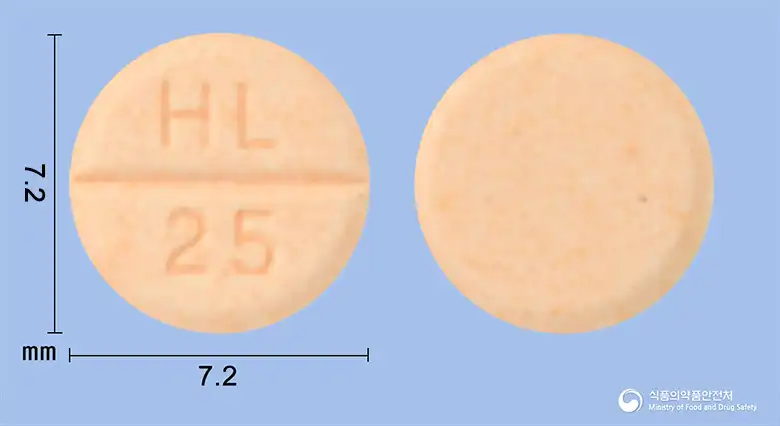
Pale pink round tablets
30 tablets/bottle, 500 tablets/bottle
Even with the same ingredient, strength, dosage form and how it is taken can differ.
Even with the same ingredient, the dose and directions can differ by strength and dosage form. Talk to a doctor or pharmacist before switching from a medication you are already taking.
No questions yet.
For anything that needs medical judgment, consult a doctor or pharmacist.
This drug information is based on data provided by the Korea Ministry of Food and Drug Safety.
Consult a doctor or pharmacist for accurate dosage, administration, and usage instructions.