
 한국어
한국어 English
 日本語
日本語 中文(简体)
 Viewing now
TVF Tablet 125 mg (Terbinafine Hydrochloride)
Terbinafine Hydrochloride 140.625mg
Tablet · Prescription medication
Donghwa Pharmaceutical Co., Ltd.
MFDS item code 200100779 · Notified 2001.05.15 · Insurance code 642703200
Treatment of skin fungal infections (tinea pedis, tinea corporis, etc.) and onychomycosis
This medication is used to treat various skin fungal infections caused by dermatophytes, including tinea pedis, tinea corporis, and tinea capitis in adults. It is also effective for treating tinea capitis in children. It helps improve fungal infections primarily occurring in the skin and nails.
As terbinafine, administer 125 mg once or 250 mg once daily. The duration of treatment varies according to the disease. 1) Dermatophyte infections - Tinea pedis (interdigital, plantar/moccasin type): 2-6 weeks - Tinea corporis: 2-4 weeks - Tinea cruris: 2-4 weeks 2) Onychomycosis - Treatment is typically for 6 weeks to 3 months. - The duration of treatment for nail infections is usually 3 months, but
Administer to children over 2 years of age. Tinea capitis: 4 weeks 1) Children under 20 kg (under 5 years): 62.5 mg once daily. 2) Children weighing 20-40 kg (5-12 years):
This medication should generally not be used in patients with chronic liver disease or active liver disease. It is essential to check for a history of liver disease before administration, and regular liver function tests should be conducted before and during treatment. If liver function test results increase, administration should be stopped immediately, and if symptoms such as nausea, fatigue, or jaundice appear, the doctor should be notified immediately. This medication can rarely cause severe liver damage, so if liver function abnormalities are suspected, prompt evaluation and discontinuation of the treatment are necessary. Patients with allergies to this medication or its components, blood disorders, severe renal failure, infants under 2 years of age, and breastfeeding mothers should not use it. It is also safe for patients with lactose intolerance to avoid this medication. Patients with impaired kidney function, elderly individuals, and underweight children should use it with caution, and if severe rashes or allergic reactions occur, administration should be discontinued immediately. This medication should only be used for difficult-to-treat fungal infections, and if side effects such as dizziness occur, driving or operating machinery should be avoided. There may be interactions with other medications when taken together, so it is essential to consult with a doctor or pharmacist before taking it, especially with drugs that are metabolized in the liver. Women who are pregnant or who may become pregnant should use this medication only after thoroughly considering its benefits and risks, and breastfeeding women should discontinue nursing while taking it. Children and elderly individuals may experience increased drug concentration due to reduced liver and kidney function, so they should be closely monitored during treatment. Overdosage may result in headache, nausea, abdominal pain, dizziness, etc., and medical assistance should be sought immediately for proper treatment. This medication should be kept out of reach of children and stored in a tightly closed container, protected from direct sunlight and at room temperature.
Persistent nausea, decreased appetite, fatigue, vomiting, pain in the upper right abdomen, jaundice, dark urine, loose stools, cholangitis, hepatitis, bile duct obstruction, jaundice, neutropenia, pancytopenia, agranulocytosis, thrombocytopenia, Stevens-Johnson syndrome, toxic epidermal necrolysis, mucocutaneous syndrome, acute generalized exanthematous pustulosis, erythema multiforme, toxic skin rash, exfoliative dermatitis, bullous dermatitis, rhabdomyolysis, dyspnea, chest pressure,
Rash, skin itching, fever, nausea, vomiting, loss of appetite, malaise, musculoskeletal reactions (arthralgia, myalgia), myalgia, weakness, elevation of CPK, increased myoglobin in blood and urine, hypotension, sensation of chest pressure, hives, erythema, facial swelling, lymphangitis, abdominal distension, dyspepsia, diarrhea, glossitis, depression, anxiety, headache, taste disturbance, dizziness, drowsiness, paresthesia, decreased sensation, decreased attention, insomnia,
Not everyone experiences these, and they can vary from person to person.
This medication should be stored in a tightly closed container to prevent exposure to air and moisture, preferably at a temperature between 1 to 30 degrees Celsius. This storage method helps maintain the drug's efficacy and prevents deterioration.
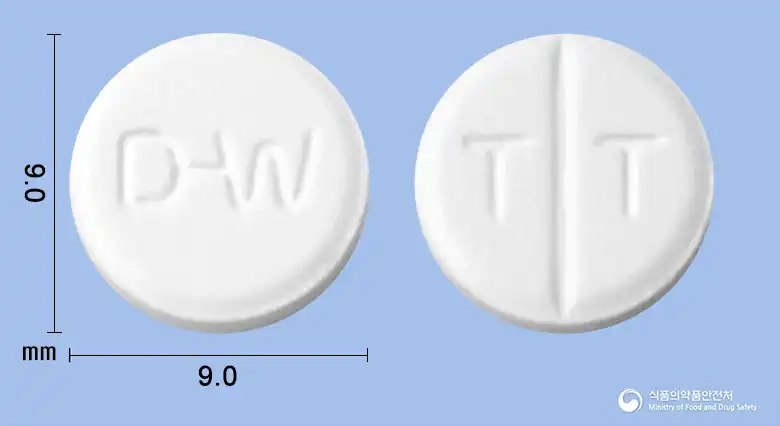
White to whitish round tablet
30 tablets/bottle, 100 tablets/bottle
Even with the same ingredient, strength, dosage form and how it is taken can differ.
Viewing nowTerbinafine Hydrochloride 140.625mg
Tablet · Prescription medication
Donghwa Pharmaceutical Co., Ltd.
Terbinafine Hydrochloride 10mg
Cream · OTC medication
GP Therapeutics Korea Co., Ltd.
Terbinafine Hydrochloride 10mg
Cream · OTC medication
Korea Hutex Pharmaceutical Co., Ltd.
Terbinafine Hydrochloride 10mg
Cream · OTC medication
Anguk Pharmaceutical Co., Ltd.
Terbinafine Hydrochloride 10mg
Cream · OTC medication
Medica Korea Co., Ltd.
Terbinafine Hydrochloride 10mg
Cream · OTC medication
Gyeongnam Pharmaceutical Co., Ltd.
Terbinafine Hydrochloride 10mg
Cream · OTC medication
Daehwa Pharmaceutical Co., Ltd.
Terbinafine Hydrochloride 10mg
Cream · OTC medication
Korea Pharmaceutical Co., Ltd.
Even with the same ingredient, the dose and directions can differ by strength and dosage form. Talk to a doctor or pharmacist before switching from a medication you are already taking.
No questions yet.
For anything that needs medical judgment, consult a doctor or pharmacist.
This drug information is based on data provided by the Korea Ministry of Food and Drug Safety.
Consult a doctor or pharmacist for accurate dosage, administration, and usage instructions.