
 한국어
한국어 English
 日本語
日本語 中文(简体)
Dosage form image
Viewing nowSodium Bicarbonate 8.4% Injection
Sodium Bicarbonate 84mg
Injections · Prescription medication
Daehan Pharmaceutical Industry Co., Ltd.
MFDS item code 200000507 · Notified 2000.05.04 · Insurance code 645100901
Relief of symptoms of acidosis and acute urticaria
Acidosis and acute urticaria are representative diseases. This medication is used for acidosis and acute urticaria.
Adults: administer intravenously 1 to 5g (12 to 60 mEq) of Sodium Bicarbonate at a time. For acidosis, the usual dosage is generally calculated by the following formula and administered intravenously. Required amount (mEq) = Base Deficit (mEq/L) × 0.2 × Body Weight (kg) Adjust dosage according to age and symptoms.
As this medication is an ampoule injection, care must be taken when cutting the container to avoid mixing in glass fragments. Extra caution is required when used in children or elderly patients. This medication should not be administered to patients with kidney disease, metabolic alkalosis, or blood alkalosis, and to hypertensive patients. Additionally, it is advisable not to use this medication in cases of sodium deficiency due to gastric fluid aspiration or vomiting, in patients taking diuretics, and in those with edema or congestive heart failure. Patients with a history of urinary stones accompanied by hypocalcemia or potassium deficiency, hypernatremia, and those in a state of respiratory depression should also avoid this medication. Caution must be exercised in administering this medication to patients with preeclampsia, hypocalcemia, hypokalemia, newborns, cardiac arrest patients, and those with very low or absent urine output. In cases of overdose, side effects such as electrolyte imbalance, delayed blood coagulation, muscle cramps, respiratory issues, excessive agitation, dry mouth, and arrhythmia may occur, so caution is necessary. Rarely, symptoms such as lip numbness or sensory abnormalities, injection site inflammation or tissue damage, fever, malaise, anemia, nausea, and bradycardia may also occur. During administration of this medication, the acidity of the blood and carbon dioxide levels should be periodically monitored to prevent alkalosis. If administered during cardiopulmonary resuscitation, adequate ventilation should be ensured to eliminate carbon dioxide. Due to possible interactions with other drugs, caution should be exercised, especially when using corticosteroids, diuretics, or potassium supplements together. For pregnant or lactating women, the safety of this medication has not been established, so it should only be used when clearly necessary, and nursing should be suspended during its use. When administering to newborns, high concentration infusion poses a risk of intracranial hemorrhage, so it should be diluted and infused slowly for safety. Elderly patients may have decreased physical function, so the infusion rate should be slow and the dosage adjusted accordingly. In cases of overdose, administration should be stopped immediately, and appropriate treatment should be sought, including possibly using acidifying agents or calcium supplements as needed. This medication should not be mixed with other injection solutions and should not be used with calcium-containing preparations. Before administration, ensure there are no abnormalities in the solution, and it should be used immediately after opening; any remaining drug should be discarded. During injection, care should be taken to prevent leakage outside of the blood vessel, and it is recommended to administer it slowly into a relatively large vein.
Not everyone experiences these, and they can vary from person to person.
This medication should be stored in a sealed container at room temperature between 1°C and 30°C. If stored in a glass container, it can be used for up to 36 months from the manufacturing date; if stored in a plastic aqueous injection container, it can be used for 18 months.
[For domestic use] Colorless, clear liquid filled in a colorless, transparent ampoule or plastic aqueous injection container. [For export] Injection product containing a colorless, clear liquid in a colorless, transparent glass or plastic aqueous injection container.
20mL × 50 ampoules
Even with the same ingredient, strength, dosage form and how it is taken can differ.
Sodium Bicarbonate 84mg
Injections · Prescription medication
Daehan Pharmaceutical Industry Co., Ltd.
Sodium Bicarbonate 84mg
Injections · Prescription medication
Dae Won Pharmaceutical Co., Ltd.
Sodium Bicarbonate 84mg
Injections · Prescription medication
Jeil Pharmaceutical Co., Ltd.
Sodium Bicarbonate 7g
Solution · Prescription medication
JW Pharmaceutical Corp.
Sodium Bicarbonate 1g
Prescription medication
Vantiv Korea Co., Ltd.
Sodium Bicarbonate 5.83g
Solution · Prescription medication
JW Pharmaceutical Corp.
Sodium Bicarbonate 1g
Prescription medication
Fresenius Medical Care Korea Co., Ltd.
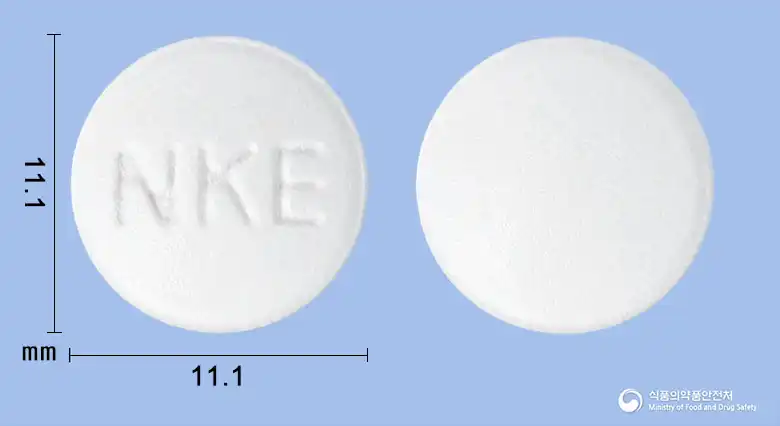
Sodium Bicarbonate 500mg
Tablet · OTC medication
NexPharm Korea Co., Ltd.
Even with the same ingredient, the dose and directions can differ by strength and dosage form. Talk to a doctor or pharmacist before switching from a medication you are already taking.
No questions yet.
For anything that needs medical judgment, consult a doctor or pharmacist.
This drug information is based on data provided by the Korea Ministry of Food and Drug Safety.
Consult a doctor or pharmacist for accurate dosage, administration, and usage instructions.