
 한국어
한국어 English
 日本語
日本語 中文(简体)
 Viewing nowCombination
Kono Pen Capsule
Codeine Phosphate Hydrate 10mg · Ibuprofen 200mg +1 more
Hard capsule · Prescription medication · Combination
Hana Pharmaceutical Co., Ltd.
MFDS item code 199907257 · Approved 1999.03.29 · Insurance code 657801830
Relief and treatment of inflammatory pain
This medication is used to relieve mild to moderate pain caused by inflammation in adults aged 19 and older. It is also utilized for the treatment of moderate acute inflammatory pain in children aged 13 to 18 who have not responded to other analgesics like acetaminophen or ibuprofen. This medication effectively helps relieve pain caused by inflammation across various age groups.
Adults aged 19 and older: Administer 1 to 2 capsules orally at 4-hour intervals. Maximum daily dose is 12 capsules.
Children aged 13 to 18 years: Administer 1 to 2 capsules orally at 4-hour intervals. Maximum daily dose is 12 capsules. Treatment period should be limited to 3 days, unless effective pain relief is achieved.
This medication contains codeine, which is converted to morphine in the liver, leading to varying responses among patients. If symptoms such as slowed or shallow breathing occur due to rapid increases in morphine levels, the medication should be stopped immediately and a doctor should be consulted. Additionally, individuals who consume alcohol regularly should consult a doctor or pharmacist before taking this medication, as it may increase the risk of liver damage or gastrointestinal bleeding. This medication also contains a non-steroidal anti-inflammatory drug, which may increase the risks of cardiovascular disease and gastrointestinal bleeding or ulcers; caution is required. The acetaminophen component can cause severe liver damage if overdosed, so care should be taken not to consume it along with other products containing acetaminophen, and patients with impaired liver function must consult a doctor before use. Due to an increased risk of respiratory depression, individuals under 18 or those who are obese or have respiratory illnesses should avoid this medication. Using this medication in combination with other central nervous system depressants or alcohol may lead to severe sedation, respiratory depression, or coma; such combinations should be avoided unless absolutely necessary, and minimal doses for the shortest duration should be used. This medication should not be administered to patients with specific conditions such as asthma, severe liver or kidney dysfunction, head trauma, severe blood pressure issues, children, late-term pregnancy women, or nursing mothers. Moreover, patients with heart disease, respiratory depression, or liver and kidney dysfunction should use this medication carefully, and those with a history of drug dependence or alcohol addiction should also be cautious. During the course of treatment, patients should be monitored closely for abnormal reactions, and if symptoms such as skin rash, difficulty breathing, jaundice, or hematuria occur, the medication should be stopped immediately and medical personnel should be consulted. Long-term use of this medication may lead to tolerance or dependence, so continuous use for over 4 weeks is not recommended. Drowsiness or dizziness may occur with this medication, so caution is advised while driving or operating machinery, and gradual dose reduction should be considered when discontinuing use. It is advisable for women who are pregnant or may become pregnant to avoid this medication, especially during late-term pregnancy, as it may pose a risk to the fetus. Nursing mothers should discontinue breastfeeding while taking this medication due to the risk of exposure to the infant through breast milk, and should monitor the infant closely for any unusual symptoms. Children, particularly those under 12 years old or those under 18 with obstructive sleep apnea following tonsillectomy, should not use this medication. The elderly or frail patients should take this medication with caution at minimal doses due to a higher risk of side effects. In cases of overdose, serious side effects such as liver damage, respiratory depression, and kidney dysfunction may occur, requiring immediate emergency treatment. This medication should be stored out of reach of children and should not be transferred to other containers.
Slow or shallow breathing, confusion, pinpoint pupils → significant adverse reactions dependence → risk of codeine dependence and abuse respiratory depression → symptoms of respiratory depression at high doses head trauma and increased intracranial pressure shock and dyspnea, generalized flushing, edema, urticaria, and anaphylactic symptoms Skin and mucous membrane syndrome (Stevens-Johnson syndrome), toxic epidermal necrolysis (Lyell syndrome), erythema multiforme, exfoliative dermatitis, DRESS syndrome
Not everyone experiences these, and they can vary from person to person.
This medication should be stored in a tightly sealed container that is not exposed to air, ideally at room temperature between 1 and 30 degrees Celsius. This will help maintain the medication's efficacy and prevent deterioration.
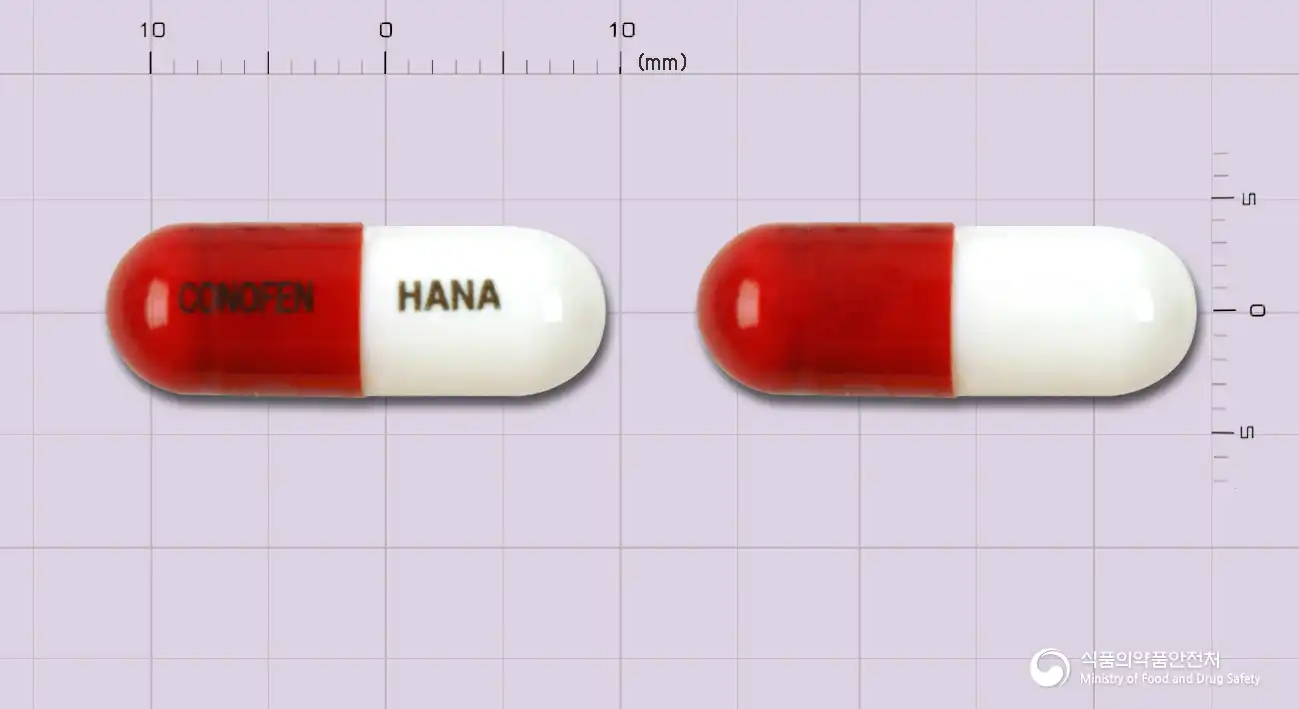
A hard capsule with a red upper portion and a white lower portion filled with white granules or powder.
100 capsules (10 capsules/blister × 10)
Even with the same ingredient, strength, dosage form and how it is taken can differ.
Viewing nowCombinationCodeine Phosphate Hydrate 10mg · Ibuprofen 200mg +1 more
Hard capsule · Prescription medication · Combination
Hana Pharmaceutical Co., Ltd.
Acetaminophen 250mg · Ibuprofen 200mg +1 more
Prescription medication · Combination
Myeongmun Pharmaceutical Co., Ltd.
 Combination
Acetaminophen 250mg · Ibuprofen 200mg +1 more
Hard capsule · Prescription medication · Combination
Sungwon Adcock Pharmaceuticals Co., Ltd.
Acetaminophen 250mg · Ibuprofen 200mg +1 more
Hard capsule · Prescription medication · Combination
Gujoo Pharmaceutical Co., Ltd.
Even with the same ingredient, the dose and directions can differ by strength and dosage form. Talk to a doctor or pharmacist before switching from a medication you are already taking.
No questions yet.
For anything that needs medical judgment, consult a doctor or pharmacist.
This drug information is based on data provided by the Korea Ministry of Food and Drug Safety.
Consult a doctor or pharmacist for accurate dosage, administration, and usage instructions.