
 한국어
 English
 日本語
 中文(简体)
Summary
- Main use
- Relief of spasticity associated with severe chronic conditions (e.g., spinal cord injury and cerebral palsy)
- Who takes it
- Adults · Children
- Adult dose
- ○ Adults Initial dose: Dantrolene sodium 25 mg per dose, once daily Dose-increasing regimen: Dantrolene sodium 25~100 mg per dose, 2~4 times daily Maximum dose: Do not exceed 100 mg of dantrolene sodium per dose, 4 times daily. 1. Increase the dose up to the amount that produces the maximum effect appropriate for the functional impairment caused by the disease, and do not increase it further. 2. It is preferable to treat with the minimum dose that produces the maximum effect. 3. If no therapeutic effect is seen within 45 days of treatment, discontinue treatment (because of the possibility of liver damage with long-term treatment). 4. Maintain each dose for 4~7 days to determine the patient's response. Do not increase the dose beyond the amount that produces the maximum effect without adverse reactions; the dose may be reduced below that amount.
- Child dose
- ○ Children Initial dose: Dantrolene sodium 1.0 mg/kg per dose, once daily Dose-increasing regimen: Dantrolene sodium 0.5~3.0 mg/kg per dose, 2~4 times daily Maximum dose: Do not exceed 50 mg of dantrolene sodium per dose, 4 times daily.
Ingredients
- Manufacturer
- Youyoung Pharmaceutical Co., Ltd.
Efficacy & effects
Relief of spasticity associated with severe chronic conditions (e.g., spinal cord injury and cerebral palsy)
- Spasticity symptoms due to spinal cord injury
- cerebral palsy
- multiple sclerosis.
View approved original textHide original text
This medication is used to alleviate spasticity symptoms caused by severe chronic conditions like spinal cord injury, cerebral palsy, and multiple sclerosis. However, it should not be used for rheumatic diseases, so caution is required.
How to take
Adult dose
○ Adults Initial dose: Dantrolene sodium 25 mg per dose, once daily Dose-increasing regimen: Dantrolene sodium 25~100 mg per dose, 2~4 times daily Maximum dose: Do not exceed 100 mg of dantrolene sodium per dose, 4 times daily. 1. Increase the dose up to the amount that produces the maximum effect appropriate for the functional impairment caused by the disease, and do not increase it further. 2. It is preferable to treat with the minimum dose that produces the maximum effect. 3. If no therapeutic effect is seen within 45 days of treatment, discontinue treatment (because of the possibility of liver damage with long-term treatment). 4. Maintain each dose for 4~7 days to determine the patient's response. Do not increase the dose beyond the amount that produces the maximum effect without adverse reactions; the dose may be reduced below that amount.
Child dose
○ Children Initial dose: Dantrolene sodium 1.0 mg/kg per dose, once daily Dose-increasing regimen: Dantrolene sodium 0.5~3.0 mg/kg per dose, 2~4 times daily Maximum dose: Do not exceed 50 mg of dantrolene sodium per dose, 4 times daily.
Precautions
This drug can cause severe liver damage, so liver function must be checked before starting treatment. Regular liver function tests are required during treatment, and if any abnormal findings are discovered, administration must be stopped immediately. There is a higher risk of liver damage, especially if taking more than 300 mg per day, or for prolonged periods, as well as in women or patients over 30 years old, those with liver damage, and those taking other hepatotoxic medications. Patients with acute liver disease, specific heart and lung diseases, or myasthenia gravis should not take this medication. Additionally, patients with allergies to this drug or its ingredients, or those with certain hereditary lactose intolerance disorders, should avoid it. Women over 35, patients with a history of liver disease, those taking tranquilizers, patients with impaired kidney function, the elderly, and those with chronic diarrhea should take this medication with caution. This drug can cause a variety of side effects such as drowsiness, dizziness, digestive disorders, liver function abnormalities, psychiatric and neurological symptoms, and skin rashes, so if abnormal symptoms occur, consult a physician immediately. During treatment, avoid exposure to sunlight and be cautious when driving or operating machinery. There may be interactions when taken with other medications; caution is particularly advised when taking tranquilizers, muscle relaxants, calcium channel blockers, or antipsychotic drugs. Use during pregnancy or breast-feeding is not recommended, and particularly during breast-feeding, administration should be avoided or breast-feeding should be discontinued. The safety of this medication in children under 5 years has not been established, so careful use is required. The elderly may have increased drug concentrations due to reduced liver function, so treatment should begin at a low dose and be closely monitored.
Side effects
Drowsiness, dizziness, discomfort, fatigue and weakness, stupor, anxiety, loss of appetite, constipation, nausea, vomiting, diarrhea, abdominal bloating, abdominal pain, gastric pain, dysphagia, gastric cramps, gastrointestinal bleeding, hepatitis, liver dysfunction (elevation of AST, ALT, etc.), jaundice, liver damage, headache, speech disorders, convulsive seizures, insomnia, mental confusion, hallucinations, confusion, drooling, phlebitis, palpitations, irregular blood pressure, tachycardia, heart failure, frequent urination, urinary incontinence, micturition disorders, crystalluria, nocturia, erectile dysfunction, urinary retention, abnormal hair growth, sweating, acne-like rash, purpura, shock, symptoms resembling anaphylaxis, numbness, vision impairment, diplopia, taste abnormalities, tearing, respiratory depression, PIE syndrome, pleuritis, rash, itching, photosensitivity reactions, thrombocytopenia, aplastic anemia, leukopenia, histiocytic lymphoma, erythrocytopenia, eosinophilia, weakness, malaise, staggering, warmth sensation, feeling of suffocation, edema, chills, fever, back pain, myalgia
Not everyone experiences these, and they can vary from person to person.
Storage
This medication should be stored in a tightly sealed container to prevent air from entering, and it is recommended to store it at room temperature between 1 and 30 degrees Celsius. Proper storage helps maintain the efficacy of the medication for a long time.
Appearance and packaging
Appearance
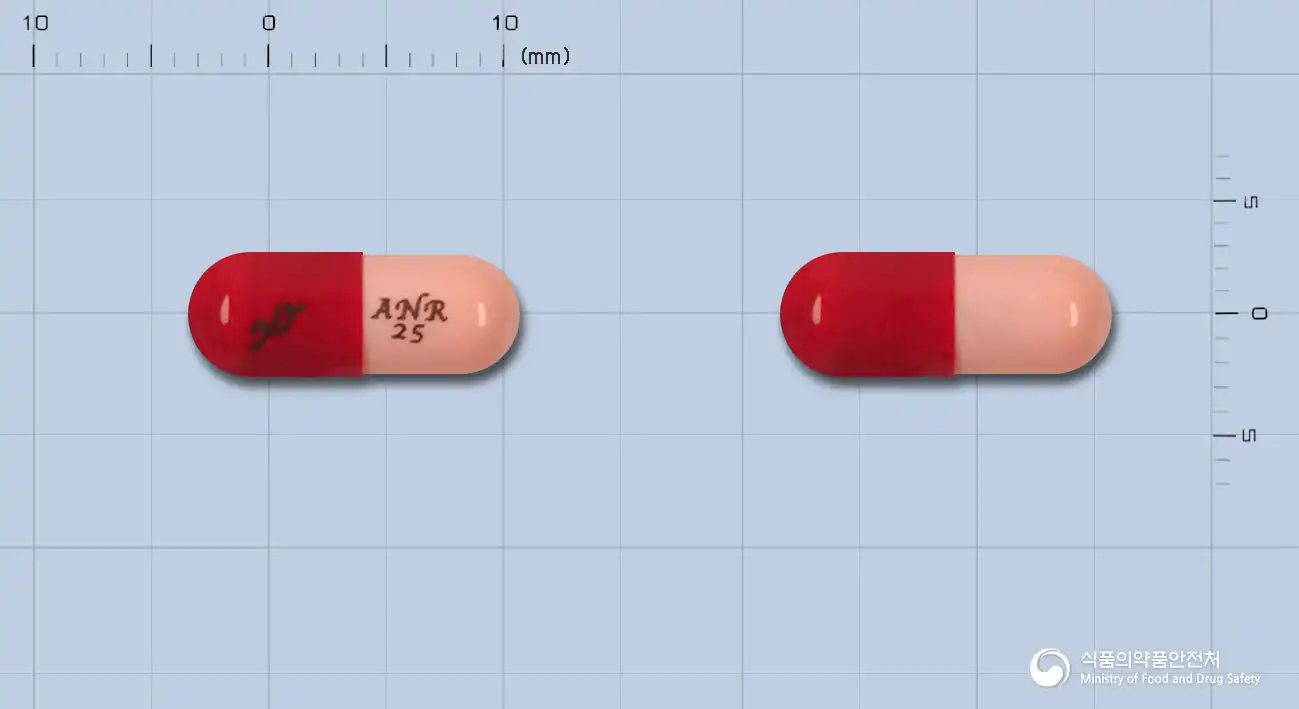
A capsule containing powder that is light yellow to dark yellow in color, with an upper reddish-brown part and a lower pink part.
Package unit
30 capsules/bottle, 500 capsules/bottle
Questions about this medicine
No questions yet.
For anything that needs medical judgment, consult a doctor or pharmacist.