
 한국어
한국어 English
 日本語
日本語 中文(简体)
 Viewing now
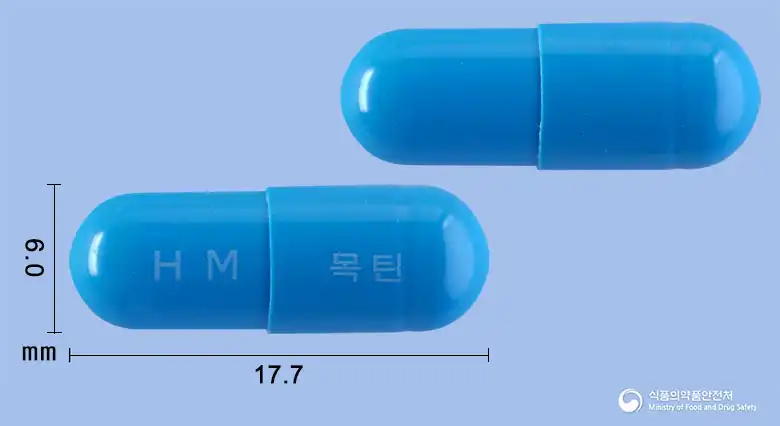
Moktin Capsule 200mg (Acetylcysteine)
Acetylcysteine 200mg
Hard capsule · OTC medication
Hanmi Pharmaceutical Co., Ltd.
MFDS item code 199902656 · Notified 1999.04.07 · Insurance code 643501030
Relief of difficulty in expectoration associated with respiratory diseases such as acute and chronic bronchitis and bronchial asthma
This medication is used to improve symptoms of difficulty in expectoration in respiratory conditions such as acute and chronic bronchitis, bronchial asthma, laryngitis, sinusitis, and cystic fibrosis.
In acute conditions, adults should take 200 mg once, three times daily with a small amount of water before meals. In chronic conditions, adults should take 200 mg once, twice daily with a small amount of water before meals.
In acute conditions, children aged 6 to 14 years should take 200 mg once, twice daily with a small amount of water before meals. In chronic conditions, children aged 6 to 14 years should take 100 mg once, three times daily with a small amount of water before meals.
This medication should not be taken by individuals who are allergic to this medication or its components. Patients with ulcers in the stomach or duodenum should also avoid taking this medication. Children under 2 years of age should not use this medication. Moreover, those with a genetic issue related to lactose digestion should not take this medication. Pregnant women or women who may become pregnant should consult a doctor before taking this medication. Breastfeeding women should also consult their doctor and take this medication cautiously, as it is uncertain whether it is excreted in breast milk. If gastrointestinal symptoms such as nausea, vomiting, inflammation of the mouth, heartburn, or diarrhea occur during use, immediately discontinue use and consult a physician. In case of allergic reactions such as hives, itching, rash, headaches, tinnitus, or difficulty in breathing or bronchospasm in asthma patients, discontinue use immediately and consult a specialist. This medication may reduce the effectiveness of certain antibiotics if taken together, so it is advisable to maintain at least a two-hour interval when taking them. Avoid mixing other medications with the liquid form of this medication. Store in a safe place out of reach of children, and it is essential to keep it in its original container. For the inhalation form of this medication, patients with asthma or impaired respiratory function should always consult a physician before use. Women who are pregnant or breastfeeding, elderly, and children should also consult a specialist before using this medication. There may be bronchoconstriction or spasms after inhalation, so if these symptoms occur, discontinue use immediately and consult a physician. A light sulfur smell might be present when inhaling, and symptoms such as nausea, vomiting, or loss of appetite may rarely appear. Sometimes symptoms such as blood-stained sputum, chills, fever, drowsiness, and chest tightness may occur, so caution is advised. After inhalation, the remnants of the medication in the nebulizer may damage metal parts, so it should be cleaned immediately after use. Mixing with antibiotics may cause precipitation or color changes, so it is better to take them separately. Keep out of reach of children and store in the original container to prevent degradation in quality or misuse.
Not everyone experiences these, and they can vary from person to person.
This medication should be taken with at least a two-hour interval when taken with oral antibiotics (Amoxicillin, Cefuroxime, Doxycycline, Erythromycin, Thiamphenicol).
This medication is sensitive to air and moisture, so it must be stored in a tightly sealed container. It is important to maintain a storage temperature between 1 and 30 degrees Celsius to preserve its effectiveness for a longer time.
Hard capsule with light blue upper and lower parts containing white powder
300 capsules/bottle
Even with the same ingredient, strength, dosage form and how it is taken can differ.
Viewing nowAcetylcysteine 200mg
Hard capsule · OTC medication
Hanmi Pharmaceutical Co., Ltd.
Acetylcysteine 200mg
Solution · OTC medication
(Co., Ltd.) Celltrion Pharm
Acetylcysteine 20g
OTC medication
Boryeong Co., Ltd.
Acetylcysteine 200mg
OTC medication
Hanwha Pharmaceutical Co., Ltd.
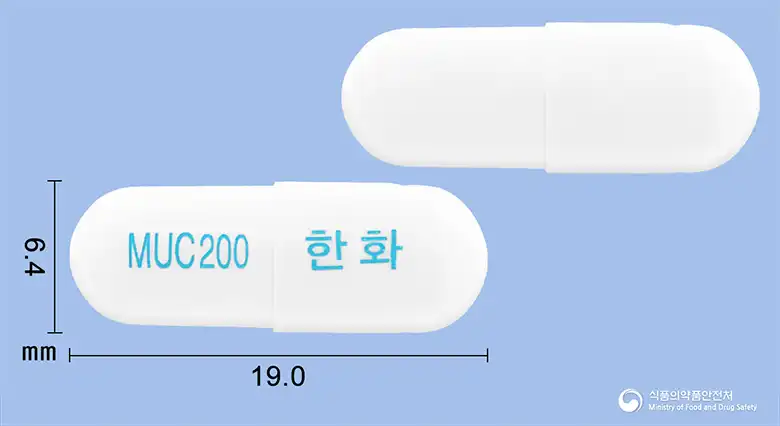
Acetylcysteine 200mg
Hard capsule · OTC medication
Hanwha Pharmaceutical Co., Ltd.
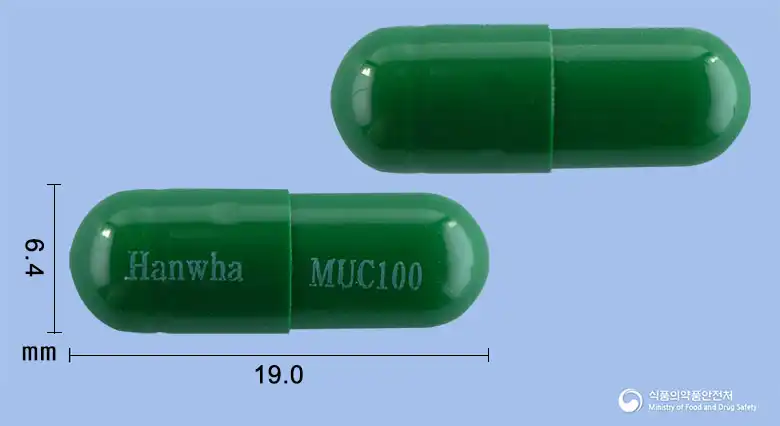
Acetylcysteine 100mg
Hard capsule · OTC medication
Hanwha Pharmaceutical Co., Ltd.
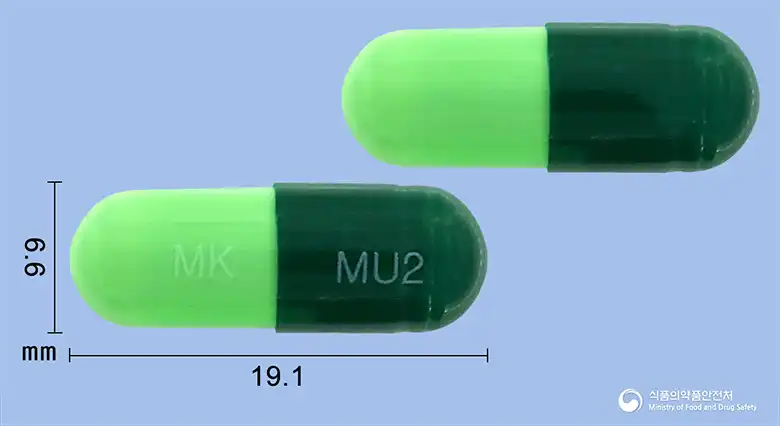
Acetylcysteine 200mg
Hard capsule · OTC medication
(Medica Korea Co., Ltd.)
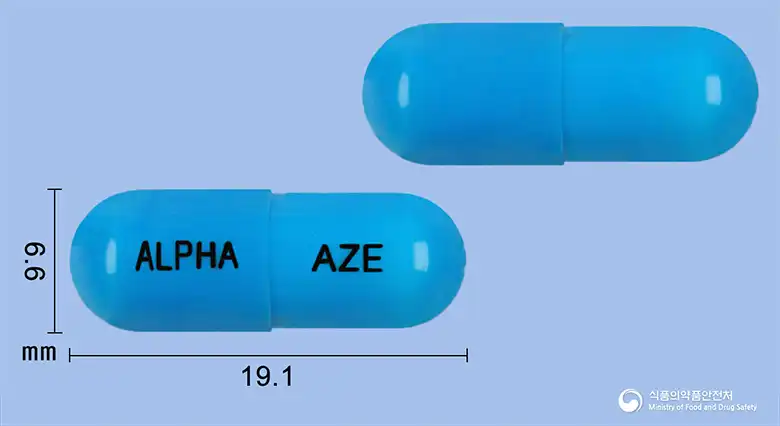
Acetylcysteine 200mg
Hard capsule · OTC medication
Alpha Pharmaceutical Co., Ltd.
Even with the same ingredient, the dose and directions can differ by strength and dosage form. Talk to a doctor or pharmacist before switching from a medication you are already taking.
No questions yet.
For anything that needs medical judgment, consult a doctor or pharmacist.
This drug information is based on data provided by the Korea Ministry of Food and Drug Safety.
Consult a doctor or pharmacist for accurate dosage, administration, and usage instructions.