
 한국어
 English
 日本語
 中文(简体)
Summary
- Main use
- Relief of Parkinson’s disease (such as tremor) and antipsychotic-induced extrapyramidal symptoms (such as movement disorders)
- Who takes it
- Adults
- Adult dose
- 1. Parkinson's disease The dosage should be determined individually, as the optimal dose varies from patient to patient. Young adult patients and patients with postencephalitic parkinsonism may require higher doses than elderly patients and patients with arteriosclerotic parkinsonism. 1) Patients not receiving other drug therapy: Initially, administer 2.5 mg of procyclidine hydrochloride orally 3 times daily after meals. If the patient tolerates the medication well, the dose may be gradually increased to 5 mg 3 times daily, or 5 mg may be administered only with the final dose. In some cases, lower doses may provide better therapeutic effects. Occasionally, patients may have difficulty tolerating a dose at bedtime; in such cases, it is preferable to omit the bedtime dose and divide the total daily dose evenly among daytime doses. To minimize adverse reactions, the medication should preferably be taken during or after meals. 2) Switching from another drug therapy to procyclidine hydrochloride therapy For patients who have been receiving another medication, gradually switch all or part of the other medication to this drug at a dose of 2.5 mg 3 times daily. Gradually increase the dose of this drug to the required level while correspondingly reducing the dose of the other medication or discontinuing it, thereby completing the switch. 2. Extrapyramidal symptoms caused by antipsychotics (phenothiazines, reserpine, etc.) When treating extrapyramidal symptoms caused by antipsychotics during treatment of patients with psychiatric disorders, adjust the dose according to the severity of adverse reactions associated with the antipsychotic. In general, the higher the dose of the antipsychotic, the more severe symptoms such as rigidity and tremor may be. Therefore, adjust the medication dose to meet each patient's needs and relieve symptoms as much as possible. To determine the daily dose of this drug, begin by administering 2.5 mg 3 times daily and increase by up to an additional 2.5 mg per day until symptoms are relieved. In most cases, excellent effects are achieved with a daily dose of 10~20 mg of this drug.
Ingredients
- Manufacturer
- Chodang Pharmaceutical Co., Ltd.
Efficacy & effects
Relief of Parkinson’s disease (such as tremor) and antipsychotic-induced extrapyramidal symptoms (such as movement disorders)
- Tremor
- rigidity
- fatigue
- weakness
- listlessness
- dystonia
- abnormal movements
- akathisia
View approved original textHide original text
This medication is used to improve symptoms such as tremor, rigidity, fatigue, weakness, and listlessness that occur after encephalitis or in atherosclerotic and idiopathic Parkinson's disease. Additionally, it is effective for treating extrapyramidal symptoms such as dystonia, abnormal movements, and akathisia caused by medications like antipsychotics (phenothiazines, reserpine, etc.). Therefore, this medication helps alleviate various motor dysfunction symptoms related to the nervous system.
How to take
Adult dose
1. Parkinson's disease The dosage should be determined individually, as the optimal dose varies from patient to patient. Young adult patients and patients with postencephalitic parkinsonism may require higher doses than elderly patients and patients with arteriosclerotic parkinsonism. 1) Patients not receiving other drug therapy: Initially, administer 2.5 mg of procyclidine hydrochloride orally 3 times daily after meals. If the patient tolerates the medication well, the dose may be gradually increased to 5 mg 3 times daily, or 5 mg may be administered only with the final dose. In some cases, lower doses may provide better therapeutic effects. Occasionally, patients may have difficulty tolerating a dose at bedtime; in such cases, it is preferable to omit the bedtime dose and divide the total daily dose evenly among daytime doses. To minimize adverse reactions, the medication should preferably be taken during or after meals. 2) Switching from another drug therapy to procyclidine hydrochloride therapy For patients who have been receiving another medication, gradually switch all or part of the other medication to this drug at a dose of 2.5 mg 3 times daily. Gradually increase the dose of this drug to the required level while correspondingly reducing the dose of the other medication or discontinuing it, thereby completing the switch. 2. Extrapyramidal symptoms caused by antipsychotics (phenothiazines, reserpine, etc.) When treating extrapyramidal symptoms caused by antipsychotics during treatment of patients with psychiatric disorders, adjust the dose according to the severity of adverse reactions associated with the antipsychotic. In general, the higher the dose of the antipsychotic, the more severe symptoms such as rigidity and tremor may be. Therefore, adjust the medication dose to meet each patient's needs and relieve symptoms as much as possible. To determine the daily dose of this drug, begin by administering 2.5 mg 3 times daily and increase by up to an additional 2.5 mg per day until symptoms are relieved. In most cases, excellent effects are achieved with a daily dose of 10~20 mg of this drug.
Precautions
This medication should not be administered to certain patients under any circumstances. For example, individuals allergic to this medication or its components, patients with angle-closure glaucoma, untreated urinary retention or obstructive uropathy, those with gastrointestinal obstruction, patients with severe myasthenia gravis, serious ulcerative colitis, delayed dyskinesia, early dementia or dementia patients, those with intestinal atony, individuals suffering from alcohol or specific drug addiction, and patients with genetic lactose intolerance should not take this medication. This medication should be used with caution in patients with cardiovascular diseases, or impaired liver or kidney function. Patients with arrhythmias, heart failure, hypertension or hypotension, liver failure, or kidney failure, as well as those exhibiting tachycardia symptoms, require special attention. Elderly patients and those with mental illnesses should also be cautious as this medication may exacerbate psychotic symptoms. While taking this medication, various side effects such as dry mouth, pupil dilation, blurred vision, dizziness, nausea, and constipation can occur. Additionally, mental symptoms such as restlessness, anxiety, confusion, and hallucinations may occur, along with reports of memory impairment or cognitive decline. Skin rashes, reduced sweating, urinary retention, palpitations, and orthostatic hypotension are also potential symptoms to be aware of. It is advisable to avoid driving or operating machinery due to symptoms such as blurred vision, dizziness, or confusion while taking this medication. Patients on nerve relaxants should discuss with their doctor about possible medication adjustments as this medication may worsen symptoms of delayed dyskinesia. Patients with liver or kidney function decline should be cautious as it can affect the metabolism and excretion of this medication. Abrupt discontinuation of this medication may result in rebound Parkinsonian symptoms, so dosages should be gradually adjusted according to a doctor's guidance. Moreover, co-administration with other anticholinergics may increase side effects, hence caution is advised. When taken with alcohol, the central nervous system depressant effect may be intensified, leading to increased drowsiness or dizziness. Interactions with amantadine, antihistamines, tricyclic antidepressants, anticonvulsants, etc., also exist, and consultation with a doctor or pharmacist is necessary. Especially when taking levodopa, caution is needed as its efficacy may be reduced. Safety of this medication in pregnant or breastfeeding women has not been established, so it should only be administered when necessary, and breastfeeding should ideally be stopped during treatment. Children are particularly sensitive to this medication and should only receive it in extraordinary cases, while elderly patients are also susceptible to side effects and should start on a low dose that is gradually adjusted. In case of overdose, severe anticholinergic effects may lead to tachycardia, flushing, warmth, skin dryness, pupil dilation, blurred vision, and in severe cases, coma or seizures may occur. Immediate medical attention should be sought for appropriate treatment, and administration of activated charcoal or symptomatic supportive care may be necessary. This medication should be kept out of reach of children, and transferring it to another container may lead to a decrease in quality or accidents, so caution is advised.
Side effects
Dry lips, pupil dilation, blurred vision, dizziness, grogginess, nausea, vomiting, upper abdominal pain, constipation, agitation, anxiety, irritability, confusion, disorientation, hallucinations, psychosis, memory impairment, cognitive dysfunction, dry mouth, gingivitis, hives, decreased sweating, rash, urinary retention, tachycardia, palpitations, orthostatic hypotension, high fever, muscle weakness, acute suppurative submandibular lymphadenitis, flushing, dry skin, dry mucous membranes, drowsiness, nonsensical speech, hypertension, photophobia, thirst, decreased gastrointestinal motility, fixed pupils, coma, seizures, psychosis, erythema, abnormal tension response, ataxia, weakness, respiratory depression, cardiac arrhythmia, rhabdomyolysis
Not everyone experiences these, and they can vary from person to person.
Storage
This medication should be stored in a closed container to prevent exposure to air or moisture, and it is best to keep it at room temperature, not in excessively hot or cold places.
Appearance and packaging
Appearance
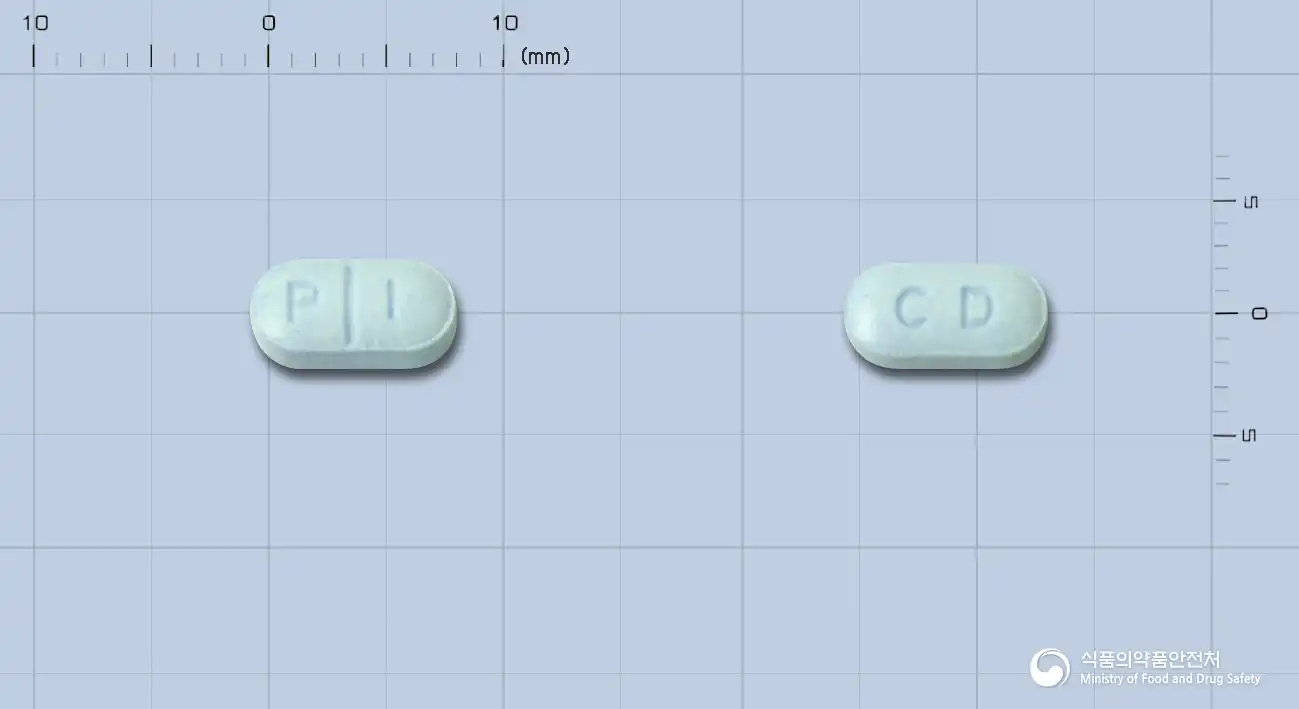
Pale blue oval tablet
Package unit
30 tablets/bottle, 500 tablets/bottle
Questions about this medicine
No questions yet.
For anything that needs medical judgment, consult a doctor or pharmacist.