
 한국어
한국어 English
 日本語
日本語 中文(简体)
 Viewing now
Vancomycin 250 mg Capsules (Vancomycin Hydrochloride)
Vancomycin Hydrochloride 250mg
Hard capsule · Prescription medication
Korea United Pharm., Ltd.
MFDS item code 199801540 · Notified 1998.11.30 · Insurance code 644301290
Treatment of enterocolitis and pseudomembranous colitis caused by Staphylococcus and Clostridium difficile.
This medication is used to treat enterocolitis caused by Staphylococcus and antibiotic-associated pseudomembranous colitis due to Clostridium difficile. The injectable form is effective for treating various severe infections caused by streptococci, staphylococci, Clostridium difficile, diphtheroids, etc. It is also utilized for infections like endocarditis, osteomyelitis, arthritis, peritonitis, meningitis, as well as respiratory infections such as pneumonia, sepsis, pulmonary abscess, and empyema. It particularly aids in the recovery of patients with severe infections that are difficult to treat with penicillins or cephalosporins. Oral administration can also treat antibiotic-associated pseudomembranous colitis. Therefore, this medication is reliably used for the treatment of various bacterial infections.
(Capsules) 500 mg (equivalent) of vancomycin per day, divided for oral administration for 7-10 days. In severe cases, 2 g (equivalent) divided into 3-4 doses per day may be used, with a total daily dose not exceeding 2 g. (Injectable) 500 mg (equivalent) intravenously every 6 hours, or 1 g (equivalent) intravenously every 12 hours. Generally, the oral dose should be divided into 500-2000 mg per day for 3-4 doses.
(Capsules) 40 mg (equivalent) per day per kg of body weight, divided into 3–4 doses for 7–10 days. The total daily dose must not exceed 2 g, and should be adjusted appropriately based on age and symptoms. (Injectable)
This drug should not be administered to specific patients. For example, patients who have had allergic reactions to this drug or its components, those with lactose intolerance or genetic lactose metabolism disorders should not use this medication. Certain patients require caution when using this drug. Patients with allergies to peptide or aminoglycoside antibiotics, those with a history of hearing loss, patients with kidney function problems, the elderly, and those allergic to specific dyes should use this drug carefully. During the administration of this drug, serious side effects may occur, so careful monitoring is necessary. For instance, symptoms such as hypotension or dizziness, blood cell count reduction, hearing loss, worsening kidney function, skin rashes, or severe skin reactions have been reported. If such symptoms occur, the medication should be discontinued immediately and appropriate treatment must be sought. To prevent the emergence of resistant bacteria, it is advisable to perform sensitivity tests and use this medication only for the necessary minimum duration. Additionally, repeated oral administration of this drug may lead to severe intestinal diseases such as pseudomembranous colitis; therefore, caution is advised. Due to the risk of auditory toxicity, especially for patients who already have hearing loss or are taking ototoxic medications, regular hearing checks are necessary. Patients with impaired kidney function or those using aminoglycosides should have their kidney function closely monitored. Long-term use of this drug may lead to overgrowth of non-sensitive bacteria, so administration should be stopped if symptoms of dysbiosis occur. Severe skin reactions may occur, therefore if symptoms such as rashes, blisters, or mucosal damage develop, drug usage should be stopped immediately. If diarrhea symptoms appear following antibiotic use, the possibility of Clostridium difficile infection should be suspected, and appropriate treatment should be sought in this case. This medication may affect blood coagulation; therefore, patients taking anticoagulants such as warfarin must frequently check their status with blood tests and adjust the drug dosage if necessary. Women who are pregnant or breastfeeding should use this medication cautiously since its safety has not been definitively established. Since this drug can be transmitted through breast milk and affect the infant, caution is needed during breastfeeding. Elderly patients require special caution during administration due to physiological changes like reduced kidney function, which can increase the risk of drug accumulation in the body. In the case of overdose, kidney function supportive treatment is necessary, and this medication is not easily removed by standard dialysis; specialized treatment is required. This drug works by interfering with the synthesis of bacterial cell walls, and resistance has been reported in some bacteria, so this should be considered during treatment.
Hives, severe swelling (edema), chest tightness, difficulty breathing, cold sweat, pallor (shock symptoms), severe allergic reactions, high fever accompanied by severe rash, blisters, skin peeling, mouth/eye mucosal pain (including Stevens-Johnson syndrome, toxic epidermal necrolysis, drug rash), severe skin reactions, shortness of breath or breathing difficulties, asthma attacks, respiratory issues accompanied by cough + fever (including wheezing, dyspnea)
Oral abnormalities, dizziness, changes in stool, tinnitus, sweating, thrombocytopenia, eosinophilia, agranulocytosis, thrombocytopenia, liver dysfunction, stomatitis, glossitis, hypotension, drug-induced fever, flushing, nausea, loss of appetite, chills, cold sensation, itching, exfoliative dermatitis, muscle cramps in the chest and back, upper body flushing, rash, hives, elevated serum creatinine or BUN levels, azotemia, hearing loss (due to overdose, history of hearing loss)
Not everyone experiences these, and they can vary from person to person.
This drug should be stored in a tightly sealed container to prevent moisture and air ingress. It is advisable to maintain a storage temperature between 1 and 30 degrees Celsius to preserve the drug's efficacy and safety.
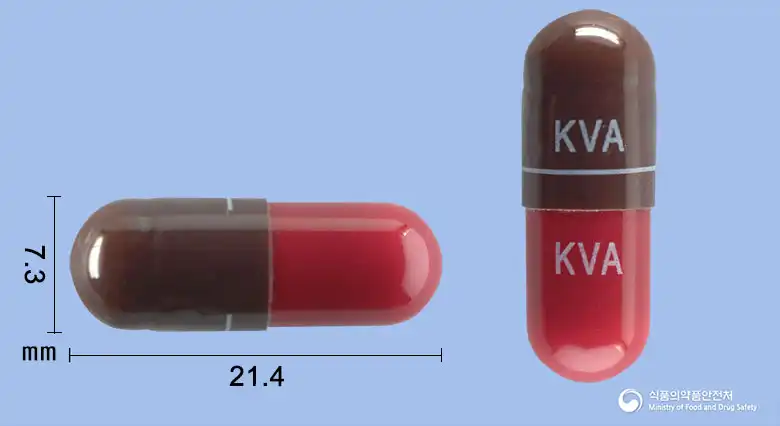
Capsule filled with light brown powder, dark brown upper part, and dark purple lower part.
For domestic use - 30 capsules/bottle, for export - 50 capsules/bottle, for export - 30 capsules/bottle, for export - 30 capsules/PTP [30 capsules (10 capsules/PTP x 3)], for export - 40 capsules/PTP [40 capsules (10 capsules/PTP x 4)]
Even with the same ingredient, strength, dosage form and how it is taken can differ.
Viewing nowVancomycin Hydrochloride 250mg
Hard capsule · Prescription medication
Korea United Pharm., Ltd.
Vancomycin Hydrochloride 500mg
Injections · Prescription medication
HK Innoen Co., Ltd.
Vancomycin Hydrochloride 500mg
Injections · Prescription medication
Aprogen Pharmaceuticals Co., Ltd.
Vancomycin Hydrochloride 500mg
Injections · Prescription medication
Yuyoung Pharmaceutical Co., Ltd.
Vancomycin Hydrochloride 500mg
Injections · Prescription medication
Oskorea Pharmaceutical Co., Ltd.
Vancomycin Hydrochloride
Prescription medication
International Pharmaceutical Co., Ltd.
Vancomycin Hydrochloride 1g
Injections · Prescription medication
Aprogen Biosciences, Co., Ltd.
Vancomycin Hydrochloride 1g
Injections · Prescription medication
HK Innoen Co., Ltd.
Even with the same ingredient, the dose and directions can differ by strength and dosage form. Talk to a doctor or pharmacist before switching from a medication you are already taking.
No questions yet.
For anything that needs medical judgment, consult a doctor or pharmacist.
This drug information is based on data provided by the Korea Ministry of Food and Drug Safety.
Consult a doctor or pharmacist for accurate dosage, administration, and usage instructions.