
 한국어
 English
 日本語
 中文(简体)
 Viewing now
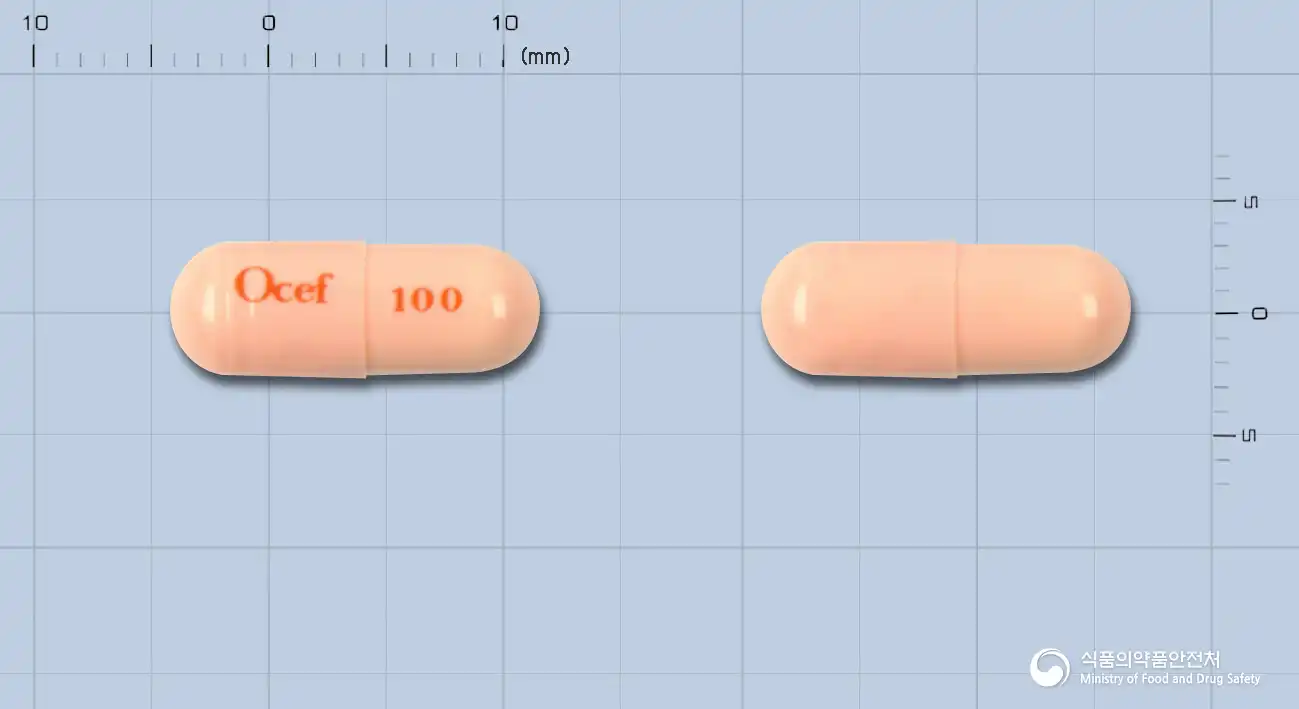
Omnicef Capsule 100 mg (Cefdinir)
Cefdinir 100mg
Hard capsule · Prescription medication
Jeil Pharmaceutical Co., Ltd.
MFDS item code 199800677 · Approved 1998.12.05 · Insurance code 645400850
Treatment of respiratory, ear, nose and throat, ophthalmic, skin and soft tissue, genitourinary, and dental infections
This medication is effective against various strains of bacteria and is used for conditions such as lymphangitis, chronic pyoderma, mastitis, perianal abscess, and superficial secondary infections of traumatic and surgical wounds. It is also effective for respiratory infections such as pharyngitis, acute bronchitis, tonsillitis, and pneumonia. It is widely used for urogenital infections, including pyelonephritis, cystitis, and gonococcal urethritis, as well as gynecological infections such as adnexitis, intrauterine infections, and Bartholin's gland inflammation. Additionally, it treats various inflammatory diseases such as chalazia, folliculitis, otitis externa, otitis media, and sinusitis. This medication is also effective for dental infections like periodontitis, pericoronitis, and alveolitis. Overall, this drug is used to improve various types of bacterial infections.
Adults: Administer 100 mg (potency) of cefdinir orally per dose 3 times daily. For patients on hemodialysis, administration of 100 mg (potency) once daily is recommended. The dose may be adjusted as appropriate according to symptoms.
This medication should not be used in patients who have previously experienced shock due to this drug or who have had an allergy to this drug, its components, or cephalosporin antibiotics. Patients with a history of allergy to penicillin antibiotics should be cautious as there may be cross-reactivity. Caution is also advised for those who have a tendency to show allergic symptoms such as asthma, rash, or urticaria. Patients with severely impaired kidney function may require dosage adjustments to avoid prolonged drug retention and potential side effects. Patients who have difficulty swallowing the medication or are in poor general condition should be closely monitored for vitamin K deficiency symptoms. Elderly patients may experience increased adverse reactions due to reduced physiological function, so dose and administration intervals should be adjusted carefully. Patients with a history of colitis should be cautious as this medication may cause a recurrence of pseudomembranous colitis. If symptoms such as shock, difficulty breathing, skin rash, fever, vomiting, diarrhea, or dizziness occur while using this medication, it should be discontinued immediately, and medical personnel should be informed. Particularly, if blistering or severe pain, fever, or headache occurs on the skin, it may indicate a serious skin reaction and requires immediate treatment. Regular blood tests should be conducted to monitor any decrease in white blood cells or platelets. If abdominal pain or frequent diarrhea occurs, it may indicate pseudomembranous colitis, so immediate consultation with a healthcare provider is needed. Regular checks and observations are essential as liver or kidney function may be affected. This medication may interact with other prescriptions, so care should be taken when taking iron supplements, warfarin, antacids, or probenecid. Women who are pregnant or could become pregnant should carefully consider the benefits and risks of using this medication. Safety in children, infants, and newborns has not been adequately confirmed, so special caution is warranted. In cases of overdose, symptoms such as vomiting, diarrhea, and convulsions may occur, with severe cases possibly requiring hemodialysis to remove the medication. It is important to conduct sensitivity tests and administer this drug only for the necessary minimum duration to prevent antimicrobial resistance. This medication should be stored in a closed container away from moisture or direct sunlight and out of reach of children.
Not everyone experiences these, and they can vary from person to person.
This medication may be sensitive to air and moisture; therefore, it must be stored in a tightly sealed container. It is best to maintain storage temperature between 1 degree and 30 degrees Celsius at room temperature to preserve its efficacy for a longer period.
A hard capsule with pink upper and lower halves containing light yellow or yellow granules.
30 capsules/bottle, 100 capsules/bottle
Even with the same ingredient, strength, dosage form and how it is taken can differ.
Viewing nowCefdinir 100mg
Hard capsule · Prescription medication
Jeil Pharmaceutical Co., Ltd.
Cefdinir 100mg
Prescription medication
Jeil Pharmaceutical Co., Ltd.
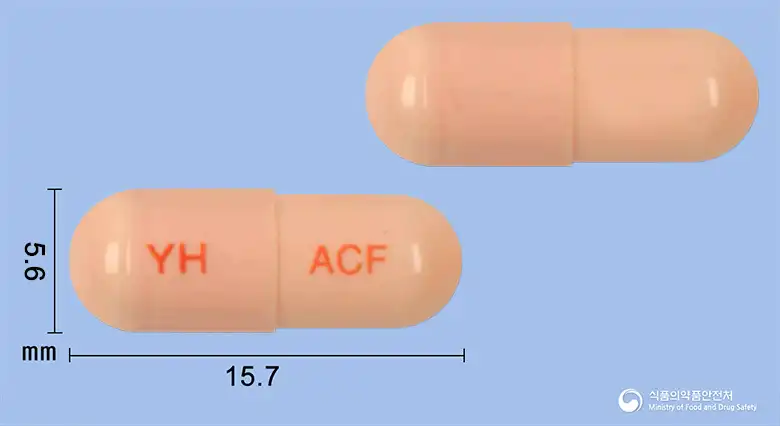
Cefdinir 100mg
Hard capsule · Prescription medication
Yuhan Corporation
Cefdinir 100mg
Prescription medication
Yuhan Corporation
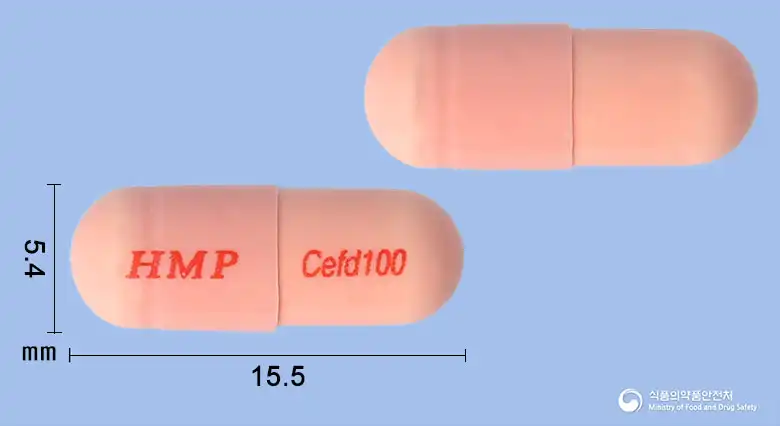
Cefdinir Monohydrate 100mg
Hard capsule · Prescription medication
Hanmi Pharmaceutical Co., Ltd.
Cefdinir 100mg
Prescription medication
Hanmi Pharmaceutical Co., Ltd.
Cefdinir Monohydrate 100mg
Hard capsule · Prescription medication
JW Pharmaceutical Co., Ltd.
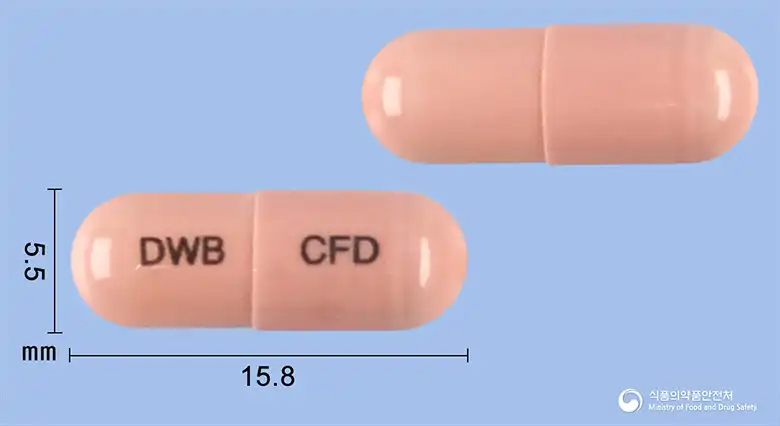
Cefdinir 100mg
Hard capsule · Prescription medication
Daewoong Bio Co., Ltd.
Even with the same ingredient, the dose and directions can differ by strength and dosage form. Talk to a doctor or pharmacist before switching from a medication you are already taking.
No questions yet.
For anything that needs medical judgment, consult a doctor or pharmacist.
This drug information is based on data provided by the Korea Ministry of Food and Drug Safety.
Consult a doctor or pharmacist for accurate dosage, administration, and usage instructions.