
 한국어
 English
 日本語
 中文(简体)
 Viewing nowCombination
UFT Capsules
Tegafur 100mg · Uracil 224mg
Hard capsule · Prescription medication · Combination
Chungju Pharmaceutical Co., Ltd.
MFDS item code 199700694 · Notified 1997.09.12 · Insurance code 645400890
Relief of symptoms of cancer (colorectal, gastric, breast cancer, etc.)
This medication is used to relieve the subjective and objective symptoms of patients with head and neck cancer, gastric cancer, colon and rectal cancer, liver cancer, gallbladder and bile duct cancer, pancreatic cancer, lung cancer, breast cancer, bladder cancer, prostate cancer, and cervical cancer.
(Capsules) The usual dose is 3~6 capsules per day, administered orally in 2~3 divided doses. For cervical cancer, the usual dose is 6 capsules per day, administered orally in 2~3 divided doses. (Granules) The usual dose is an amount equivalent to 300~600 mg of tegafur per day, administered orally in 2~3 divided doses. For cervical cancer, the usual dose is an amount equivalent to 600 mg of tegafur per day, administered orally in 2~3 divided doses.
This medication should not be used in conjunction with antiviral drugs such as Sorivudine or fluorouracil drugs, as serious blood disorders may occur. Regular liver function tests should be conducted, and the patient's condition should be monitored closely, as this drug can cause liver dysfunction; if abnormalities are found, the treatment should be discontinued immediately, and appropriate care should be sought. Serious side effects may also occur when used in combination with certain combination anticancer agents, so it should not be used together with this medication. Patients with hypersensitivity to this drug, pregnant women or women of childbearing age, nursing mothers, children, and those with specific enzyme deficiencies should not use this drug. Patients with weak kidney or liver function, the elderly, those with infections, or gastrointestinal disorders should use this drug cautiously, as the risk of side effects is high, and it is important to consult with healthcare professionals adequately. Various side effects may occur during the course of taking this drug, such as dehydration, severe diarrhea, blood disorders, liver and kidney dysfunction, digestive symptoms, skin rashes, and neurological disorders; symptoms should be monitored carefully, and healthcare professionals should be informed immediately if abnormalities arise. Regular blood tests and liver and kidney function tests should be conducted to continuously check the patient's status, and it is especially important to have frequent check-ups during the initial treatment phase. This drug may interact with certain other medications, so if you are taking other drugs, you must inform your healthcare professional, especially if used together with anticancer drugs, antiviral agents, or warfarin. Pregnant or nursing women are advised not to use this medication, and contraception should be practiced during the treatment period and for a certain period afterward. Special caution is required when administering to children or the elderly, as there is a higher risk of side effects. In case of overdose, serious side effects such as vomiting, diarrhea, gastric ulcers, and blood disorders may occur; there is no specific antidote, so appropriate treatment should be sought immediately at a hospital. This medication should be swallowed whole without chewing; caution is also necessary for long-term use, as changes may occur in brain tissue with prolonged use. Lastly, during the course of this medication, it is crucial to receive regular tests as directed by healthcare professionals and to consult immediately if any abnormal symptoms occur to ensure safe continuity of treatment.
Not everyone experiences these, and they can vary from person to person.
This medication should be stored in a tightly sealed container to prevent air exposure, preferably at room temperature between 1°C and 30°C. Storing it this way helps maintain the effectiveness of the medication for a longer period.
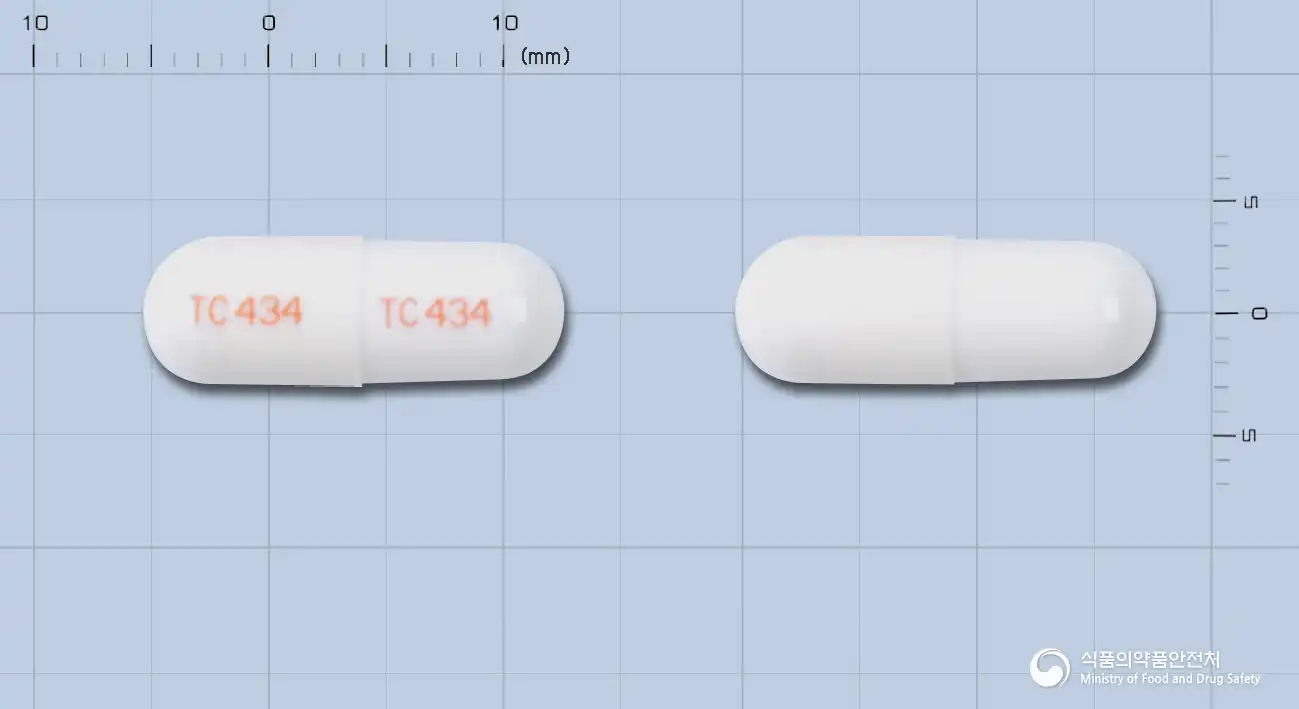
The product is a hard capsule containing a white powder inside a white upper and lower part.
90 capsules (10 capsules/PTP*9)
Even with the same ingredient, strength, dosage form and how it is taken can differ.
Even with the same ingredient, the dose and directions can differ by strength and dosage form. Talk to a doctor or pharmacist before switching from a medication you are already taking.
No questions yet.
For anything that needs medical judgment, consult a doctor or pharmacist.
This drug information is based on data provided by the Korea Ministry of Food and Drug Safety.
Consult a doctor or pharmacist for accurate dosage, administration, and usage instructions.