
 한국어
 English
 日本語
 中文(简体)
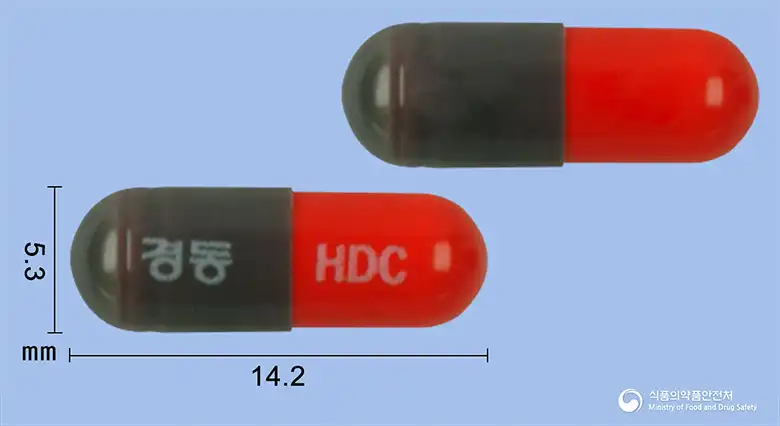 Viewing now
Hedac Capsule (Flunarizine Hydrochloride)
Flunarizine Hydrochloride 5.9mg
Hard capsule · Prescription medication
Kyungdong Pharmaceutical Co., Ltd.
MFDS item code 199201939 · Notified 1992.08.12 · Insurance code 648102410
Treatment of severe, refractory migraine and dizziness caused by vestibular dysfunction
This medication is used for severe refractory migraines and dizziness caused by functional disorders of the vestibular system.
1. Severe, refractory migraine Initial dose: Administer 10㎎ of flunarizine once daily in the evening to adults under 65 years of age (5㎎ per dose for those 65 years of age and older). Discontinue treatment if depression, extrapyramidal symptoms, other severe adverse reactions occur, or if symptoms do not improve after 2 months of treatment. Maintenance dose: If maintenance therapy is needed, reduce the dose by administering 10㎎ of this medicine per dose every other day (5㎎ per dose for those 65 years of age and older), or 10㎎ once daily for 5 days per week (5㎎ per dose for those 65 years of age and older), with a 2-day break. In addition, as maintenance therapy to prevent migraine, discontinue treatment 6 months after starting the initial dose, even if migraine symptoms have not occurred; restart from the initial dose only if symptoms recur. 2. Dizziness due to functional disorders of the vestibular system: Use the same dosage and administration as for migraine, but the initial dose should not be continued longer than the period needed to control dizziness (generally 2 months). In addition, discontinue treatment if there is no clear improvement in symptoms after 1 month of treatment for chronic dizziness or 2 months for paroxysmal dizziness. The dose may be adjusted according to age and symptoms.
This medication should not be used in patients with unresolved intracranial hemorrhage, patients with acute myocardial infarction, patients with Parkinson's disease, or patients who have depressive symptoms or a history of depression. Women who are pregnant or may become pregnant should not take this medication, nor should patients with lactose intolerance or specific genetic issues. Patients with impaired liver function or elderly patients should use this medication with great caution. This medication may cause side effects such as drowsiness, depression, increased appetite, constipation, muscle pain, menstrual irregularities, and weight gain, thus caution is advised. Additionally, rare symptoms such as nausea, fatigue, weakness, headache, dizziness, edema, and excessive milk secretion may occur. During treatment, due to potential alterations in motor function or facial expressions, and depressive symptoms, patients' conditions should be monitored closely, and if such symptoms occur, the medication should be discontinued immediately. This medication may cause drowsiness or weakness, so it is advisable to avoid driving vehicles or operating dangerous machinery. When taken with antihypertensive drugs, dosage adjustments may be needed, and caution should be exercised when taken with alcohol, tranquilizers, or sleeping pills as sedation may be intensified. It is advisable to avoid this medication during pregnancy or breastfeeding; if unavoidable, cessation of breastfeeding is recommended. The safety in children has not been established, so its use is not recommended. In case of overdose, symptoms such as sedation, excitement, rapid heart rate may occur, and immediate medical attention should be sought.
Not everyone experiences these, and they can vary from person to person.
This medication should be stored in a tightly closed container to prevent air or moisture from entering, and it is best to keep it at room temperature, neither too hot nor too cold.
A hard capsule with a gray top and a light pink bottom containing a white powder.
For domestic use: 30 capsules/bottle, 100 capsules/bottle; for export: 60 capsules (10 capsules/PTP X 6), 100 capsules (10 capsules/PTP X 10)
Even with the same ingredient, strength, dosage form and how it is taken can differ.
Viewing nowFlunarizine Hydrochloride 5.9mg
Hard capsule · Prescription medication
Kyungdong Pharmaceutical Co., Ltd.
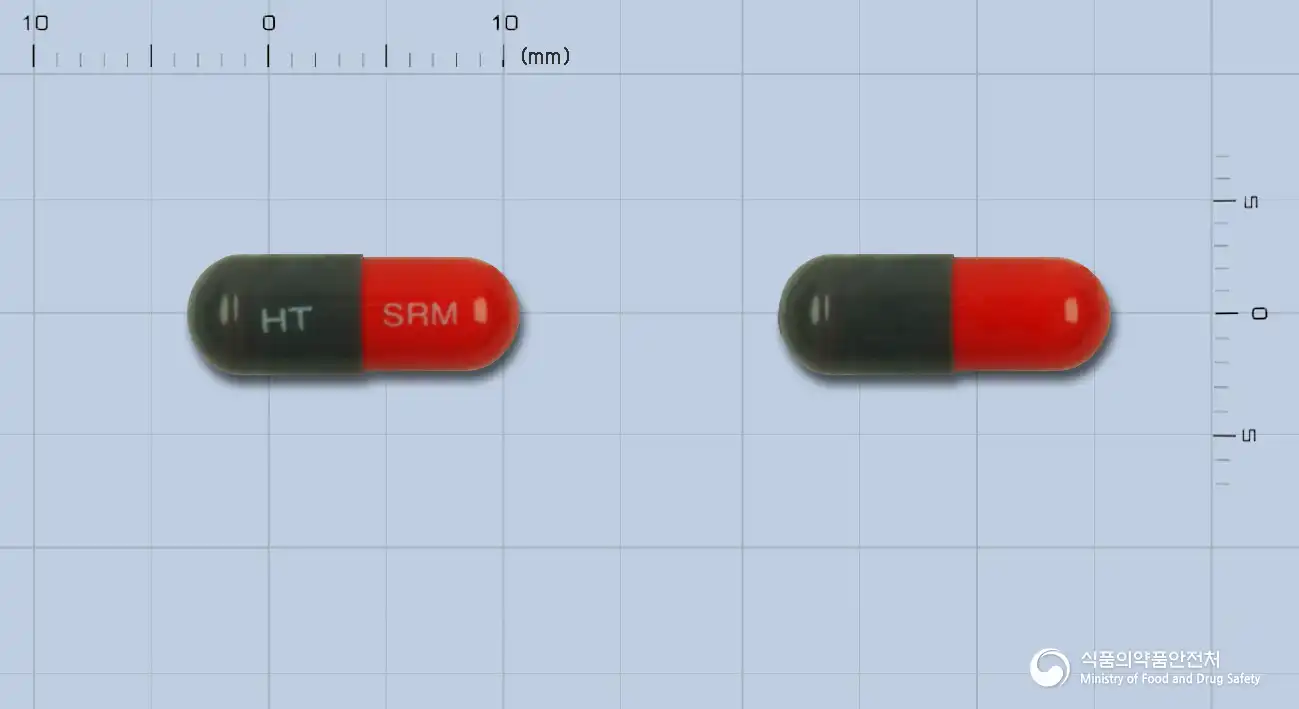
Flunarizine Hydrochloride 5.9mg
Hard capsule · Prescription medication
Korea Hutex Pharmaceutical Co., Ltd.
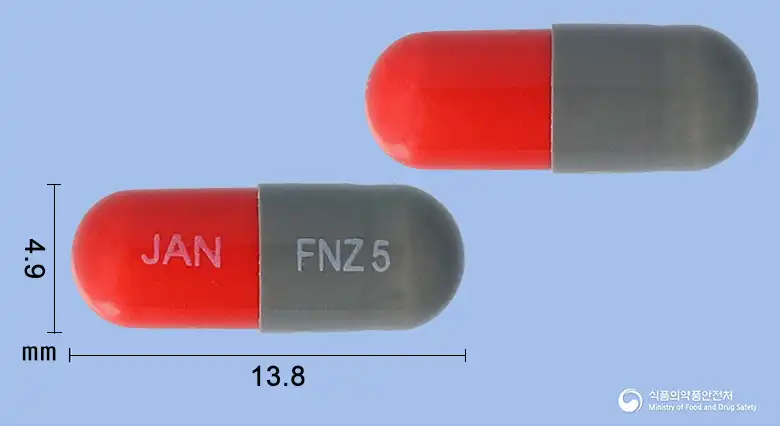
Flunarizine Hydrochloride 5.9mg
Hard capsule · Prescription medication
Korea Janssen Co., Ltd.
Even with the same ingredient, the dose and directions can differ by strength and dosage form. Talk to a doctor or pharmacist before switching from a medication you are already taking.
No questions yet.
For anything that needs medical judgment, consult a doctor or pharmacist.
This drug information is based on data provided by the Korea Ministry of Food and Drug Safety.
Consult a doctor or pharmacist for accurate dosage, administration, and usage instructions.