
 한국어
한국어 English
 日本語
日本語 中文(简体)
 Viewing now
Trodon Capsule (Tramadol Hydrochloride)
Tramadol Hydrochloride 50mg
Hard capsule · Prescription medication
Aju Pharmaceutical Co., Ltd.
MFDS item code 198900630 · Notified 1989.03.15 · Insurance code 654001730
Relief of severe and moderate acute chronic pain (cancer, pain from diagnosis and surgery)
This medication is used for the relief of severe and moderate acute chronic pain, such as pain occurring from various cancers and pain following diagnosis or surgery.
Administer 50mg orally as tramadol hydrochloride, and if pain relief is inadequate after 30-60 minutes, an additional 50mg may be given. The maximum dosage per day is 400mg. For adults aged 75 or younger, dosage adjustment is not necessary. For individuals over 75, the dosing interval may need to be adjusted as needed. For patients with renal or hepatic impairment, extending the dosing interval should be considered due to delayed excretion.
This medication should not be taken in doses exceeding the recommended amount, as this may cause seizures; therefore, the prescribed dosage must be strictly followed. Taking this medication with other drugs that may increase seizure risk may increase the likelihood of seizures; patients with a history of epilepsy or those at risk of seizures should consult their doctor before taking. Long-term use of this medication may lead to psychological and physical dependence, so patients with a history of drug abuse or dependence should use it for a short duration under strict supervision. Concurrent use with alcohol or central nervous system depressants (such as benzodiazepines) can cause severe drowsiness, respiratory depression, coma, or even death; therefore, this combination should be avoided or used under strict medical supervision. Individuals with a genetic profile that metabolizes this drug very rapidly may have increased plasma concentrations of the active metabolite, leading to a higher risk of respiratory depression; in such cases, they should discuss dosage adjustment or alternative medications with their doctor. This medication should not be administered to children under 12 years of age or to adolescents under 18 years old who have undergone specific surgeries (such as tonsillectomy or adenoidectomy). Adolescents between 12 and 18 years of age should also avoid the medication if they are at risk of respiratory depression. This medication is not to be used in cases of acute alcohol intoxication, severe respiratory depression, head injury, patients on MAO inhibitors, severe liver or kidney impairment, and in pregnant or breastfeeding women. When administering this medication, careful consideration must be given to interactions with other opioids such as morphine, the patient's history of seizures, and whether they consume alcohol. This medication can cause various side effects, particularly seizures, respiratory depression, mental disturbances, and allergic reactions, so if any adverse symptoms occur, patients should consult a doctor immediately. Drowsiness, dizziness, and other symptoms may occur during use; therefore, driving or operating dangerous machinery should be avoided. Long-term use may lead to tolerance, requiring an increase in dosage, and sudden discontinuation may cause withdrawal symptoms; therefore, dosage should be gradually reduced under a doctor’s guidance. When used with other central nervous system depressants, the sedative effects may be exacerbated, which may be dangerous; hence, dose adjustment and close monitoring are necessary. Pregnant or breastfeeding women should avoid taking this medication; particularly during breastfeeding, this medication may be transmitted through breast milk, posing risks such as respiratory depression in the baby. In cases of overdose, serious respiratory depression and seizures may occur, and emergency treatment should be sought, with naloxone potentially being used as an antidote. This medication should be kept out of reach of children and stored in its original container to prevent misuse or deterioration.
Hives, severe swelling (edema), chest tightness, difficulty breathing, cold sweat, pallor, severe rash accompanied by high fever, blisters, peeling of the skin, mucosal pain in the mouth/eyes, difficulty breathing or shortness of breath, asthma attack, respiratory abnormalities accompanied by cough + fever, yellowing of the skin or eyes (jaundice), profound lethargy, sudden and severe headaches, thunderclap headache, seizures, altered consciousness, vision disturbances, paralysis, urination
Not everyone experiences these, and they can vary from person to person.
This medication may be sensitive to light; therefore, it should be stored in an opaque, airtight container to prevent light exposure. Storing it this way can help maintain the efficacy of the medication.
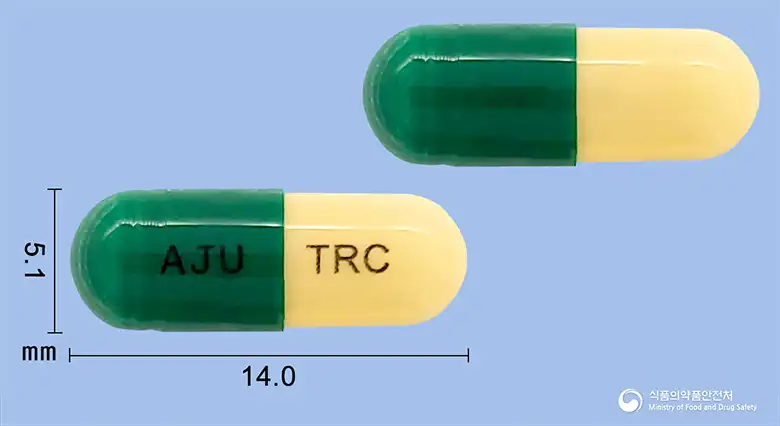
A hard capsule with white powder and granules mixed in, with a green upper part and a yellowish lower part. (For export: A hard capsule with white powder and granules mixed in, with a sky-blue upper part and a white lower part.)
30 capsules/bottle, 500 capsules/bottle
Even with the same ingredient, strength, dosage form and how it is taken can differ.
Viewing nowTramadol Hydrochloride 50mg
Hard capsule · Prescription medication
Aju Pharmaceutical Co., Ltd.
Tramadol Hydrochloride 50mg
Prescription medication
(Yuhan Corporation)

Tramadol Hydrochloride 50mg
Hard capsule · Prescription medication
Yuhan Corporation
Tramadol Hydrochloride 50mg
Injections · Prescription medication
Hanol BioPharma Co., Ltd.
Tramadol Hydrochloride 50mg
Prescription medication
Il Sung IS Co., Ltd.
Tramadol Hydrochloride 100mg
Prescription medication
Il Sung IS Co., Ltd.
Tramadol Hydrochloride 50mg
Prescription medication
Ilseong IS Co., Ltd.
Tramadol Hydrochloride 50mg
Injections · Prescription medication
Donggwang Pharmaceutical Co., Ltd.
Even with the same ingredient, the dose and directions can differ by strength and dosage form. Talk to a doctor or pharmacist before switching from a medication you are already taking.
No questions yet.
For anything that needs medical judgment, consult a doctor or pharmacist.
This drug information is based on data provided by the Korea Ministry of Food and Drug Safety.
Consult a doctor or pharmacist for accurate dosage, administration, and usage instructions.