
 한국어
한국어 English
 日本語
日本語 中文(简体)
Dosage form image
Viewing nowNucomit Liquid (Acetylcysteine)
Acetylcysteine 200mg
Solution · OTC medication
(Co., Ltd.) Celltrion Pharm
MFDS item code 198600267 · Notified 1986.04.22 · Insurance code 693900211
Improvement of difficulty in expectoration (e.g., bronchial asthma, chronic bronchitis) and treatment effects before and after bronchial examinations
This medication is used to relieve symptoms of difficulty in expectoration in respiratory diseases such as bronchial asthma, chronic bronchitis, and pneumonia. It also helps in pre- and post-procedures and surgeries related to the bronchi, such as bronchography, bronchoscopy, lung cancer cytological examinations, and tracheostomy. This helps improve respiratory health and effectively manage symptoms.
1. Nebulization therapy using face masks, mouthpieces, or tracheostomy tubes: Nebulize 1 to 10 mL of this drug every 2 to 6 hours. The recommended dosage is 3 to 5 mL nebulized 3 to 4 times a day. 2. Nebulization therapy using a tent or inhaler (Croupette): This is a method used under special circumstances, depending on the patient's individual needs and convenience of administration. This method may require large volumes of solution, sometimes up to 300 mL during a single treatment. The recommended dosage should maintain a very dense mist within the tent or inhaler throughout the treatment duration. Intermittent or prolonged administration is preferred. 3. Direct administration: 1) Administer 1 to 2 mL of this drug every hour. 2) For regular treatment of patients with tracheostomy, administer 1 to 2 mL of this drug through the tracheostomy every 1 to 4 hours. 3) For local anesthesia and direct incisions into the airway to directly administer small plastic catheters into specific parts of pulmonary airway structures, administer 2 to 5 mL of this drug every 1 to 4 hours using a syringe connected to the catheter. 4) When using a percutaneous catheter in the bronchi, administer 1 to 2 mL of this drug every 1 to 4 hours using a syringe connected to the catheter. 4. For diagnostic bronchography: Prior to bronchography, administer 1 to 2 mL of this drug by nebulization or direct bronchial instillation 2 to 3 times.
This drug should not be taken by anyone who has an allergic reaction to this drug or its components. Those with ulcers in the stomach or duodenum and children under the age of 2 should also avoid use. Women who are pregnant or may become pregnant should only take it after consulting with a doctor. Nursing mothers should be cautious about taking this medication due to uncertainty whether it passes into breast milk. If symptoms such as nausea, vomiting, inflammation of the mouth, heartburn, or diarrhea occur during use, discontinue use immediately and consult a specialist. If allergic symptoms such as hives, itching, rash, headache, tinnitus, or dyspnea occur, cease use immediately and consult a doctor. This medication may reduce the efficacy of certain antibiotics, so it is advisable to take it with an interval of at least 2 hours from the antibiotics. Avoid mixing other medications into this drug solution. Store out of reach of children, and keep in the original container to prevent misuse or quality degradation. Caution is required when the inhalation formulation is used by patients with bronchial asthma or impaired respiratory function, as bronchospasm may occur. The safety of the inhalation formulation has not been established in elderly patients or children, and should only be used after consulting a specialist. Observational monitoring may be necessary as mild drowsiness, nausea, vomiting, and loss of appetite can occasionally occur after inhalation. If bronchial secretions increase and cannot be naturally expelled, mechanical methods or position changes should be used to assist. The inhalation formulation may reduce the effectiveness of antibiotics, so they should be taken separately or by other means of administration. This medication should not be used as an injection or eye drop; after using a nebulizer, it is recommended to wash the face mask with water to remove its residue. Nebulizer parts must be cleaned immediately after use to prevent corrosion or blockages due to leftover medication. The nebulized solution may become more concentrated over time, so it is safer and more effective to use it diluted.
Nausea, vomiting, stomatitis, heartburn, diarrhea, itching, rash, headache, tinnitus, tachycardia, hypertension, mild drowsiness in the gastrointestinal tract, loss of appetite, hemoptysis, chills, fever, nasal discharge, drowsiness, chest tightness, airway and bronchial irritation, discoloration symptoms
Not everyone experiences these, and they can vary from person to person.
This medication should be discussed with a doctor or pharmacist if taken with antibiotics, tetracycline, erythromycin, bromhexine, and other substances.
This medication should be stored in a sealed container to prevent exposure to air and is best kept at room temperature between 1 to 30 degrees Celsius. Additionally, it is important to avoid direct sunlight and store in a dark place to maintain the drug's efficacy.
A colorless and transparent liquid contained in a colorless and transparent ampoule
10 ampoules (1 ampoule/4mL * 10 pieces)
Even with the same ingredient, strength, dosage form and how it is taken can differ.
Acetylcysteine 200mg
Solution · OTC medication
(Co., Ltd.) Celltrion Pharm
Acetylcysteine 20g
OTC medication
Boryeong Co., Ltd.
Acetylcysteine 200mg
OTC medication
Hanwha Pharmaceutical Co., Ltd.
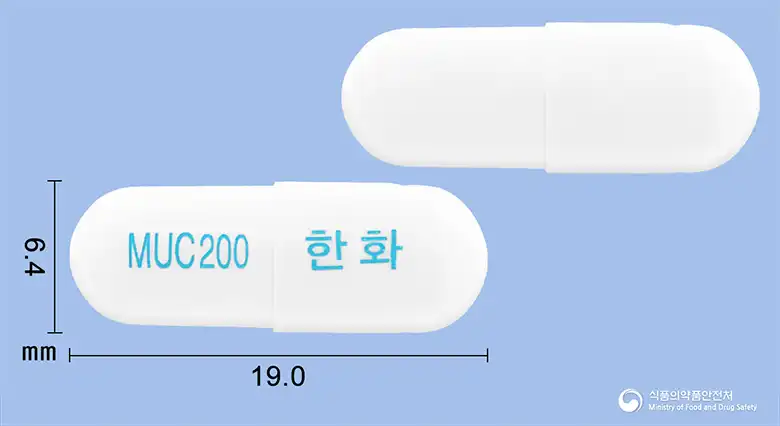
Acetylcysteine 200mg
Hard capsule · OTC medication
Hanwha Pharmaceutical Co., Ltd.
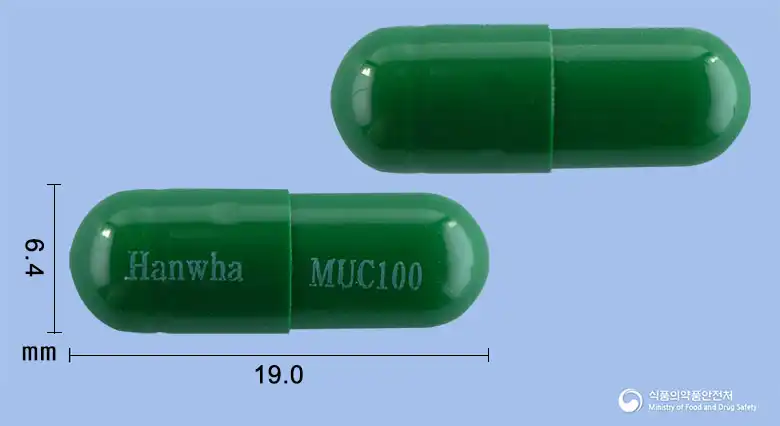
Acetylcysteine 100mg
Hard capsule · OTC medication
Hanwha Pharmaceutical Co., Ltd.
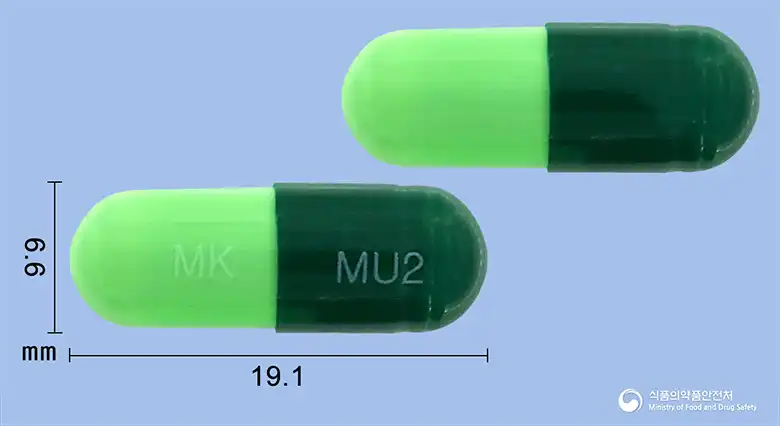
Acetylcysteine 200mg
Hard capsule · OTC medication
(Medica Korea Co., Ltd.)
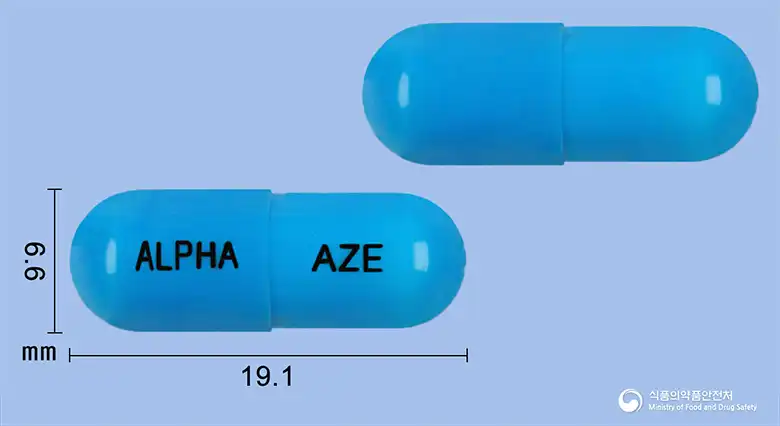
Acetylcysteine 200mg
Hard capsule · OTC medication
Alpha Pharmaceutical Co., Ltd.
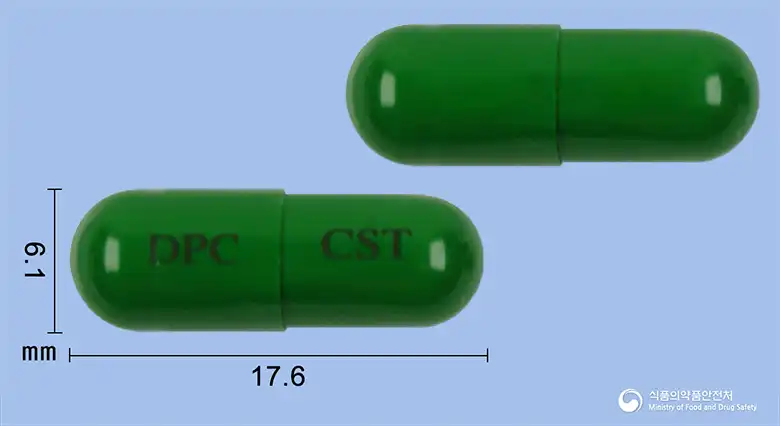
Acetylcysteine 200mg
Hard capsule · OTC medication
Donggwang Pharmaceutical Co., Ltd.
Even with the same ingredient, the dose and directions can differ by strength and dosage form. Talk to a doctor or pharmacist before switching from a medication you are already taking.
No questions yet.
For anything that needs medical judgment, consult a doctor or pharmacist.
This drug information is based on data provided by the Korea Ministry of Food and Drug Safety.
Consult a doctor or pharmacist for accurate dosage, administration, and usage instructions.