
 한국어
 English
 日本語
 中文(简体)
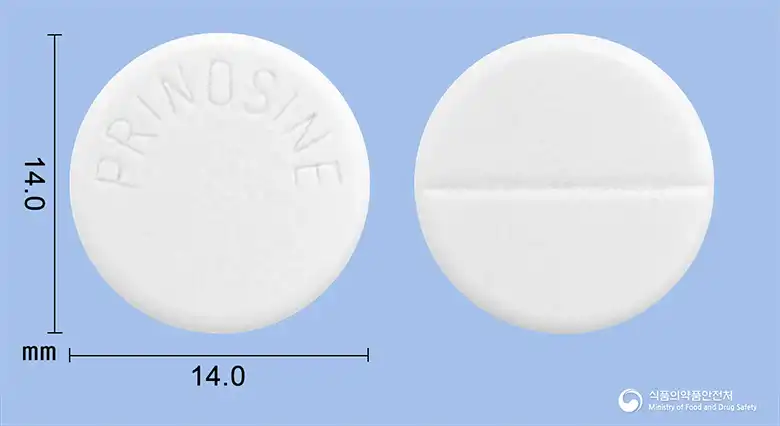
Dosage form image
Viewing nowSerinosin Tablet (Inosiplex)
Inosiplex
Prescription medication
Taeguk Pharm. Co., Ltd.
MFDS item code 197900215 · Notified 1979.07.28
This product's status changed to Approval withdrawn on 2023.04.03. It may no longer be sold, so consult a doctor or pharmacist before taking it.
Treatment of viral infections (herpes simplex, herpes zoster, chickenpox, etc.)
This medication is used for viral infections such as herpes simplex, shingles, and chickenpox. It is also used to treat measles and subacute sclerosing panencephalitis (SSPE) that can occur in immunocompromised patients.
(Tablets) Adults: Administer inosiplex orally at a dose of 3~4 g daily, divided into doses of 500 mg~1 g every 4~6 hours. (Syrup) Adults: Administer inosiplex orally at a dose of 3~4 g daily (60~80 mL of this medicine), divided into doses of 500 mg~1g (10~20 mL) every 4~6 hours.
(Tablets) Children: Administer this medicine orally at a dose of 50~100 mg per kg of body weight daily, divided into 6 doses. (Syrup) Children: Administer orally at a dose of 50~100 mg per kg of body weight daily, divided into 6 doses.
This medicine should not be used by those who have had allergic reactions to this medicine or its components. Patients with gout or hyperuricemia or with a past history of such conditions should use this medicine with caution, as increased uric acid levels in the blood can exacerbate symptoms. Individuals with urinary or kidney stones should also use this medicine cautiously due to the risk of worsening symptoms from increased uric acid levels. Patients with impaired kidney function need to be careful as this medicine may affect the elimination of uric acid from the body. Those taking other medications that affect the heart, especially digitalis, should be cautious when using this medicine. Digestive symptoms such as discomfort, diarrhea, constipation, nausea, vomiting, and abdominal pain may occur with this medicine. Blood-related abnormalities may cause increased red blood cell count or decreased white blood cell count, and increased platelet count may also occur. There is a possibility of elevated liver function test results, so liver health should be monitored. Occasionally, allergic reactions like skin rashes may occur. This medicine can increase blood uric acid levels, leading to symptoms of hyperuricemia. It may affect the kidneys and urinary tract, resulting in symptoms such as increased blood urea nitrogen (BUN), kidney stones, increased urine volume, and urinary stones. There may be neurological symptoms such as headaches, dizziness, fatigue, drowsiness, and insomnia, so caution is required. Rare side effects such as arthralgia or interstitial pneumonia have also been reported. It is advisable to regularly check blood and urine uric acid levels and kidney function tests while taking this medicine. Drug interactions are rarely serious; however, it is recommended to avoid using this medicine with corticosteroids, globulin, antiproliferatives, and antithymocyte globulin. Women who are pregnant or may become pregnant should consult with a doctor before using this medicine, and it is especially safe to avoid its use during the first trimester of pregnancy. This medicine may also be transmitted through breast milk, therefore, it is advisable to halt breastfeeding during the treatment period. In case of overdose, symptoms such as vomiting, headache, upper abdominal discomfort, dizziness, and palpitations may occur. In such cases, it is important to reduce or discontinue the medication and seek necessary treatment.
upper abdominal discomfort, diarrhea, constipation, gastrointestinal bleeding, nausea, vomiting, gastric pain, increased red blood cells, decreased white blood cells, increased platelets, elevated AST/ALT, elevated γ-GTP, elevated ALP, elevated LDH, rash, hyperuricemia, elevated BUN, renal stones accompanied by hypercalcemia, polyuria, urinary stones, headache, dizziness, fatigue, malaise, neuroirritability, drowsiness, insomnia, arthralgia, interstitial pneumonia, palpitations
Not everyone experiences these, and they can vary from person to person.
This medicine should be stored in a tightly sealed container to prevent exposure to air and moisture. Additionally, it should be kept in a cool, dry place to maintain its efficacy.
White tablet
20, 50, 100, 500 tablets
Even with the same ingredient, strength, dosage form and how it is taken can differ.
Inosiplex
Prescription medication
Taeguk Pharm. Co., Ltd.
Inosiplex 500mg
Tablet · Prescription medication
Jongkundang Corporation
Inosiplex
Prescription medication
Vivozon Pharmaceutical Co., Ltd.
Inosiplex 5g
Syrup · Prescription medication
Jongkeundang Co., Ltd.
Inosiplex 5mg
Syrup · Prescription medication
Sama Pharmaceutical Co., Ltd.
Inosiplex 5000mg
Syrup · Prescription medication
Kolon Pharmaceutical Co., Ltd.
Inosiplex 5000mg
Syrup · Prescription medication
Pharmgen Science Co., Ltd.
Inosiplex 5000mg
Syrup · Prescription medication
Korea Hyutex Pharmaceutical Co., Ltd.
Even with the same ingredient, the dose and directions can differ by strength and dosage form. Talk to a doctor or pharmacist before switching from a medication you are already taking.
No questions yet.
For anything that needs medical judgment, consult a doctor or pharmacist.
This drug information is based on data provided by the Korea Ministry of Food and Drug Safety.
Consult a doctor or pharmacist for accurate dosage, administration, and usage instructions.