
 한국어
 English
 日本語
 中文(简体)
 Viewing now
Ampsillin Capsule 250 mg (Ampicillin Trihydrate)
Ampicillin Hydrate 250mg
Hard capsule · Prescription medication
Jongkundang Co., Ltd.
MFDS item code 197000005 · Notified 1970.02.28
This product's status changed to Approval withdrawn on 2025.04.02. It may no longer be sold, so consult a doctor or pharmacist before taking it.
Treatment of respiratory infections (e.g., pneumonia), skin and genitourinary infections (e.g., gonorrhea), and systemic and other infections
This medication acts effectively against various bacteria. For example, it is used for skin infections such as abscesses, furuncles, and cellulitis, as well as respiratory infections such as tonsillitis, otitis media, and sinusitis. It is also effective for lung diseases such as pneumonia, lung abscess, and empyema, as well as systemic infections like sepsis and bacterial endocarditis. In addition to urinary tract infections such as cystitis, pyelonephritis, and urethritis, it is also used to treat sexually transmitted diseases such as gonorrhea. It can treat secondary infections due to surgery or trauma and infections after tooth extraction. It is also used for various infectious diseases such as osteomyelitis, intrauterine infections, peritonitis, liver abscess, and typhoid fever. Overall, this medication is used to improve various bacterial infections.
(Capsules)(Dry syrup) ○ Adults: Administer 250~500mg (potency) of ampicillin orally per dose, 4~6 times daily. ○ In cases of sepsis or bacterial endocarditis, use a higher dose than the usual dose. Adjust the dose as appropriate according to age and symptoms. (Injection) 1. Intramuscular injection ○ Adults: Inject 250~1000mg (potency) of ampicillin intramuscularly per dose, 2~4 times daily. 2. Intravenous injection ○ Adults: For severe infections, dissolve 1~2g (potency) daily of ampicillin in 20mL of 5% dextrose injection or normal saline injection and administer intravenously in 1~2 divided doses. For intravenous infusion, dissolve 1~2g (potency) daily in 500mL of an electrolyte solution or 5% dextrose injection and administer in 1~2 divided doses. In cases of sepsis or bacterial endocarditis, use a higher dose than the usual dose. Adjust the dose as appropriate according to age and symptoms.
○ Children: Administer 25~50mg (potency) per kg of body weight daily in 4 divided oral doses (dry syrup only).
This medication should not be used in certain patients. For instance, it is dangerous to administer it to individuals who have experienced severe allergic reactions or shock from this medication, or who have allergies or hypersensitivity history to penicillins or cephalosporin antibiotics. Patients with infectious mononucleosis or genetic issues such as lactose intolerance, lactose deficiency, or glucose-galactose malabsorption should also avoid taking this medication. Caution is warranted when administering this medication to patients with allergic tendencies, severe kidney impairment, those who have difficulty with oral intake, and elderly patients. Especially, signs of vitamin K deficiency may occur, so their condition should be monitored closely. This medication contains a dye called Yellow No. 5, and patients allergic to this ingredient or with a history of hypersensitivity should use it cautiously. During administration, if symptoms of allergy such as shock, fever, rash, hives, severe abdominal pain, diarrhea, or blood in stools occur, the medication should be stopped immediately and medical consultation sought. Rarely, blood disorders, central nervous system symptoms, skin diseases, liver dysfunction, and kidney impairment may occur, so regular tests are necessary. Additionally, prolonged or excessive use of this medication may increase the risk of bleeding due to vitamin K deficiency, so caution is advised. To prevent the development of drug-resistant bacteria, it is recommended to perform susceptibility testing and to administer only for the minimum necessary duration. Prior to use, check for allergic reactions, and closely observe the patient's stable condition after administration. This medication should be preferred in oral form when oral administration is possible, and injectable form should only be used when oral administration is not feasible. This medication may decrease the effectiveness of oral contraceptives, so additional contraceptive methods are recommended to enhance contraceptive efficacy. Moreover, interactions with other medications may occur, so it is essential to inform the healthcare provider about any concurrent medications being taken. During pregnancy, the safety is not established; it should only be administered when the therapeutic benefit outweighs the risks, and it is advisable to discontinue breastfeeding while on this medication. Elderly patients are at increased risk of side effects due to declining bodily functions, so dosages and administration intervals should be adjusted carefully. Finally, this medication may cause false-positive results in urine glucose tests, so caution is advised during testing. When using injectable forms, care should be taken with the injection site and method to prevent side effects such as phlebitis.
shock
Not everyone experiences these, and they can vary from person to person.
This medication must be stored in a tightly closed container to avoid exposure to air and moisture. It is recommended to maintain a storage temperature between 1 degree and 30 degrees Celsius at room temperature to preserve the medication’s efficacy.
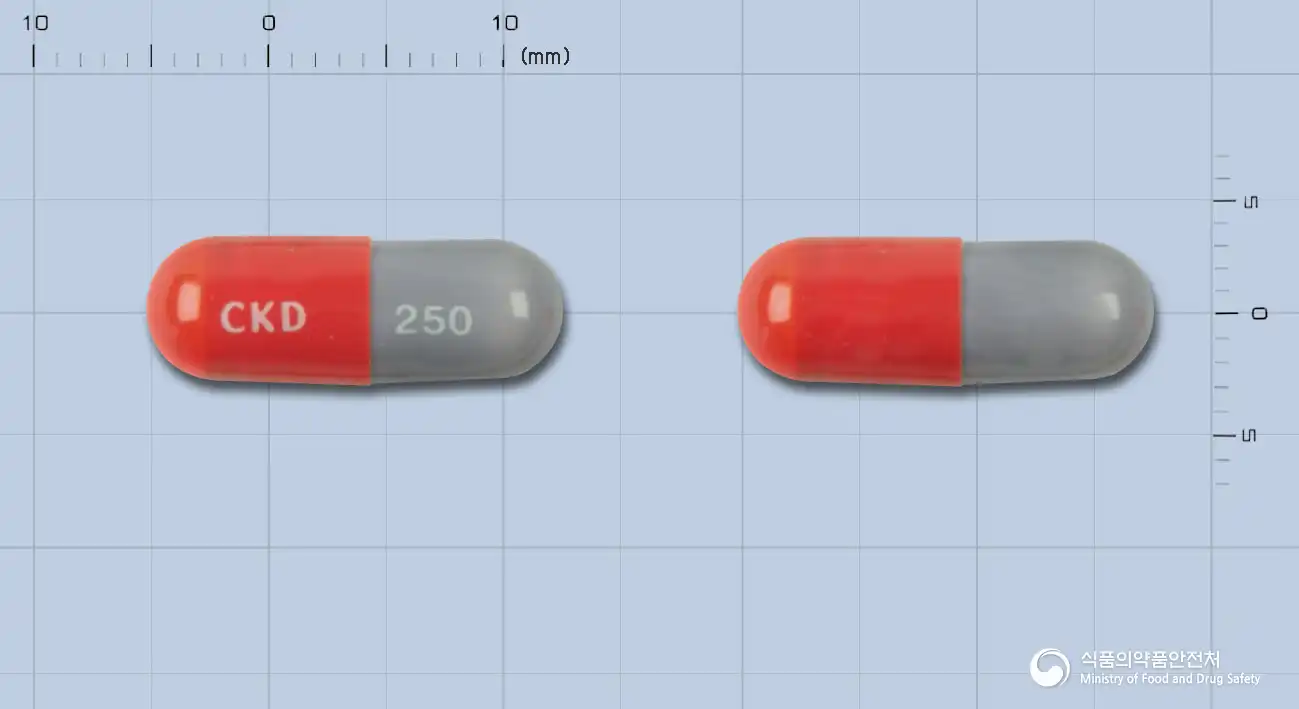
The capsule contains a white or pale yellow crystalline powder; the cap is red and the body is a cloudy purple.
500 capsules/bottle
Even with the same ingredient, strength, dosage form and how it is taken can differ.
Even with the same ingredient, the dose and directions can differ by strength and dosage form. Talk to a doctor or pharmacist before switching from a medication you are already taking.
No questions yet.
For anything that needs medical judgment, consult a doctor or pharmacist.
This drug information is based on data provided by the Korea Ministry of Food and Drug Safety.
Consult a doctor or pharmacist for accurate dosage, administration, and usage instructions.