Medication info
Dapagliflozin Propanediol Hydrate / Sitagliptin Phosphate Hydrate / Metformin Hydrochloride Extended-release Tablet 10/100/1000 mg

Dapagliflozin Propanediol Hydrate / Sitagliptin Phosphate Hydrate / Metformin Hydrochloride Extended-release Tablet 10/100/1000 mg

Prescription medicationTabletOral
Ingredient · strength
Dapagliflozin Propanediol Hydrate›12.3mg / 1 tabletSitagliptin Phosphate Hydrate›128.5mg / 1 tabletMetformin Hydrochloride with Colloidal Anhydrous Silica›1010mg / 1 tablet
Manufacturer / importer
Daewon Pharmaceutical Co., Ltd.
Appearance
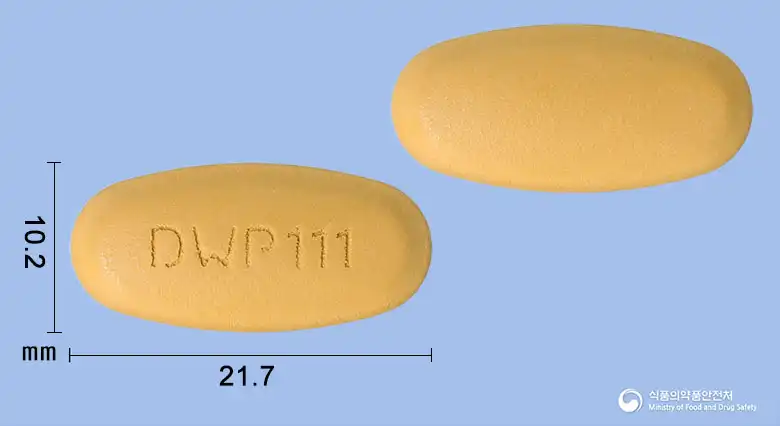
Extended-release film-coated tablet, oval shape, double convex, with a deep yellow color
Packaging
30 tablets/bottle
Approval status
Active

MFDS item code 202301622 · Approved 2023.05.22 · Insurance code 671807690

Summary

Main use
Improvement of glycemic control in type 2 diabetes mellitus
Who takes it
Adults
Adult dose
The recommended dose of this medicine for antidiabetic therapy is 10 mg of dapagliflozin and 100 mg of sitagliptin; the dose of extended-release metformin hydrochloride should be determined based on each patient's current treatment regimen, efficacy, and tolerability, and should not exceed 2000 mg. To reduce gastrointestinal adverse reactions caused by metformin hydrochloride, take this medicine with food once daily, preferably in the evening. If the dose of metformin hydrochloride needs adjustment, adjust it gradually. Patients taking this medicine as the 10/100/1000 mg extended-release tablet should take 1 tablet once daily. Patients taking this medicine as the 5/50/500 mg, 5/50/750 mg, or 5/50/1000 mg extended-release tablet should take 2 tablets once daily. Patients who do not achieve adequate glycemic control with combination therapy of metformin hydrochloride and sitagliptin should start this medicine at dapagliflozin 10 mg, sitagliptin 100 mg, and the current dose of metformin hydrochloride or a therapeutically similar dose. For patients switching to this medicine from combination therapy with dapagliflozin, sitagliptin, and metformin hydrochloride, the dose of this medicine should correspond to the previous doses of each component. The safety and efficacy of this medicine have not been specifically evaluated in patients switching to it from another glucose-lowering agent. Since changes may cause changes in glycemic control, any changes in the treatment of patients with type 2 diabetes should be made under careful monitoring. To maintain its extended-release properties, this medicine must be swallowed whole and must not be split, crushed, ground, or chewed. This medicine may not dissolve completely and may be excreted in the stool. It is unknown whether the material excreted in the stool contains the active ingredients of the medicine. If a patient repeatedly reports finding this medicine in the stool, healthcare professionals should assess whether blood glucose is being adequately controlled (see Precautions for Use, 5. General Precautions). Special populations Patients with renal impairment The efficacy and safety of this medicine depend on renal function, and dosage adjustment according to renal function is required. Therefore, renal function should be assessed before and periodically after administration of this medicine. No dosage adjustment is necessary in patients with mild renal impairment. If eGFR is 45 mL/min/1.73m2 or higher and below 60 mL/min/1.73m2, this medicine may be used by adjusting the dose of metformin hydrochloride, one of its components, provided the patient tolerates it well and has no other condition that may increase the risk of lactic acidosis. The starting dose of extended-release metformin hydrochloride is 500mg or 750 mg once daily; therefore, treatment should not be initiated with this medicine. The maximum daily dose of metformin hydrochloride is 1000 mg. If eGFR falls below 45 mL/min/1.73m2, administration of this medicine should be discontinued immediately. Renal function should be assessed every 3~6 months.

Ingredients

Manufacturer
Daewon Pharmaceutical Co., Ltd.

Efficacy & effects

Improvement of glycemic control in type 2 diabetes mellitus

View approved original text

This medication helps control blood sugar levels in patients with type 2 diabetes when used in combination with dapagliflozin, sitagliptin, and metformin. It assists in effectively managing blood sugar levels along with dietary and exercise therapies, suitable for patients who find it difficult to control blood sugar levels. Taking this medication contributes to stabilizing blood sugar levels, having a positive impact on diabetes management.

How to take

Adult dose

The recommended dose of this medicine for antidiabetic therapy is 10 mg of dapagliflozin and 100 mg of sitagliptin; the dose of extended-release metformin hydrochloride should be determined based on each patient's current treatment regimen, efficacy, and tolerability, and should not exceed 2000 mg. To reduce gastrointestinal adverse reactions caused by metformin hydrochloride, take this medicine with food once daily, preferably in the evening. If the dose of metformin hydrochloride needs adjustment, adjust it gradually. Patients taking this medicine as the 10/100/1000 mg extended-release tablet should take 1 tablet once daily. Patients taking this medicine as the 5/50/500 mg, 5/50/750 mg, or 5/50/1000 mg extended-release tablet should take 2 tablets once daily. Patients who do not achieve adequate glycemic control with combination therapy of metformin hydrochloride and sitagliptin should start this medicine at dapagliflozin 10 mg, sitagliptin 100 mg, and the current dose of metformin hydrochloride or a therapeutically similar dose. For patients switching to this medicine from combination therapy with dapagliflozin, sitagliptin, and metformin hydrochloride, the dose of this medicine should correspond to the previous doses of each component. The safety and efficacy of this medicine have not been specifically evaluated in patients switching to it from another glucose-lowering agent. Since changes may cause changes in glycemic control, any changes in the treatment of patients with type 2 diabetes should be made under careful monitoring. To maintain its extended-release properties, this medicine must be swallowed whole and must not be split, crushed, ground, or chewed. This medicine may not dissolve completely and may be excreted in the stool. It is unknown whether the material excreted in the stool contains the active ingredients of the medicine. If a patient repeatedly reports finding this medicine in the stool, healthcare professionals should assess whether blood glucose is being adequately controlled (see Precautions for Use, 5. General Precautions). Special populations Patients with renal impairment The efficacy and safety of this medicine depend on renal function, and dosage adjustment according to renal function is required. Therefore, renal function should be assessed before and periodically after administration of this medicine. No dosage adjustment is necessary in patients with mild renal impairment. If eGFR is 45 mL/min/1.73m2 or higher and below 60 mL/min/1.73m2, this medicine may be used by adjusting the dose of metformin hydrochloride, one of its components, provided the patient tolerates it well and has no other condition that may increase the risk of lactic acidosis. The starting dose of extended-release metformin hydrochloride is 500mg or 750 mg once daily; therefore, treatment should not be initiated with this medicine. The maximum daily dose of metformin hydrochloride is 1000 mg. If eGFR falls below 45 mL/min/1.73m2, administration of this medicine should be discontinued immediately. Renal function should be assessed every 3~6 months.

Precautions

This medication is a combination product containing sitagliptin, dapagliflozin, and metformin, each of which has specific precautions. First, sitagliptin can rarely cause serious allergic reactions, including anaphylaxis, angioedema, and severe skin disorders. If such symptoms occur, stop taking the medication immediately and seek medical attention. Additionally, sitagliptin can lead to acute pancreatitis, so if abdominal pain or vomiting, which are signs of pancreatitis, appears during treatment, discontinue use and visit a hospital immediately. Next, dapagliflozin may cause decreased body fluids and low blood pressure, so patients with impaired kidney function, elderly patients, or those taking diuretics should regularly monitor their blood pressure and kidney function before and during use. This medication may increase the risk of urinary tract infections and genital infections, so appropriate treatment should be obtained if any infection symptoms appear. Patients with a history of infections should exercise additional caution. Moreover, dapagliflozin can lead to diabetic ketoacidosis, even when blood sugar levels are not significantly elevated, so if symptoms such as vomiting, abdominal pain, or difficulty breathing occur, consult healthcare professionals immediately. Patients with severely impaired kidney function, acute or chronic metabolic acidosis, serious infections, or congestive heart failure should not take this medication. Metformin can rarely cause severe lactic acidosis, which can be life-threatening; therefore, patients with reduced kidney function or those at risk due to cardiopulmonary disease or sepsis should avoid taking it. Gastrointestinal side effects (nausea, vomiting, diarrhea, etc.) are common with metformin, and vitamin B12 deficiency can occur, so regular blood testing is recommended. During the course of this medication, irregular meals, excessive exercise, the use of other hypoglycemic agents, and excessive alcohol intake can increase the risk of hypoglycemia, so caution is advised. Patients scheduled to undergo a radiographic iodine contrast procedure should discontinue the use of this medication for a specified period before and after the test and avoid re-administration until kidney function has recovered. Pregnant patients, patients with impaired liver function, and patients with severe infections or cardiovascular collapse should use this medication with caution. Finally, if skin rashes, severe joint pain, blistering skin disorders, pain or swelling around the perineum occur during the use of this medication, consult a physician immediately and discontinue use if necessary.

Side effects

  • hypersensitivity
  • anaphylaxis
  • angioedema
  • Stevens-Johnson syndrome
  • acute pancreatitis
  • hemorrhagic pancreatitis
  • necrotizing pancreatitis
  • lactic acidosis
  • hypoglycemia
  • vulvitis
Show 102 more
  • balanitis
  • genital infection
  • urinary tract infection
  • fungal infection
  • perineal necrosis
  • decreased fluid volume
  • thirst
  • diabetic ketoacidosis
  • dizziness
  • constipation
  • dry mouth
  • low back pain
  • dysuria
  • polyuria
  • nocturia
  • interstitial nephritis
  • vulvar pruritus
  • genital pruritus
  • increased hematocrit
  • decreased serum creatinine clearance
  • dyslipidemia
  • increased serum creatinine
  • elevated blood urea
  • weight loss
  • rash
  • urosepsis
  • pyelonephritis
  • acute kidney injury
  • kidney dysfunction
  • pneumonia
  • diabetes complications
  • metabolic acidosis
  • falls
  • cardiac arrest
  • gastroesophageal reflux disease
  • abdominal pain
  • diverticulosis
  • intestinal perforation
  • chronic pancreatitis
  • hyperglycemia
  • paresthesia
  • cerebral infarction
  • nerve compression
  • sinusitis
  • diverticulitis
  • pelvic inflammatory disease
  • pulmonary tuberculosis
  • asthenia
  • pain
  • ligament sprain
  • keratitis
  • chronic obstructive pulmonary disease
  • hemoptysis
  • cerebral hemorrhage
  • peripheral artery occlusion
  • angina pectoris
  • myocardial infarction
  • bile duct stones
  • cholangitis
  • alcoholic cirrhosis
  • depression
  • suicide attempt
  • gastric adenocarcinoma
  • anaphylactic reaction
  • acute pyelonephritis
  • chest pain
  • dyspepsia
  • nausea
  • diarrhea
  • vomiting
  • urinary retention
  • increased alanine aminotransferase
  • increased aspartate aminotransferase
  • decreased appetite
  • headache
  • nasopharyngitis
  • chest discomfort
  • vaginal discharge
  • menstrual irregularity
  • pruritus
  • urticaria
  • diaphoresis
  • arthralgia
  • musculoskeletal pain
  • limb pain
  • muscular weakness
  • myalgia
  • osteoarthritis
  • ligament sprain
  • diabetic retinopathy
  • cough
  • dyspnea
  • orthostatic hypotension
  • palpitations
  • insomnia
  • fatty liver
  • gallbladder polyp
  • tinnitus
  • taste impairment
  • erythema
  • urticaria
  • rash

Not everyone experiences these, and they can vary from person to person.

Storage

This medication must be stored in a tightly closed container to prevent exposure to air and moisture. The appropriate storage temperature is room temperature between 1 to 30 degrees Celsius, and it should be kept away from extremely hot or cold places.

Appearance and packaging

Appearance

Extended-release film-coated tablet, oval shape, double convex, with a deep yellow color

Package unit

30 tablets/bottle

Same-ingredient medicines

Even with the same ingredient, strength, dosage form and how it is taken can differ.

Even with the same ingredient, the dose and directions can differ by strength and dosage form. Talk to a doctor or pharmacist before switching from a medication you are already taking.

Questions about this medicine

No questions yet.

For anything that needs medical judgment, consult a doctor or pharmacist.

Related searches

Search tags

Suggested searches

This drug information is based on data provided by the Korea Ministry of Food and Drug Safety.
Consult a doctor or pharmacist for accurate dosage, administration, and usage instructions.