
 한국어
 English
 日本語
 中文(简体)
Dosage form image
Viewing nowMomohydrochloride Tablet (Minoxidil)
Minoxidil 5mg
Tablet · Prescription medication
The Yoo Pharmaceutical Co., Ltd.
MFDS item code 202103151 · Notified 2021.04.16
This product's status changed to Approval withdrawn on 2024.10.10. It may no longer be sold, so consult a doctor or pharmacist before taking it.
Treatment of symptomatic hypertension with target-organ damage and resistant hypertension
This drug is used to treat hypertension caused by symptomatic situations or damage to specific organs. It is also effective for resistant hypertension that is not controlled even when combined with diuretics and two types of antihypertensive agents. Thus, this drug provides assistance to patients with hypertension that is difficult to control due to various causes.
1. Adults (12 years and older): The initial dose is 5㎎ of minoxidil orally once daily, and the maintenance dose is 10-40㎎ daily in 1-several divided doses. A maximum of 100㎎ daily may be administered. 3. Frequency of administration: The magnitude of fluctuations in arterial blood pressure during the day while taking this medicine is proportional to the reduction in blood pressure. If the reduction in supine diastolic blood pressure is less than 30mmHg, it may be administered once daily; if supine diastolic blood pressure is 30mmHg or more, administer in 2 divided doses daily. 4. Dose changes: The dose should be determined carefully according to the patient's response. When adjusting the dose, allow an interval of at least 3 days as a sufficient response to a dose may take 3 days or more to appear. If more rapid treatment of hypertension is required, the dose may be adjusted every 6 hours while carefully monitoring the patient. 5. Concomitant administration 1) Diuretics: This medicine is administered with a diuretic in patients who rely on renal function to maintain salt and water balance. It has been administered concomitantly with the following diuretics. ① Hydrochlorothiazide (50㎎ per dose twice daily) or another thiazide diuretic (equivalent effective dose) ② Chlorthalidone (50-100㎎ per dose once daily) ③ Furosemide (40㎎ per dose twice daily) If excessive salt and water retention results in a weight gain of approximately 1.8㎏ or more, the diuretic should be changed to furosemide; if the patient is already receiving furosemide, increase the dose as needed. 2) β-blockers or other sympatholytic agents: During treatment with this medicine, administer a β-blocker in divided doses equivalent to 80-160㎎ of propranolol daily. If β-blockers are contraindicated, methyldopa (250-750㎎ per dose twice daily) may be given instead. Since methyldopa takes time to exert its effect, administer it at least 24 hours before starting this medicine. Sympatholytic agents may not completely prevent an increase in heart rate caused by this medicine, but they can generally prevent tachycardia. Patients receiving a β-blocker before starting therapy with this medicine typically have bradycardia; with this medicine, their heart rate is expected to increase to normal. When this medicine is administered concomitantly with a β-blocker or another sympatholytic agent, the opposing effects on the heart counterbalance each other, resulting in little change in heart rate. Adjust the dose appropriately according to age and symptoms.
Children (12 years or younger): The initial dose is 0.2㎎/㎏ once daily, and may be increased by 50-100% until blood pressure is optimally controlled. The maintenance dose is 0.25㎎-1.0㎎/㎏ daily. A maximum of 50㎎ daily may be administered.
This drug should not be used in certain patients. For instance, patients with pheochromocytoma should avoid this drug as it can lower blood pressure while increasing the amount of catecholamines secreted by the tumor. Additionally, patients with pulmonary hypertension due to mitral stenosis, those with acute myocardial infarction, and patients who have previously shown allergic reactions to this drug also should not receive it. Patients with chronic congestive heart failure, severe kidney failure, or angina should be particularly cautious when using this drug and should follow the doctor's instructions considering the possibility of side effects. Use of this drug may result in hypertrichosis in approximately 80% of patients, typically beginning in certain parts of the face or body and spreading to other areas. This phenomenon gradually disappears after discontinuation of treatment, but it may take several months to fully revert to the original state. Skin rashes or bullous reactions may also occur as hypersensitivity reactions, and there is a possibility of decreased platelet or white blood cell counts in blood tests. Changes in the T wave may be observed in some patients on electrocardiograms, although in most cases, significant abnormalities in heart function are not present, and recovery occurs upon discontinuation. Rarely, pericardial effusion may occur, and special attention is needed, especially in patients with poor kidney function. In such cases, the condition should be monitored with ultrasound, and treatment methods should be adjusted if necessary. Other rare side effects may include weight gain, swelling of hands and feet, increased heart rate, gastrointestinal disturbances, rashes, and gynecomastia. When using this drug, diuretics are often used together to reduce the risk of fluid retention and heart failure, and weight and electrolyte status should be regularly monitored. Due to its vasodilating effect, the heart may race or anginal symptoms may occur, so medications like beta-blockers may be used in combination to prevent these symptoms. Patients with reduced kidney function should have their dosage adjusted, and patients with myocardial infarction should use it only after their condition is stabilized. In the initial stages of administration, regular tests should be conducted, including urinalysis, kidney function tests, electrocardiograms, chest X-rays, and echocardiograms to check for abnormalities. This drug may interact with other medications, so special care should be taken when used in conjunction with guanethidine, antidepressants, antipsychotics, corticosteroids, anti-inflammatory pain relievers, etc. It should be avoided during pregnancy as safety has not been established, and during breastfeeding, it is advisable to avoid administration whenever possible or to discontinue breastfeeding. Experience with use in children, especially neonates, is limited, so it should be administered with caution. In cases of overdose, blood pressure may drop significantly, requiring immediate medical treatment, with appropriate interventions needed to maintain blood pressure and promote urine excretion.
Hair growth, thickening, pigmentation increase, exudative rash, vesicular lesions, mucocutaneous syndrome, thrombocytopenia, leukopenia, decreased hematocrit, decreased hemoglobin, decreased red blood cells, increased ALP, changes in the direction and amplitude of ECG T waves, pericardial effusion, cyanosis, peripheral vascular edema, increased heart rate, elevated creatinine, elevated BUN, gastrointestinal disturbances, rash, mastalgia, gynecomastia, hemolytic anemia, pulmonary infiltration, increased antinuclear antibodies, headache, intermittent claudication, frequent menstruation, nausea, vomiting
Not everyone experiences these, and they can vary from person to person.
This drug should be stored in a tightly closed container to avoid exposure to air or moisture, and it should be kept at room temperature between 1 to 30 degrees Celsius. By storing it this way, the drug's efficacy can be maintained and used safely.
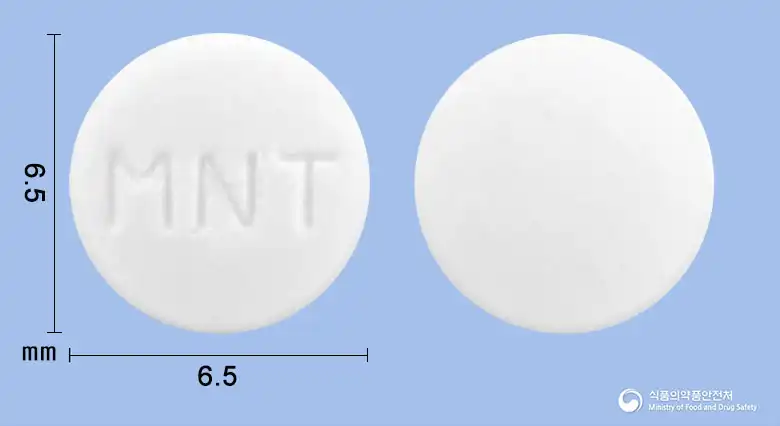
White round tablets
30 tablets/bottle, 100 tablets/bottle
Even with the same ingredient, strength, dosage form and how it is taken can differ.
Minoxidil 5mg
Tablet · Prescription medication
The Yoo Pharmaceutical Co., Ltd.
Minoxidil 5mg
Tablet · Prescription medication
Hyundai Pharmaceutical Co., Ltd.
Minoxidil 3g
OTC medication
Hyundai Pharmaceutical Co., Ltd.
Minoxidil 5g
OTC medication
Hyundai Pharmaceutical Co., Ltd.
Minoxidil 5g
OTC medication
Hanmi Pharmaceutical Co., Ltd.
Minoxidil 5g
Solution · OTC medication
JW Pharmaceutical Corp.
Minoxidil 3g
Solution · OTC medication
Haitai HTB Co., Ltd.
Minoxidil 5g
Solution · OTC medication
Ilhwa Co., Ltd.
Even with the same ingredient, the dose and directions can differ by strength and dosage form. Talk to a doctor or pharmacist before switching from a medication you are already taking.
No questions yet.
For anything that needs medical judgment, consult a doctor or pharmacist.
This drug information is based on data provided by the Korea Ministry of Food and Drug Safety.
Consult a doctor or pharmacist for accurate dosage, administration, and usage instructions.