
 한국어
 English
 日本語
 中文(简体)
Dosage form image
Viewing nowEnteric-Coated Aspirin Tablet 100 mg (Aspirin)
Aspirin 100mg
Tablet · OTC medication
The U Pharmaceutical Co., Ltd.
MFDS item code 202003522 · Notified 2020.05.15
This product's status changed to Expired on 2025.05.15. It may no longer be sold, so consult a doctor or pharmacist before taking it.
Prevention of thrombosis after cardiovascular or cerebrovascular disease and coronary intervention, and reduction of cardiovascular risk in high-risk patients
This medication assists in inhibiting thrombus formation in major cardiovascular diseases such as myocardial infarction, cerebrovascular accident, and unstable angina. It also prevents thrombus formation in patients who have undergone coronary artery bypass surgery or percutaneous coronary intervention, enhancing the therapeutic effect. It reduces cardiovascular risk in high-risk patients with multiple risk factors such as hypertension, obesity, and diabetes. This mechanism is used to protect the patient’s heart health and reduce the occurrence of cardiovascular events.
Adults: 1 tablet once daily. Do not take a high dose without a physician's prescription. As a general rule, aspirin-containing products should not be taken on an empty stomach because of the risk of gastrointestinal bleeding. However, since this product is enteric-coated, it may be taken before meals with plenty of water. Because of the risk of bleeding, inform and consult the attending physician that you are taking an aspirin product if you are undergoing surgery (including dental surgery).
This medication should be discussed with a doctor or pharmacist before use by individuals who consume three or more glasses of alcohol regularly each day. Those who drink heavily are at a higher risk for gastrointestinal bleeding when taking this medication. This medication should not be administered to certain patients, such as those who have had allergic reactions to this drug or other salicylates, patients with peptic ulcers, individuals with aspirin-induced asthma or a history thereof, patients with hemophilia, those with severe liver or kidney impairment, individuals with severe heart failure, those with bleeding tendencies, and pregnant women in the third trimester should not take this medication. Additionally, patients with kidney impairment, cardiovascular disease, liver impairment, blood disorders, bronchial asthma, patients prior to surgery, children under 3 years of age, individuals with a history of allergies, elderly patients, those taking anticoagulants, and patients with glucose-6-phosphate dehydrogenase deficiency should use this medication with caution. This medication can cause hemolytic anemia, so these patients need particular attention. When taking this medication, patients should be vigilant for hypersensitivity or allergic reactions, skin rashes, severe skin reactions, blood disorders, gastrointestinal symptoms (abdominal pain, nausea, vomiting, etc.), neurological symptoms (dizziness, headache, etc.), liver impairment, or kidney impairment; any unusual symptoms should prompt immediate discontinuation and consultation with a healthcare professional. For children under 14 years old, this medication should be administered carefully during chickenpox or influenza infections, and their condition should be closely monitored afterward. This medication is a treatment to alleviate symptoms and is not a fundamental treatment, so regular checkups are necessary when used for chronic conditions, and dosage should be adjusted based on the severity of symptoms when administered for acute conditions. During treatment, the patient's condition should be monitored closely, especially in children with high fever, the elderly, or those with weakened physical condition. In cases where an infection is suspected, appropriate antibiotic therapy should be used cautiously along with this medication, as infections may be masked. If this medication has been taken within one week prior to surgery, the risk of bleeding may increase, so consultation with a physician prior to surgery is necessary. Furthermore, this medication may increase the risk of bleeding by inhibiting platelet aggregation, so any signs of bleeding should be reported immediately. This medication can reduce urate excretion and trigger gout attacks in patients with gout, requiring caution for gout sufferers. Additionally, its efficacy may be reduced when taken with other non-steroidal anti-inflammatory drugs such as ibuprofen or naproxen, so consultation with a physician is advised. This medication has the potential for drug interactions, so when taken with anticoagulants, hypoglycemic agents, methotrexate, lithium, other anti-inflammatory medications, antidepressants, etc., it is essential to follow professional guidance. Particular care should be taken during pregnancy, and it must not be taken during the third trimester. This medication can be excreted in breast milk, so breastfeeding women should also avoid it. Elderly individuals may experience adverse reactions more readily, so they should start with a small dose while monitoring their condition. This medication is in enteric-coated form, so care should be taken not to damage the coating, and it is advisable not to mix it with alkaline agents such as sodium bicarbonate. Finally, this medication should be kept out of reach of children and stored in its original container to maintain its quality.
Not everyone experiences these, and they can vary from person to person.
This medication should be stored in a tightly sealed container to protect it from air and moisture. Additionally, keeping it at room temperature below 25 degrees Celsius is important to maintain its efficacy.
White, round, enteric-coated tablet
30 tablets/bottle, 500 tablets/bottle
Even with the same ingredient, strength, dosage form and how it is taken can differ.
Aspirin 100mg
Tablet · OTC medication
The U Pharmaceutical Co., Ltd.
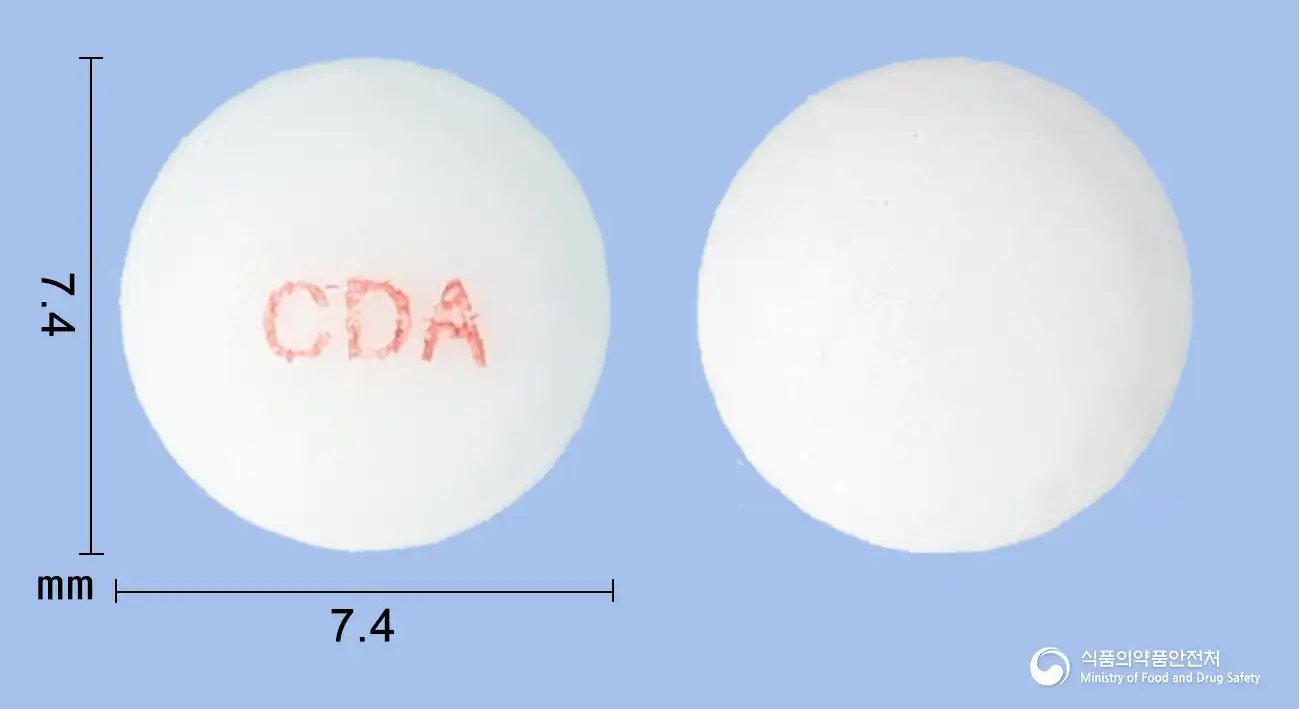
Aspirin 100mg
Tablet · OTC medication
Chodang Pharmaceutical Co., Ltd.
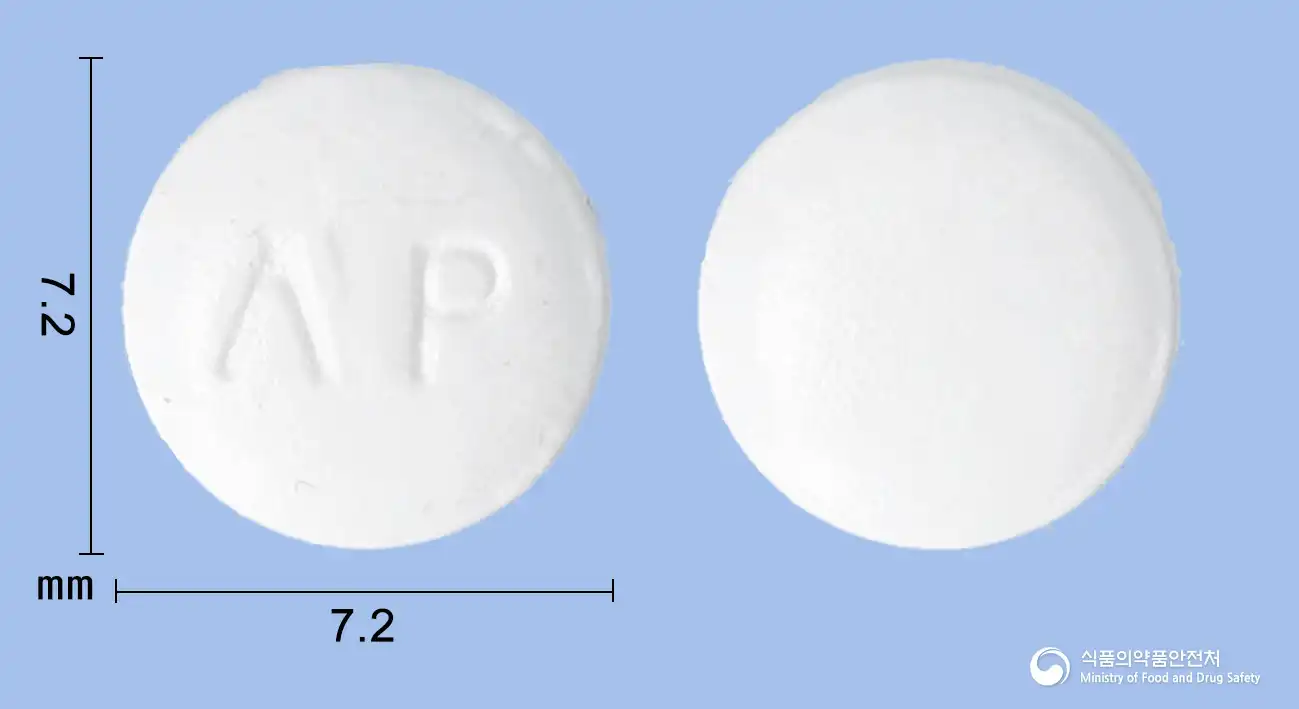
Aspirin 100mg
Tablet · OTC medication
Hanmi Pharmaceutical Co., Ltd.
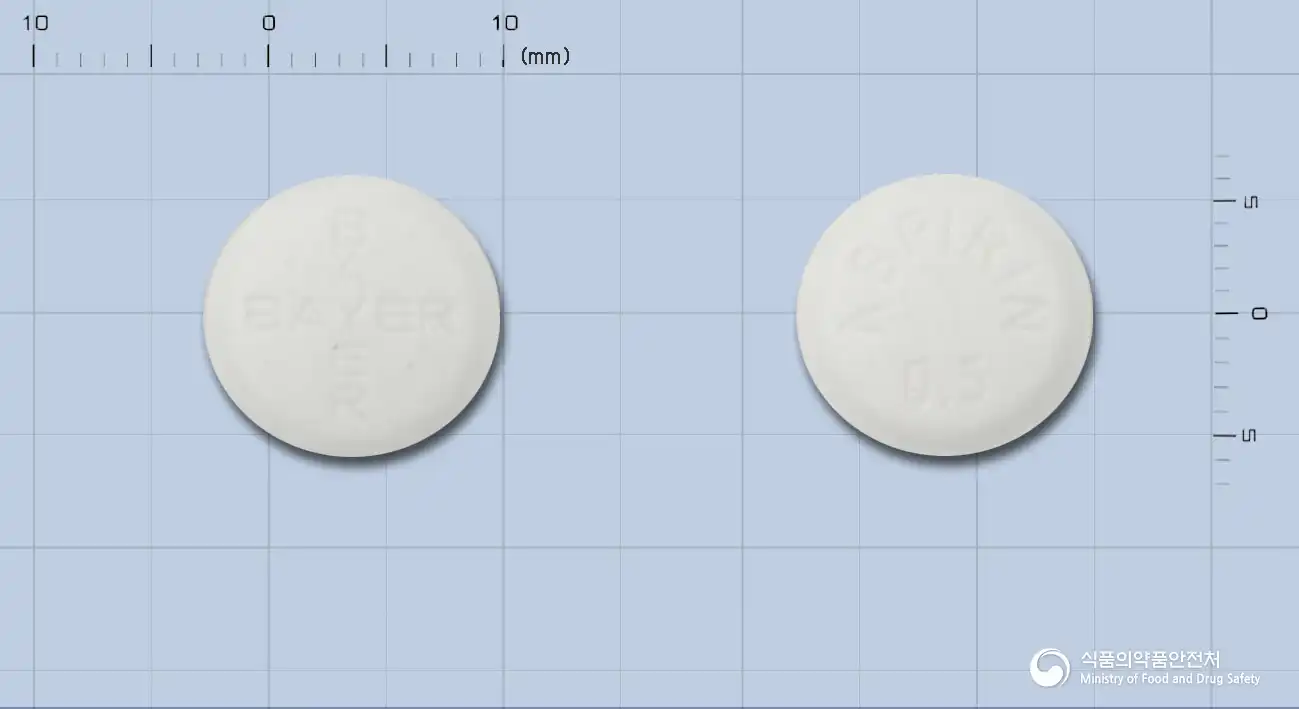
Aspirin 500mg
Tablet · OTC medication
Bayer Korea Co., Ltd.

Aspirin 100mg
Tablet · OTC medication
Bayer Korea Co., Ltd.
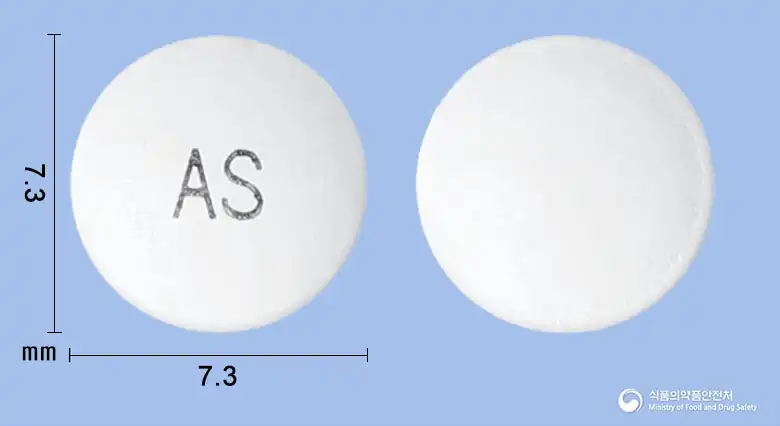
Aspirin 100mg
Tablet · OTC medication
Youngjin Pharmaceutical Co., Ltd.
Aspirin 81mg
Tablet · OTC medication
Youngpoong Pharmaceutical Co., Ltd.
Aspirin 75mg
Tablet · OTC medication
IlYang Biopharm Co., Ltd.
Even with the same ingredient, the dose and directions can differ by strength and dosage form. Talk to a doctor or pharmacist before switching from a medication you are already taking.
No questions yet.
For anything that needs medical judgment, consult a doctor or pharmacist.
This drug information is based on data provided by the Korea Ministry of Food and Drug Safety.
Consult a doctor or pharmacist for accurate dosage, administration, and usage instructions.