
 한국어
한국어 English
 日本語
日本語 中文(简体)
 Viewing now
Cimetidine Tablet (Cimetidine)
Cimetidine 200mg
Tablet · Prescription medication
Bukwang Pharmaceutical Co., Ltd.
MFDS item code 197800307 · Notified 1978.05.10 · Insurance code 642201300
Treatment of gastric and duodenal ulcers and gastroesophageal reflux disease, improvement of gastric mucosal lesions
This medication is used for the treatment of various gastrointestinal diseases such as gastric and duodenal ulcers, gastroesophageal reflux disease, recurrent ulcers, anastomotic ulcers, and Zollinger-Ellison syndrome. It also helps improve symptoms of mucosal lesions in acute exacerbations of acute and chronic gastritis, such as erosion, bleeding, redness, and swelling. This drug protects the gastric mucosa and alleviates inflammation, helping to manage gastrointestinal health effectively. If you seek relief from gastrointestinal symptoms, this medication is suitable for you. Overall, it is used to enhance gastrointestinal health and assist in the treatment of diseases.
As cimetidine, take 400 mg twice daily (morning and bedtime) or 800 mg once daily (at bedtime). Alternatively, take 300 mg four times a day (after meals and at bedtime). The dosage may be increased up to 400 mg four times daily (total 1.6 g). In cases of acute exacerbations of acute gastritis or chronic gastritis, take 200 mg twice a day or 400 mg once a day.
Administer 20-40 mg per kg of body weight divided orally per day.
When using this drug in ampoule injection form, there is a risk of glass fragments being introduced, so care must be taken when cutting the container. Extra caution is needed when handling, especially for children and the elderly. This medication should not be administered to patients who have had an allergic reaction or hypersensitivity to cimetidine or other components. It should also not be used in patients taking dofetilide due to an increased risk of cardiac arrhythmias. Since it contains lactose, it should not be given to patients with lactose intolerance or related genetic disorders. Patients with kidney or liver dysfunction, those with a history of drug allergies, elderly patients, children under 19 years old, and patients undergoing hemodialysis should use this medication with caution. Particularly, patients with reduced kidney function may require dose adjustment due to increased drug concentration. During treatment, blood tests may show a decrease in white blood cells or platelets; thus, if symptoms like fatigue, bleeding, or fever occur, immediate medical attention should be sought. Symptoms of liver or kidney dysfunction may also rarely occur, so careful monitoring is necessary. Hypersensitivity may lead to shock, respiratory distress, or skin rashes; if these symptoms occur, administration should be stopped immediately. Hormone-related side effects such as gynecomastia, excessive milk secretion, and erectile dysfunction have also been reported. Gastrointestinal symptoms like abdominal bloating, diarrhea, constipation, as well as neurological symptoms like headache, dizziness, drowsiness, and mental confusion may also occur, though rarely. Elderly patients or those with impaired kidney function may easily exhibit mental confusion, hence caution is required. Cardiac-related side effects such as bradycardia, tachycardia, and palpitations are rarely reported. Severe systemic skin reactions may occur very rarely, requiring careful observation of skin conditions. This drug has many interactions with other medications, thus dose adjustments and monitoring of blood concentration are necessary when taken with warfarin, midazolam, diazepam, theophylline, and others. Pregnant or breastfeeding women should use this medication only when absolutely necessary, and only under a physician's judgment, and it's advisable to discontinue breastfeeding during treatment. For children, safety has not been thoroughly established, so it should be administered cautiously and only when necessary. Elderly patients may require reduced dosing or increased intervals between doses due to prolonged drug retention in the body caused by decreased kidney function. In case of overdose, respiratory depression may occur, necessitating appropriate emergency measures such as artificial respiration or gastric lavage. When administered in injection form, rapid intravenous administration may cause arrhythmias or decreased blood pressure; thus, it should be given slowly. This medication must be stored in a sealed container to prevent air or moisture entry, thereby maintaining its efficacy for a longer period.
Not everyone experiences these, and they can vary from person to person.
This medication should be stored in a sealed container to prevent air or moisture from entering. This will help maintain the drug's effectiveness for a longer time.
Green film-coated tablet
500 tablets/bottle
Even with the same ingredient, strength, dosage form and how it is taken can differ.
Viewing nowCimetidine 200mg
Tablet · Prescription medication
Bukwang Pharmaceutical Co., Ltd.
Cimetidine 200mg
Tablet · Prescription medication
Ildong Pharmaceutical Co., Ltd.

Cimetidine 200mg
Tablet · Prescription medication
International Pharmaceutical Co., Ltd.
Cimetidine 100mg
Prescription medication
(Company) Yuhan Corporation

Cimetidine 200mg
Tablet · Prescription medication
Donghwa Pharmaceutical Co., Ltd.
Cimetidine 200mg
Tablet · Prescription medication
Bionex Co., Ltd.

Cimetidine 300mg
Tablet · Prescription medication
Bukwang Pharmaceuticals Co., Ltd.
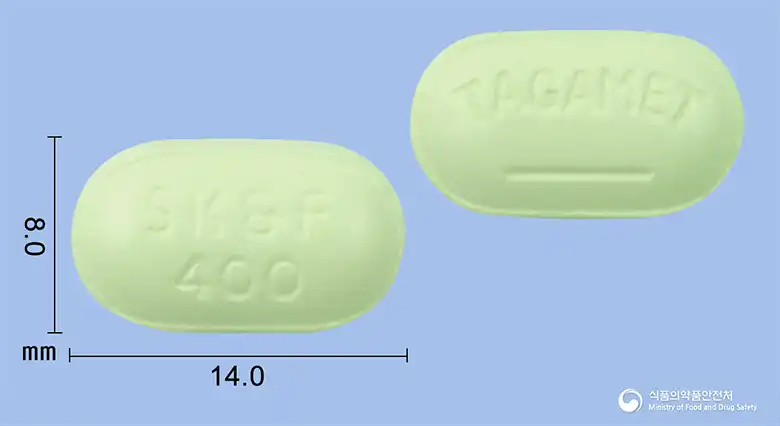
Cimetidine 400mg
Tablet · Prescription medication
(Stock Company) Yuhan Corporation
Even with the same ingredient, the dose and directions can differ by strength and dosage form. Talk to a doctor or pharmacist before switching from a medication you are already taking.
No questions yet.
For anything that needs medical judgment, consult a doctor or pharmacist.
This drug information is based on data provided by the Korea Ministry of Food and Drug Safety.
Consult a doctor or pharmacist for accurate dosage, administration, and usage instructions.