
 한국어
 English
 日本語
 中文(简体)
Summary
- Main use
- Treatment of storage symptoms (e.g., frequent urination) and voiding symptoms associated with benign prostatic hyperplasia
- Who takes it
- Adults
- Adult dose
- Adult men (including older adults) The recommended dose is 1 tablet (6 mg/0.4 mg) once daily. The maximum daily dose is 1 tablet (6 mg/0.4 mg). This medicine may be taken with or without food and should be swallowed whole with water. Do not bite or chew this medicine; swallow it whole. Do not crush this medicine. Moderate and strong inhibitors of cytochrome P450 (CYP) 3A4 The maximum daily dose of this medicine should be limited to 1 tablet (6 mg/0.4 mg). Use this medicine with caution in patients receiving concomitant treatment with a moderate CYP3A4 inhibitor (e.g., verapamil). This medicine should not be coadministered with a strong CYP3A4 inhibitor (e.g., ketoconazole, ritonavir, nelfinavir, itraconazole) (see Precautions for Use 5. Drug Interactions).
Ingredients
- Importer
- Astellas Pharma Korea Inc.
Efficacy & effects
Treatment of storage symptoms (e.g., frequent urination) and voiding symptoms associated with benign prostatic hyperplasia
- Frequent urination
- urgency
- urinary symptoms
View approved original textHide original text
Used for treating moderate to severe storage symptoms such as frequent urination and urgency, and urinary-related symptoms in adult men who do not adequately respond to monotherapy with Tamsulosin due to benign prostatic hyperplasia.
How to take
Adult dose
Adult men (including older adults) The recommended dose is 1 tablet (6 mg/0.4 mg) once daily. The maximum daily dose is 1 tablet (6 mg/0.4 mg). This medicine may be taken with or without food and should be swallowed whole with water. Do not bite or chew this medicine; swallow it whole. Do not crush this medicine. Moderate and strong inhibitors of cytochrome P450 (CYP) 3A4 The maximum daily dose of this medicine should be limited to 1 tablet (6 mg/0.4 mg). Use this medicine with caution in patients receiving concomitant treatment with a moderate CYP3A4 inhibitor (e.g., verapamil). This medicine should not be coadministered with a strong CYP3A4 inhibitor (e.g., ketoconazole, ritonavir, nelfinavir, itraconazole) (see Precautions for Use 5. Drug Interactions).
Precautions
This medication should not be used in certain patients. For instance, those who are allergic to this drug or its components, patients undergoing hemodialysis, patients with severe liver impairment, and patients taking certain strong medications should not take this drug. Additionally, patients with severe gastrointestinal problems, myasthenia gravis, glaucoma, orthostatic hypotension, those with urinary retention symptoms, and women who are pregnant or may become pregnant should also avoid this medication. Patients with severe renal impairment or at risk of urinary retention, patients at risk of gastrointestinal obstruction, patients with gastroesophageal reflux or esophagitis should use this medication with caution. Moreover, attention is needed in patients with autonomic neuropathy, moderate liver impairment, those taking specific medications, and the elderly. This medication may cause side effects such as dry mouth, constipation, dyspepsia, dizziness, blurred vision, fatigue, and ejaculatory dysfunction. Rarely, severe issues with sudden urinary retention may occur. During treatment with this drug, blood pressure may decrease, and if symptoms of orthostatic hypotension occur, the patient should rest sitting or lying down. Also, patients scheduled for cataract or glaucoma surgery should inform their doctor about taking this medication before surgery. This medication can interact with other drugs; therefore, especially in cases of concurrent use with strong CYP3A4 inhibitors, antihypertensive medications, or PDE5 inhibitors, it is essential to consult a doctor. Pregnant women or those who may become pregnant should not use this drug, and safety and efficacy have not been established in pediatric patients. In case of overdose, severe side effects may occur, so it is crucial to contact a medical institution immediately and receive appropriate treatment if necessary. This drug should be kept in a safe place out of reach of children, and care should be taken not to transfer it to another container as it may adversely affect its quality.
Side effects
Dry mouth, constipation, indigestion, dizziness, blurred vision, fatigue, sexual dysfunction, acute urinary retention, drowsiness, pruritus, urinary hesitation, dry mouth, nausea, epigastric pain, vomiting, urinary tract infection, influenza, pharyngitis, depression, dry eyes, lower extremity edema, cough, hypertension, shingles, headache, history of ejaculation, decreased semen volume, itching, syncope, loss of consciousness, abnormal sense of balance, orthostatic dizziness, irritability, insomnia, decreased libido, anxiety, numbness, tachycardia, hypotension, orthostatic hypotension, palpitations, arrhythmia, rash, urticaria, nausea, discomfort in the stomach, heaviness in the stomach, abdominal pain, loss of appetite, thirst, dental disorders, swallowing difficulties, liver dysfunction, jaundice, burning sensation in the throat, general malaise, nasal congestion, nosebleeds, edema, urinary incontinence, taste disturbances, gynecomastia, priapism, lethargy, back pain, chest pain, rhinitis, pharyngitis, increased cough, sinusitis, abnormal ejaculation, amblyopia, intraoperative floppy iris syndrome, visual impairment, erythema multiforme, exfoliative dermatitis, Stevens-Johnson syndrome, photosensitivity reaction, chest discomfort, vomiting, gastroesophageal reflux disease, intestinal obstruction, taste disturbances, abdominal pain, peripheral edema, headache, hallucinations, delirium, confusion, renal impairment, itching, rash, urticaria, angioedema, erythema multiforme, exfoliative dermatitis, dry skin, atrial fibrillation, palpitations, tachycardia, polymorphic ventricular tachycardia, QT prolongation on electrocardiogram, liver function test abnormalities, decreased appetite, hyperkalemia, voice disorders, dry nose, anaphylaxis, glaucoma, muscle weakness, dysuria, decreased urinary flow, post-void residual, cystitis, nasopharyngitis, abdominal discomfort, diarrhea, history of ejaculation, decreased semen volume, itching, skin disorders of the tongue, lips, and face, angioedema, hypotension, skin peeling, priapism, syncope, loss of consciousness, dizziness, abnormal sense of balance, orthostatic dizziness, headache, drowsiness, irritability, insomnia, decreased libido, anxiety, numbness, tachycardia, hypotension, orthostatic hypotension, palpitations, rash, itching, urticaria, nausea, vomiting, discomfort in the stomach, heaviness in the stomach, abdominal pain, loss of appetite, thirst, constipation, diarrhea, dental disorders, swallowing difficulties, liver impairment, jaundice, burning sensation in the throat, general malaise, nasal congestion, nosebleeds, edema, urinary incontinence, taste disturbances, gynecomastia, priapism, infection, lethargy, back pain, chest pain, rhinitis, pharyngitis, increased cough, sinusitis, abnormal ejaculation, amblyopia, intraoperative floppy iris syndrome, blurred vision, visual impairment, erythema multiforme, exfoliative dermatitis, Stevens-Johnson syndrome, photosensitivity reaction, chest discomfort, dyspnea, ejaculatory failure, erythema, tinnitus, skin disorders of the tongue, lips, and face, itching, angioedema, urticaria, palpitations, hypotension, skin peeling, constipation, vomiting, priapism, intraoperative floppy iris syndrome (IFIS) during cataract or glaucoma surgery, acute hypotension, headache, thirst, dizziness, drowsiness, blurred vision, alteration of consciousness level, hallucinations, excessive excitement, convulsions, respiratory failure, tachycardia, hypotension, syncope, elevated serum creatinine, perforated duodenal ulcer, urinary incontinence, acute renal failure, bladder outlet obstruction, worsening renal dysfunction, pneumonia, elevated prostate-specific antigen, ovarian carcinoma, bile duct cancer, uterine cancer, myocardial infarction, decreased cardiac output, soft tissue infection, facial edema, frequent urination, urination disorders, urgency, neurogenic bladder, skin numbness, diarrhea, abdominal bloating, nocturia, reduced urine volume, sensory disturbances, generalized edema, chest tightness, periorbital edema, edema, male perineal pain, benign prostatic hyperplasia, male genital itching, decreased erection, erectile dysfunction, abnormal orgasm, retrograde ejaculation, blood in semen, keratosis, hair loss, feeling of sinking, anxiety, decreased libido, back pain, vaginal bleeding, syncope, hearing impairment, tremors, myelopathy, Parkinson's disease, fractures, shoulder impingement syndrome, acute alcohol intoxication, gynecomastia, hyperlipidemia, male reproductive organ abscess, prostate cancer, angina, mental illness, transient ischemic attack, cough
Not everyone experiences these, and they can vary from person to person.
Storage
This medication should be stored in a tightly closed container to protect it from air and moisture. It's important to maintain the storage temperature between 1°C and 30°C. Proper storage will help maintain the medication's efficacy and safety.
Appearance and packaging
Appearance
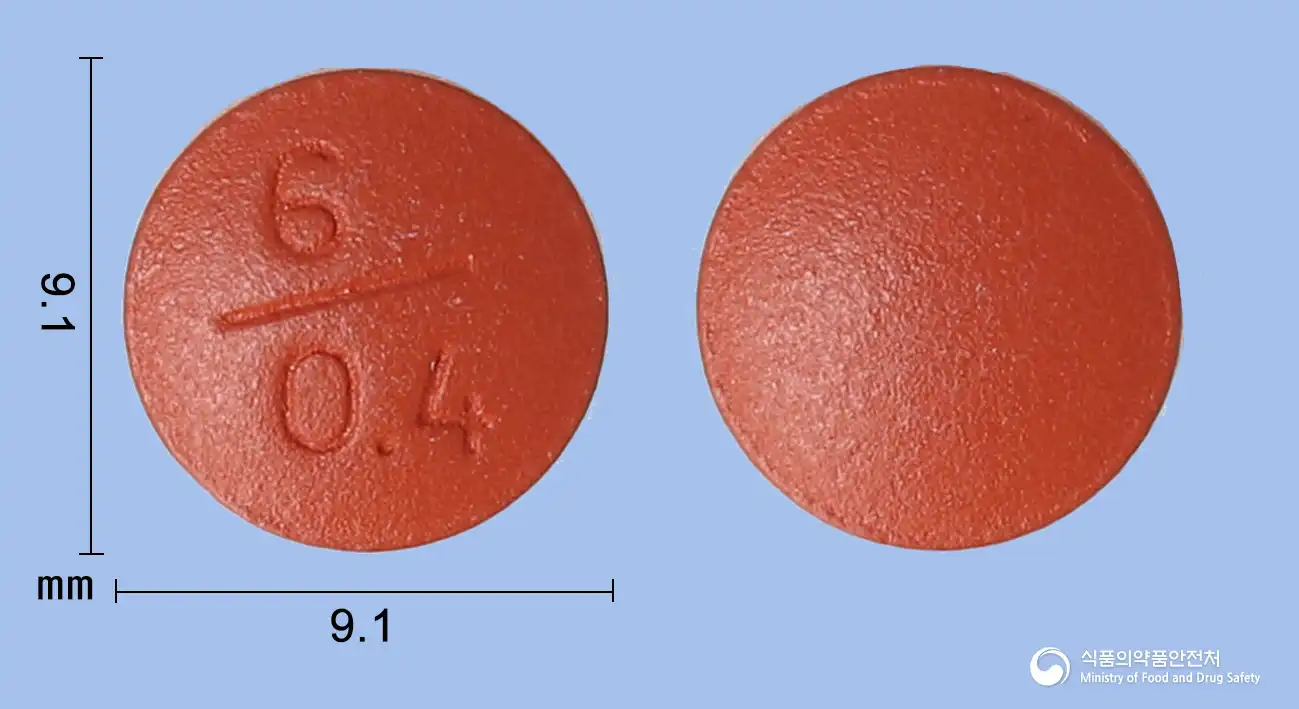
This medicine is a red, round, film-coated sustained-release tablet.
Package unit
90 tablets/box [10 tablets/PTP x 9], 10 tablets/box [10 tablets/PTP x 1]
Questions about this medicine
No questions yet.
For anything that needs medical judgment, consult a doctor or pharmacist.