
 한국어
 English
 日本語
 中文(简体)
 Viewing now
Nifedron CR Tablet 20 mg (Nifedipine)
Nifedipine 20mg
Tablet · Prescription medication
Ellison Pharmaceutical Co., Ltd.
MFDS item code 202500925 · Approved 2025.04.17 · Insurance code 620500480
Treatment of hypertension and coronary artery disease (including chronic stable angina)
This medication is used for hypertension, chronic stable angina, variant angina, and syndromes following myocardial infarction.
1. Usual dosage Treatment should be individualized according to the severity of the patient's condition and response to treatment. The following are the recommended doses for adults. The usual dose is 40 milligrams once daily. If an increase is needed, 80 milligrams may be taken once daily or divided into 2 doses per day. Doses exceeding 80 milligrams are not recommended. 2. Coronary artery disease The recommended dose is 40 milligrams once daily. If an increase is needed, 80 milligrams may be taken once daily or divided into 2 doses per day. An increase to a dose exceeding 80 milligrams may be used exceptionally under a physician's direction. Take after meals. Swallow whole with plenty of water without chewing.
Adolescents aged 14 years and older: The usual dose is 40 milligrams once daily. If an increase is needed, 80 milligrams may be taken once daily or divided into 2 doses per day. Doses exceeding 80 milligrams are not recommended. Adolescents aged 14 years and older: The recommended dose is 40 milligrams once daily. If an increase is needed, 80 milligrams may be taken once daily or divided into 2 doses per day. An increase to a dose exceeding 80 milligrams may be used exceptionally under a physician's direction.
This medication should not be used in certain patients. For instance, it can be dangerous for those allergic to this drug, pregnant or breastfeeding women, patients with serious heart problems, and patients with very low blood pressure. Patients with impaired liver or kidney function, heart failure, elderly individuals, and patients with diabetes should use this medication with caution and follow their physician's instructions carefully. Taking this medication can cause various side effects such as liver function abnormalities, urinary problems, blood abnormalities, heart pain, dizziness, headaches, indigestion, skin rashes, etc., so if symptoms appear, medical staff should be notified immediately. In particular, abruptly stopping this medication can worsen symptoms, so do not cease taking it without a doctor's instruction. Dizziness may occur due to lowered blood pressure, so be cautious when driving or operating hazardous machinery. This medication may interact with various other drugs, so if you are taking other medications, you must inform your doctor or pharmacist, and it is advisable not to consume grapefruit juice while taking this medication. Women who are pregnant or breastfeeding should not take this medication; if absolutely necessary, breastfeeding should be discontinued. This medication is not recommended for children under the age of 18 as its safety and efficacy have not been established. In case of overdose, severe hypotension, cardiac arrhythmias, and altered consciousness may occur, so immediate medical attention is essential. This medication should be taken strictly according to the doctor's prescription and direction, and when storing, keep it out of reach of children in the original container protecting it from moisture and light.
Not everyone experiences these, and they can vary from person to person.
This medication should be stored in a tightly closed container that protects from light, at room temperature between 1°C and 30°C. Storing this way helps preserve the drug's ingredients and ensures safe usage.
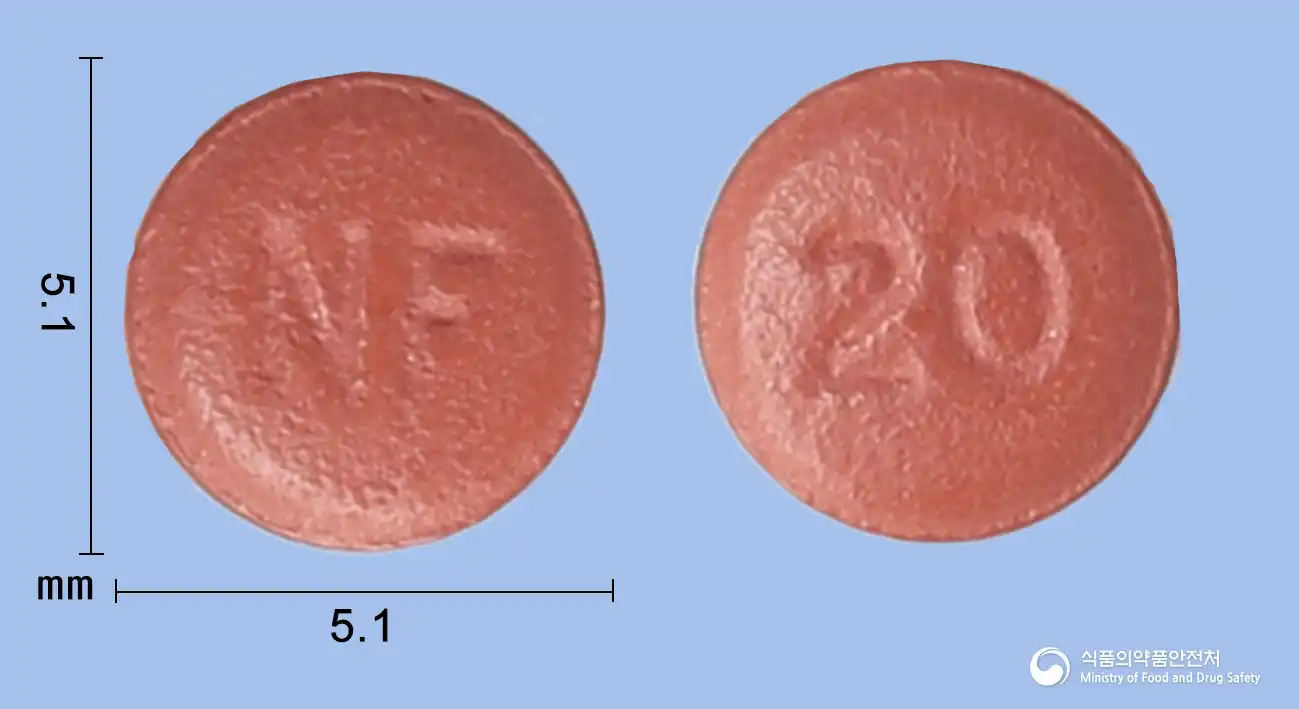
Brownish-red round film-coated tablet
100 tablets/box [10 tablets/PTP x 10]
Even with the same ingredient, strength, dosage form and how it is taken can differ.
Viewing nowNifedipine 20mg
Tablet · Prescription medication
Ellison Pharmaceutical Co., Ltd.
Nifedipine 40mg
Tablet · Prescription medication
Ellison Pharmaceutical Co., Ltd.
Nifedipine 30mg
Tablet · Prescription medication
Kwangdong Pharmaceutical Co., Ltd.
Nifedipine 33mg
Tablet · Prescription medication
Erison Pharmaceutical Co., Ltd.
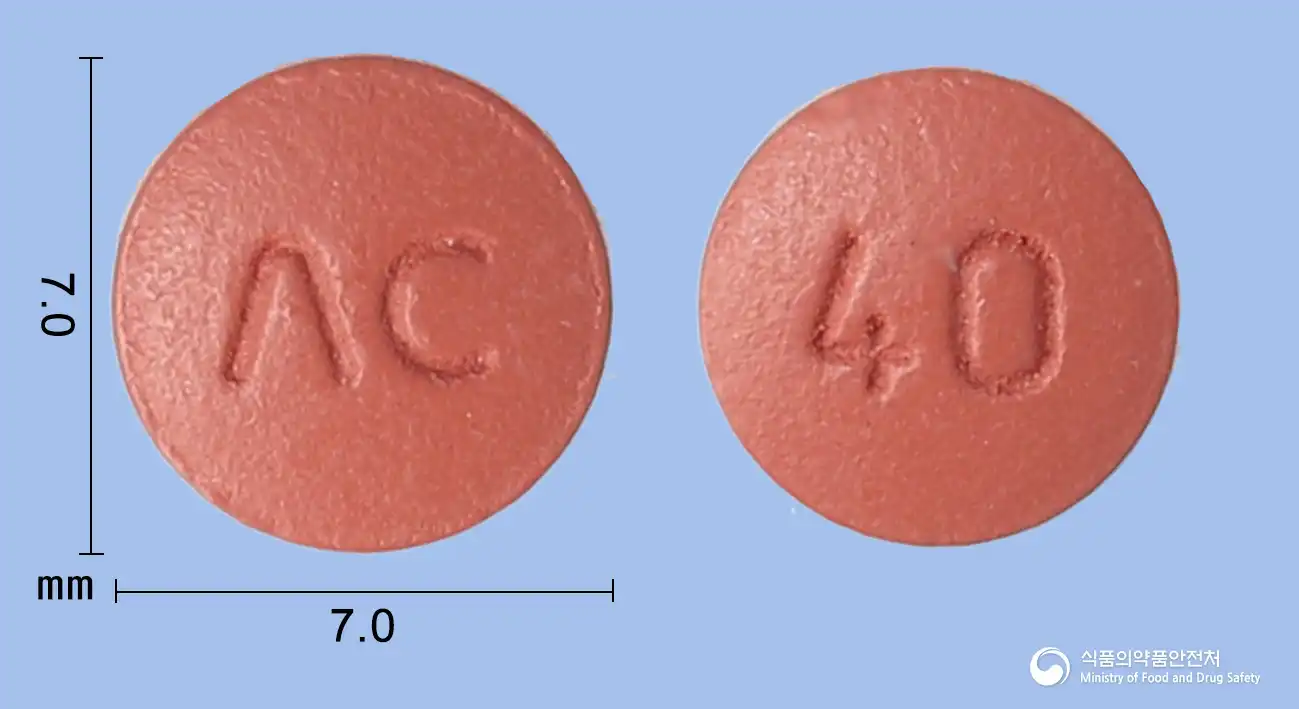
Nifedipine 40mg
Tablet · Prescription medication
Aliko Pharmaceutical Co., Ltd.
Even with the same ingredient, the dose and directions can differ by strength and dosage form. Talk to a doctor or pharmacist before switching from a medication you are already taking.
No questions yet.
For anything that needs medical judgment, consult a doctor or pharmacist.
This drug information is based on data provided by the Korea Ministry of Food and Drug Safety.
Consult a doctor or pharmacist for accurate dosage, administration, and usage instructions.