
 한국어
한국어 English
 日本語
日本語 中文(简体)
 Viewing now
Minogen Capsule 50 mg (Minocycline Hydrochloride)
Minocycline Hydrochloride 50mg
Hard capsule · Prescription medication
TheU Pharmaceutical Co., Ltd.
MFDS item code 202500078 · Approved 2025.01.09
(Infectious diseases) Treatment for Rickettsia, Mycoplasma pneumonia, etc.
This medication is effective against various bacteria and infectious agents including Rickettsia, Mycoplasma pneumoniae, Chlamydia, Vibrio cholerae, Yersinia pestis, Brucella, Treponema, and Staphylococcus aureus. It can treat multiple infectious diseases such as epidemic typhus, scrub typhus, Mycoplasma pneumonia, chancroid, cholera, plague, brucellosis, and syphilis. Additionally, it is used for respiratory and urinary tract infections such as pneumonia, bronchitis, cystitis, meningitis, and ear and sinus infections such as otitis media and sinusitis. It also helps in treating various inflammatory diseases such as intrauterine infections, acute epididymitis, and dental abscesses. Thus, it is a medication widely used to improve various bacterial infectious diseases and aid in patient recovery.
Initially, administer 200 mg (potency) of minocycline, and thereafter take 100 mg (potency) orally every 12 hours. Minocycline standard oral preparations should be taken 1 hour before meals or 2 hours after meals and continued for an additional 24-48 hours even after symptoms have resolved. For streptococcal infections, treatment should continue for at least 10 days.
For children over 12 years of age, administer an initial dose of 4 mg per kg of body weight (potency) and thereafter take 2 mg per kg of body weight (potency) orally every 12 hours.
This medication is a tetracycline antibiotic and should not be administered to certain patients. Firstly, it is not used for patients with allergies to this medication or its components and those with hypersensitivity to tetracycline drugs. It should not be given to pregnant or lactating women, and children under 12 years of age due to risks such as tooth discoloration and skeletal development issues. Patients with impaired kidney function, severe liver dysfunction, and certain skin diseases or autoimmune diseases should also avoid this medication. There are cases where this medication should be used cautiously, such as in patients with weak kidney or liver function, allergic individuals, and those allergic to certain dyes. Additionally, this medication may increase sensitivity to sunlight; hence, it is advisable to avoid direct sunlight exposure. During the course of this medication, kidney and liver functions as well as blood tests should be monitored regularly, and any adverse reactions should be closely observed. Rarely, severe allergic reactions, liver damage, kidney issues, skin rashes, gastrointestinal disorders, and central nervous system symptoms may occur; if symptoms arise, medical consultation should be sought immediately. This medication may interact with other drugs, so it is important to inform healthcare professionals of any other medications being taken. Caution is particularly needed when taken with anticoagulants, oral contraceptives, antacids, anticonvulsants, and immunosuppressants. It is safer not to use this medication during pregnancy or lactation as it may be harmful to the fetus or newborn. It should not be administered to children as it may affect tooth and bone development. Older adults have reduced bodily functions and need dose adjustments and careful observation. When taking this medication, it should be taken upright with sufficient water to prevent retention in the esophagus, particularly avoiding taking it before bedtime. In case of overdose, it is necessary to visit a medical institution promptly for appropriate treatment. This medication should be stored out of reach of children, and care should be taken as transferring it to another container may cause quality degradation or accidents.
Hives, severe swelling (angioedema, vascular edema, limb and facial swelling), chest tightness, difficulty breathing, respiratory distress, asthma attacks, hypotension, cold sweat, pallor, severe allergic reactions, high fever with severe rashes, blisters, skin peeling, pain in mucous membranes of mouth/eyes, severe skin adverse reactions, yellowing of skin or eyes (jaundice), extreme lethargy, liver abnormalities, sudden and very severe
Not everyone experiences these, and they can vary from person to person.
This medication is sensitive to air and moisture, so it should be stored in a tightly sealed container. It is best kept in a dry place at room temperature between 1 and 30 degrees Celsius.
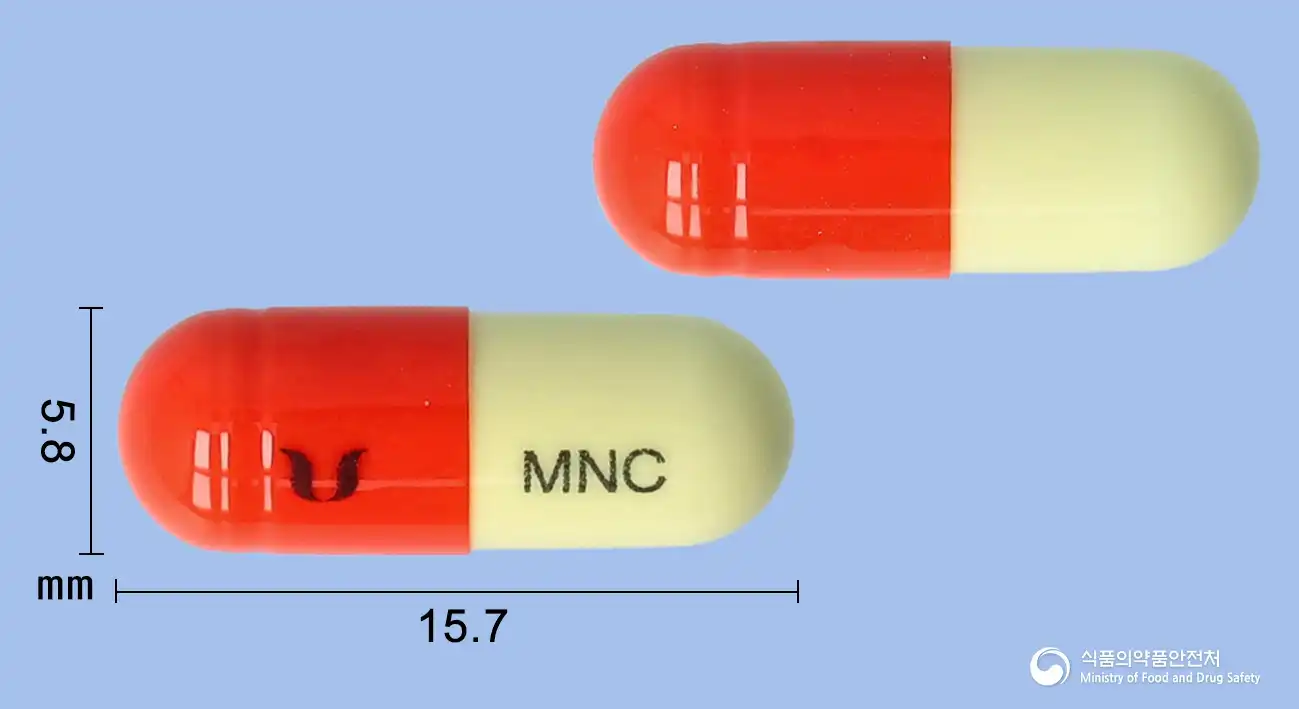
A hard capsule that is upper dark red and lower yellowish opaque, containing yellow powder.
30 capsules/bottle, 100 capsules/bottle
Even with the same ingredient, strength, dosage form and how it is taken can differ.
Viewing nowMinocycline Hydrochloride 50mg
Hard capsule · Prescription medication
TheU Pharmaceutical Co., Ltd.
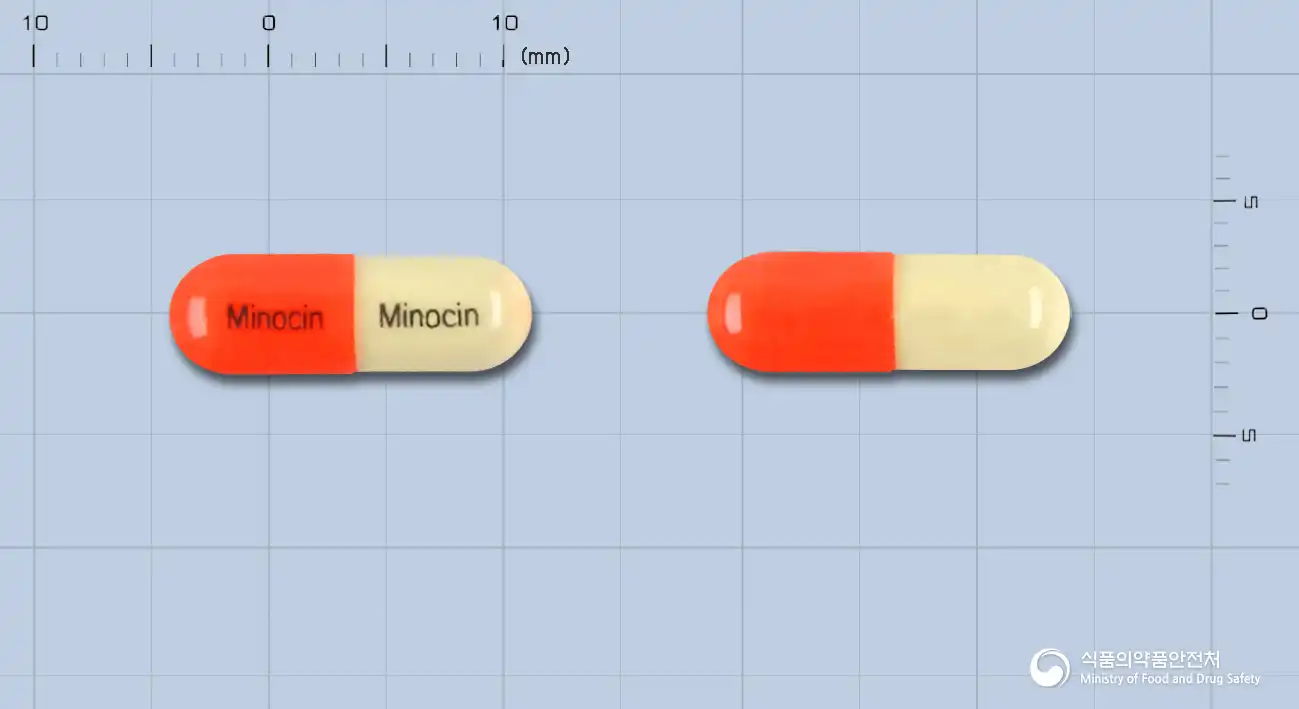
Minocycline Hydrochloride 50mg
Hard capsule · Prescription medication
SK Chemicals Co., Ltd.
Minocycline Hydrochloride 20mg
Ointment · Prescription medication
Dongkuk Pharmaceutical Co., Ltd.
Minocycline Hydrochloride 10mg
Ointment · Prescription medication
Vimer
Minocycline Hydrochloride 20mg
Ointment · Prescription medication
Nybex Co., Ltd.
Minocycline Hydrochloride 20mg
Ointment · Prescription medication
Genewon Science Co., Ltd.
Minocycline Hydrochloride 20mg
Ointment · Prescription medication
Ostem Pharma Co., Ltd.
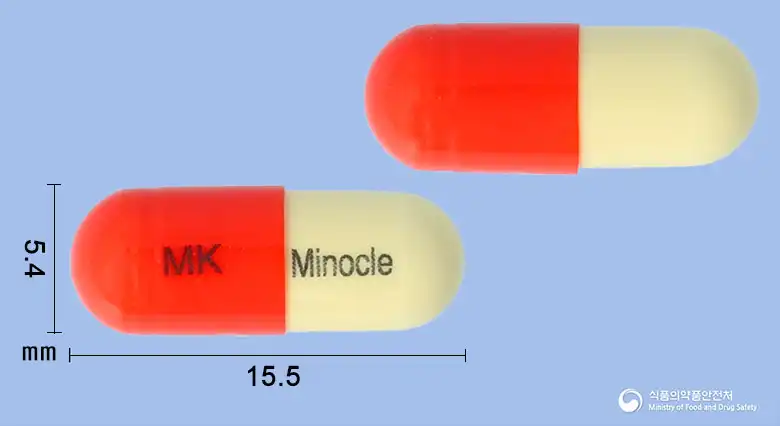
Minocycline Hydrochloride 50mg
Hard capsule · Prescription medication
(Korea Medica Co., Ltd.)
Even with the same ingredient, the dose and directions can differ by strength and dosage form. Talk to a doctor or pharmacist before switching from a medication you are already taking.
No questions yet.
For anything that needs medical judgment, consult a doctor or pharmacist.
This drug information is based on data provided by the Korea Ministry of Food and Drug Safety.
Consult a doctor or pharmacist for accurate dosage, administration, and usage instructions.