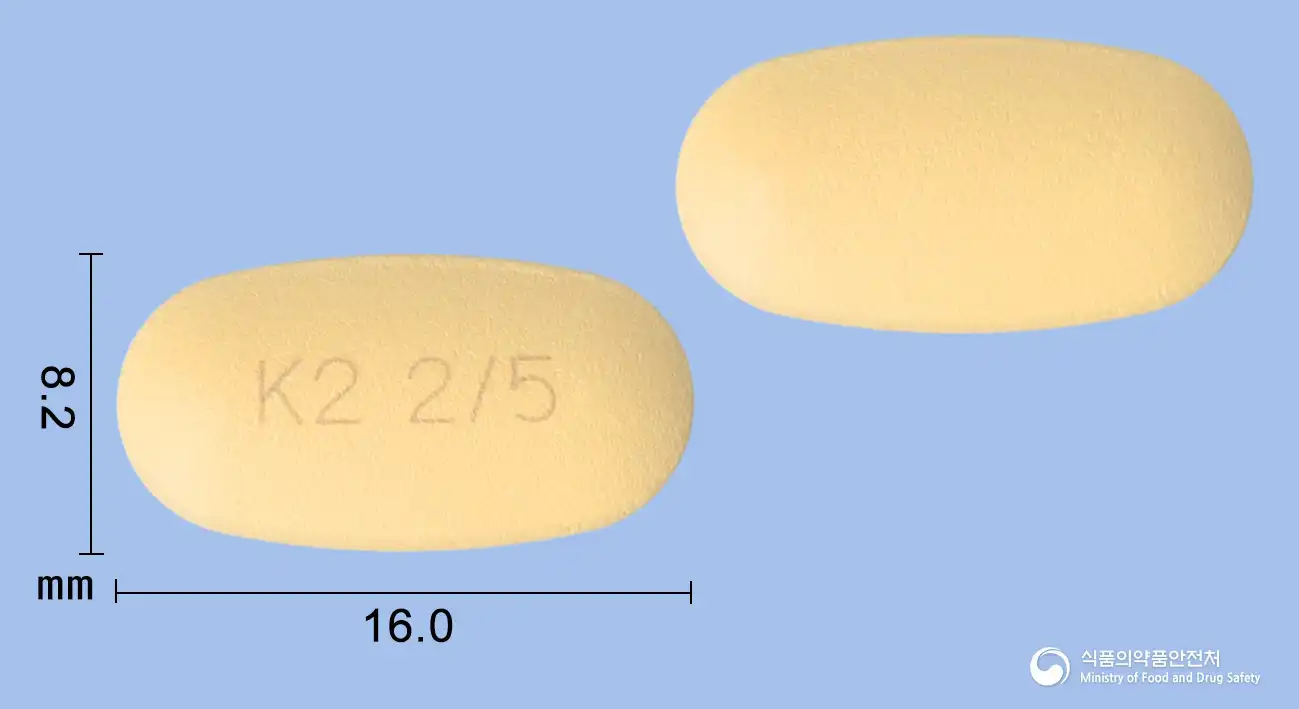
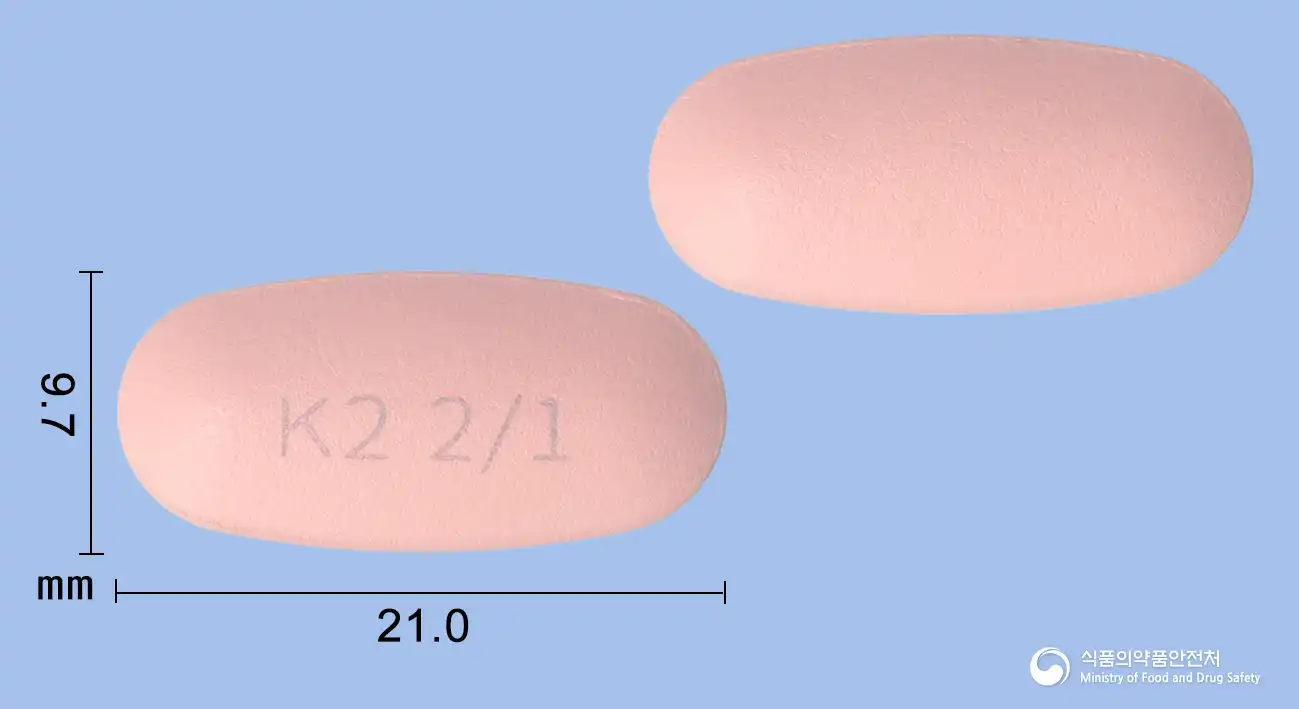
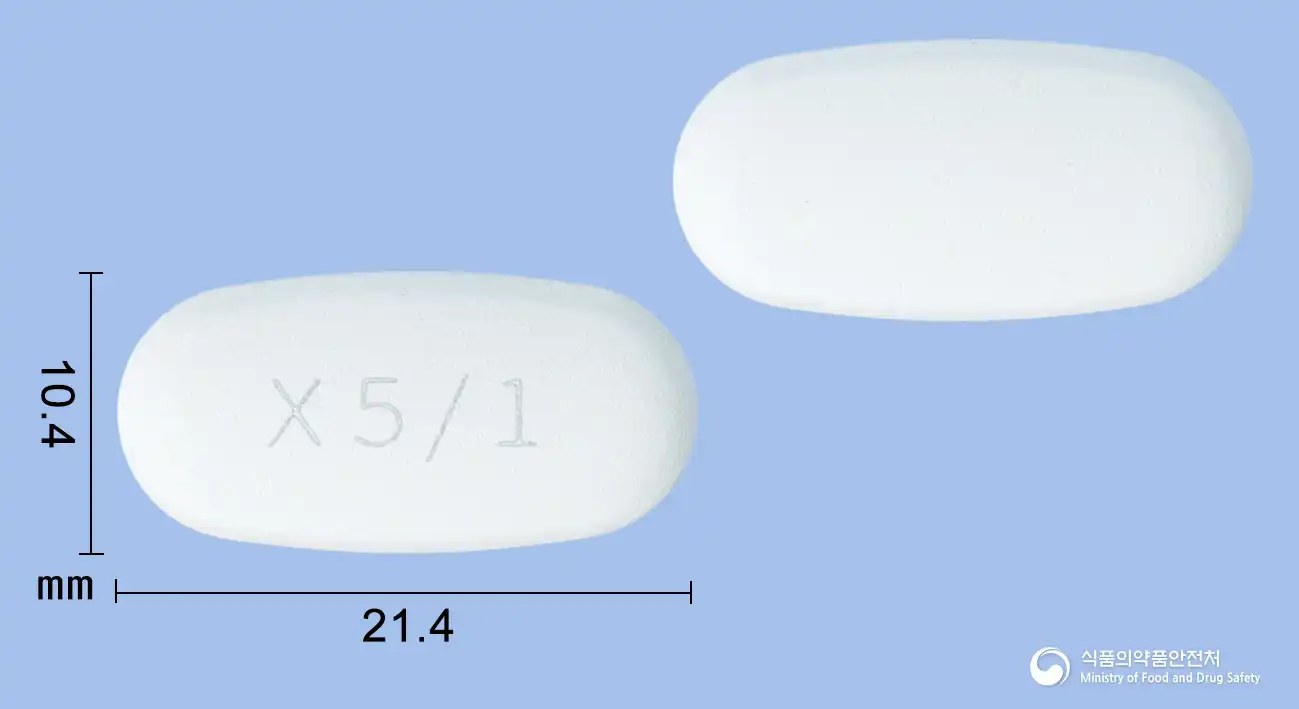
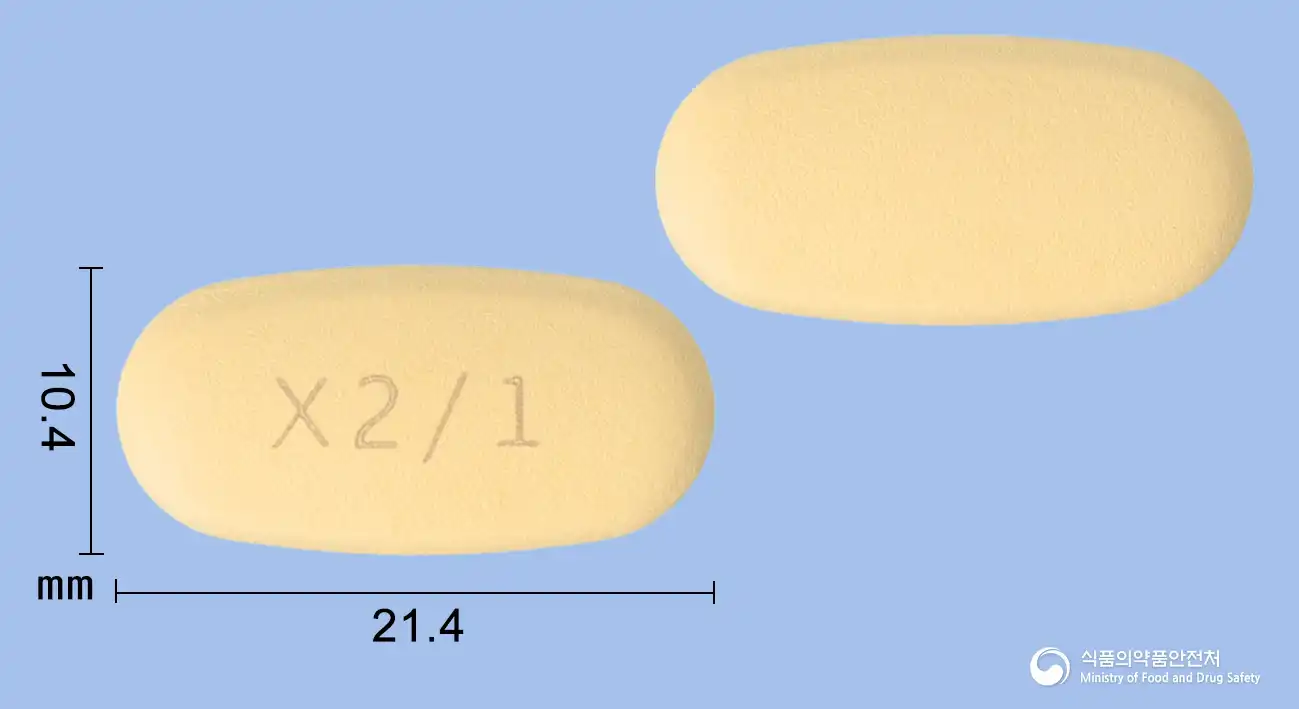
Oval extended release tablet, white to almost white, engraved with SJ501 on one side
Packaging
28 tablets/box (7 tablets/PTP x 4)
Approval status
Active
MFDS item code 202400610 · Approved 2024.03.22
Summary
Main use
Improvement of glycemic control in patients with type 2 diabetes mellitus
Who takes it
Adults
Adult dose
The dose of this medication for antidiabetic therapy should be determined based on each patient's current treatment regimen, efficacy, and tolerability, without exceeding the maximum recommended daily doses of each component: linagliptin 5mg and metformin hydrochloride extended-release 2000 mg.
This medication should be taken once daily with a meal, preferably with the evening meal.
The dose of metformin hydrochloride should be increased gradually.
To maintain its extended-release properties, this medication should be swallowed whole and not split, crushed, ground, or chewed.
The 5/1000 mg extended-release tablet of this medication should be taken once daily as 1 tablet per dose.
Patients taking the 2.5/1000 mg extended-release tablets of this medication should take 2 tablets together once daily.
1. Patients not currently receiving metformin: The initial dose of this medication is a total daily dose of linagliptin 5 mg and metformin hydrochloride 1000mg. The dose of metformin hydrochloride may be gradually increased up to the maximum recommended daily dose of 2000 mg.
2. Patients receiving metformin
- For patients who cannot achieve adequate glycemic control with metformin monotherapy, the initial dose of this medication is a total daily dose of linagliptin 5 mg and the patient's current dose of metformin hydrochloride.
- For patients who cannot achieve adequate glycemic control with combination therapy of metformin and a sulfonylurea, or metformin and insulin, an initial dose of this medication consisting of a total daily dose of linagliptin 5mg and a dose of metformin hydrochloride similar to the patient's current dose should be considered.
- When switching from an immediate-release metformin formulation to an extended-release formulation, glycemic control should be closely monitored and the dose adjusted appropriately if necessary.
- When switching from combination therapy with linagliptin and extended-release metformin to this medication, the dose of this medication is the patient's current dose of linagliptin and extended-release metformin hydrochloride.
No dose adjustment of this medication is necessary in patients with mild renal impairment [creatinine clearance (CrCl) ≧ 60mL/min or estimated glomerular filtration rate (eGFR) ≧ 60mL/min/1.73 m2].
In patients with moderate renal impairment (CKD stage 3A), with creatinine clearance (CrCl) of 45mL/min or more and less than 60mL/min, or estimated glomerular filtration rate (eGFR) of 45mL/min/1.73m2 or more and less than 60mL/min/1.73m2, who tolerate treatment well and have no other conditions that may increase the risk of lactic acidosis, this medication may be used with adjustment of the metformin hydrochloride dose as follows.
The starting dose of metformin hydrochloride is 500mg or 750mg once daily; therefore, treatment should not be initiated with this medication. The maximum daily dose of metformin hydrochloride is 1000mg.
If creatinine clearance (CrCl) falls below 45mL/min or estimated glomerular filtration rate (eGFR) falls below 45mL/min/1.73m2, this medication should be discontinued immediately.
Improvement of glycemic control in patients with type 2 diabetes mellitus
Abnormal blood sugar control in patients with type 2 diabetes
View approved original textHide original text
This medication is used along with dietary control and exercise therapy to assist patients with type 2 diabetes who are suitable for the combined use of Linagliptin and Metformin to help manage their blood sugar levels. This helps effectively control blood sugar levels and aids in the prevention of diabetes complications. It plays a crucial role in improving blood sugar control through consistent usage and lifestyle changes.
How to take
Adult dose
The dose of this medication for antidiabetic therapy should be determined based on each patient's current treatment regimen, efficacy, and tolerability, without exceeding the maximum recommended daily doses of each component: linagliptin 5mg and metformin hydrochloride extended-release 2000 mg.
This medication should be taken once daily with a meal, preferably with the evening meal.
The dose of metformin hydrochloride should be increased gradually.
To maintain its extended-release properties, this medication should be swallowed whole and not split, crushed, ground, or chewed.
The 5/1000 mg extended-release tablet of this medication should be taken once daily as 1 tablet per dose.
Patients taking the 2.5/1000 mg extended-release tablets of this medication should take 2 tablets together once daily.
1. Patients not currently receiving metformin: The initial dose of this medication is a total daily dose of linagliptin 5 mg and metformin hydrochloride 1000mg. The dose of metformin hydrochloride may be gradually increased up to the maximum recommended daily dose of 2000 mg.
2. Patients receiving metformin
- For patients who cannot achieve adequate glycemic control with metformin monotherapy, the initial dose of this medication is a total daily dose of linagliptin 5 mg and the patient's current dose of metformin hydrochloride.
- For patients who cannot achieve adequate glycemic control with combination therapy of metformin and a sulfonylurea, or metformin and insulin, an initial dose of this medication consisting of a total daily dose of linagliptin 5mg and a dose of metformin hydrochloride similar to the patient's current dose should be considered.
- When switching from an immediate-release metformin formulation to an extended-release formulation, glycemic control should be closely monitored and the dose adjusted appropriately if necessary.
- When switching from combination therapy with linagliptin and extended-release metformin to this medication, the dose of this medication is the patient's current dose of linagliptin and extended-release metformin hydrochloride.
No dose adjustment of this medication is necessary in patients with mild renal impairment [creatinine clearance (CrCl) ≧ 60mL/min or estimated glomerular filtration rate (eGFR) ≧ 60mL/min/1.73 m2].
In patients with moderate renal impairment (CKD stage 3A), with creatinine clearance (CrCl) of 45mL/min or more and less than 60mL/min, or estimated glomerular filtration rate (eGFR) of 45mL/min/1.73m2 or more and less than 60mL/min/1.73m2, who tolerate treatment well and have no other conditions that may increase the risk of lactic acidosis, this medication may be used with adjustment of the metformin hydrochloride dose as follows.
The starting dose of metformin hydrochloride is 500mg or 750mg once daily; therefore, treatment should not be initiated with this medication. The maximum daily dose of metformin hydrochloride is 1000mg.
If creatinine clearance (CrCl) falls below 45mL/min or estimated glomerular filtration rate (eGFR) falls below 45mL/min/1.73m2, this medication should be discontinued immediately.
Precautions
This medication contains Metformin Hydrochloride and Linagliptin, which assist in blood sugar control.
Caution is needed when taking this medication as severe lactic acidosis or hypoglycemic symptoms may occur.
Patients with severely impaired kidney function, type 1 diabetes, acute myocardial infarction, or severe infection should not take this medication.
During use, hypoglycemic symptoms may occur; therefore, caution is especially necessary when used with insulin or sulfonylureas.
Lactic acidosis is a very rare but dangerous side effect, and immediate medical attention is required if sudden muscle pain, abdominal pain, weakness, or difficulty breathing occurs.
This medication is primarily excreted through the kidneys; thus, regular kidney function tests should be conducted, and discontinuation may be necessary if kidney function deteriorates.
The use of this medication should be suspended for a period during surgeries or radiological examinations, and the decision to resume use will depend on the recovery of kidney function.
Acute pancreatitis or blistering skin conditions may occur, so if severe abdominal pain or skin abnormalities appear, consult a doctor immediately.
Long-term use may lead to vitamin B12 deficiency; therefore, if necessary, blood tests should be conducted to check vitamin B12 levels.
This medication should not be crushed or chewed; it should be swallowed whole, and it's normal for the tablet shell to be excreted in stool.
When used in combination with other medications, the possibility of interactions exists, so notify your doctor or pharmacist of any other medications being taken.
It is advisable not to use this medication during pregnancy or breastfeeding; consult a specialist in special situations.
In elderly patients, renal function may decline, so kidney function should be checked before use and monitored regularly.
In cases of overdose, gastrointestinal disturbances or the risk of lactic acidosis exist, so immediate hospital visit for appropriate treatment is necessary.
Keep this medication out of the reach of children and store it avoiding humidity and direct sunlight.
Not everyone experiences these, and they can vary from person to person.
Storage
Store this medication in a tightly sealed container to avoid exposure to air or moisture. It is advisable to keep the storage temperature between 1 to 30 degrees Celsius. Storing in this manner ensures the safety of the medication's effectiveness.
Appearance and packaging
Appearance
Oval extended release tablet, white to almost white, engraved with SJ501 on one side
Package unit
28 tablets/box (7 tablets/PTP x 4)
Same-ingredient medicines
Even with the same ingredient, strength, dosage form and how it is taken can differ.
Even with the same ingredient, the dose and directions can differ by strength and dosage form. Talk to a doctor or pharmacist before switching from a medication you are already taking.
Questions about this medicine
No questions yet.
For anything that needs medical judgment, consult a doctor or pharmacist.
This drug information is based on data provided by the Korea Ministry of Food and Drug Safety. Consult a doctor or pharmacist for accurate dosage, administration, and usage instructions.

 한국어
 English
 日本語
 中文(简体)