
 한국어
 English
 日本語
 中文(简体)
Summary
- Main use
- Acute treatment of migraine with or without aura in adults
- Who takes it
- Adults
- Adult dose
- Swallow this medicine whole with water; do not split, chew, or crush it. Do not take this medicine for migraine prevention. ○ Adults The recommended dose is 1 tablet daily (sumatriptan 85mg/naproxen sodium 500mg). The maximum recommended dose in a 24-hour period is 2 tablets. Doses must be taken at least 2 hours apart. The efficacy of a repeat dose after the initial 1-tablet dose has not been systematically evaluated. The efficacy of repeat dosing has not been established when the initial dose is ineffective. The safety of this medicine for an average of more than 5 migraine attacks over 30 days has not been established. Because this medicine contains a dose higher than the minimum effective dose of sumatriptan succinate, its use should take into account the benefits of the higher sumatriptan dose and the increased risk of adverse reactions for each patient. Use the minimum effective dose for the shortest duration appropriate to the treatment goals of the individual patient. ○ Patients with renal impairment This medicine should not be administered to patients with renal failure or severe renal impairment (creatinine clearance < 30 mL/min). Use of this medicine is not recommended in patients with mild to moderate renal impairment. (See Precautions for Use_5. General Precautions.) ○ Patients with hepatic impairment This medicine should not be administered to patients with moderate to severe hepatic impairment (ChildPugh B and C). Use of this medicine is not recommended in patients with mild hepatic impairment. (See Precautions for Use_5. General Precautions.)
Ingredients
- Manufacturer
- SK Chemical Co., Ltd.
Efficacy & effects
Acute treatment of migraine with or without aura in adults
- Aura symptoms
- migraine
View approved original textHide original text
This medicine is effective for acute treatment of migraines, with or without aura, in adults aged 18 years and older. It rapidly alleviates migraine symptoms, helping patients return to their daily activities. It not only relieves headache pain but also improves accompanying symptoms such as nausea and sensitivity to light and sound. Moreover, it helps reduce the recurrence of symptoms and minimizes discomfort caused by migraines. For these reasons, it is widely used for the acute treatment of migraines.
How to take
Adult dose
Swallow this medicine whole with water; do not split, chew, or crush it. Do not take this medicine for migraine prevention. ○ Adults The recommended dose is 1 tablet daily (sumatriptan 85mg/naproxen sodium 500mg). The maximum recommended dose in a 24-hour period is 2 tablets. Doses must be taken at least 2 hours apart. The efficacy of a repeat dose after the initial 1-tablet dose has not been systematically evaluated. The efficacy of repeat dosing has not been established when the initial dose is ineffective. The safety of this medicine for an average of more than 5 migraine attacks over 30 days has not been established. Because this medicine contains a dose higher than the minimum effective dose of sumatriptan succinate, its use should take into account the benefits of the higher sumatriptan dose and the increased risk of adverse reactions for each patient. Use the minimum effective dose for the shortest duration appropriate to the treatment goals of the individual patient. ○ Patients with renal impairment This medicine should not be administered to patients with renal failure or severe renal impairment (creatinine clearance < 30 mL/min). Use of this medicine is not recommended in patients with mild to moderate renal impairment. (See Precautions for Use_5. General Precautions.) ○ Patients with hepatic impairment This medicine should not be administered to patients with moderate to severe hepatic impairment (ChildPugh B and C). Use of this medicine is not recommended in patients with mild hepatic impairment. (See Precautions for Use_5. General Precautions.)
Precautions
This medication may cause gastrointestinal bleeding in individuals who regularly consume more than three alcoholic beverages daily; therefore, it is essential to consult a physician or pharmacist. Additionally, the ingredients in this medicine may exacerbate cardiovascular issues and increase the risk of severe heart and vascular diseases, such as myocardial infarction and stroke. Patients with a history of cardiovascular disease or risk factors should exercise extra caution. Patients who have undergone coronary artery bypass surgery should not take this medication. Serious gastrointestinal issues such as bleeding, ulcers, or perforations may occur, so particular caution is required for elderly patients or those with a history of gastrointestinal disorders. If such symptoms arise, immediate evaluation and treatment by a physician are necessary. This medicine is not to be administered to patients with specific allergies or conditions, to pregnant or nursing women, or to children under 18 years of age. Women of childbearing age, elderly individuals, patients with impaired liver or kidney function, and those with hypertension should use this medication cautiously and under a physician's guidance. During use, symptoms such as dizziness, drowsiness, nausea, dry mouth, dyspepsia, and chest discomfort may arise, so care should be taken while driving or operating machinery. This medication may interact with other specific drugs, so it is crucial to inform the healthcare provider about any other medications currently being taken, especially when used with antidepressants, anticoagulants, diuretics, or antihypertensives. Women who are pregnant or may become pregnant are advised not to use this medication, and nursing mothers should avoid taking it as well. Patients taking this medicine should undergo regular physician check-ups and closely monitor any adverse reactions or changes in symptoms. In the event of an overdose, severe side effects may occur, so it is important to adhere to the prescribed dosage and visit a healthcare facility immediately if side effects are suspected. This medication should be stored out of reach of children and care should be taken not to transfer it to other containers.
Side effects
Dizziness, drowsiness, sensory disturbances, nausea, dry mouth, indigestion, chest discomfort, pain, aching, feeling of heat, feeling of cold, feeling of pressure, sensation of tightness or pressure in any part of the body, flushing, weakness, fatigue, sleepiness, cramps, sensory abnormalities, sensory loss, phonophobia, photophobia, confusion, depression, decreased concentration, olfactory dysfunction, dysarthria, ecstasy, facial pain, heat sensitivity, impaired coordination, tearing, monoplegia, sleep disorders, syncope, tremors, aggression, apathy, cluster headache, decreased appetite, drug addiction, abnormal stress response, facial paralysis, hallucinations, hunger, hypersensitivity, hysteria, increased arousal, memory disorders, neuralgia, paralysis, personality changes, phobias, neuropathies, euphoria, suicide, monospasm, agitation, anxiety, depressive disorders, loss of attachment, movement disorders, neurosis, taste disorders, increased intracranial pressure, vomiting, diarrhea, gastrointestinal disorders, constipation, dysphagia, gastroesophageal reflux, gastrointestinal bleeding, hematemesis, melena, peptic ulcer, gastrointestinal pain, heartburn, toothache, gastrointestinal pressure, gastritis, excessive salivation, hyposalivation, abdominal distension, abdominal pain, oral irritation, itching, sialadenitis, hypertension, flushing, palpitations, hypotension, arrhythmia, ECG changes, hypertension, hypotension, pallor, tachycardia, angina pectoris, atherosclerosis, bradycardia, cerebral ischemia, cerebrovascular damage, heart block, peripheral cyanosis, thrombosis, temporary myocardial ischemia, vasodilation, anemia, shortness of breath, asthma, viral infection, hiccups, respiratory difficulties, cough, bronchitis, interference with liver function tests, sinusitis, tinnitus, allergic rhinitis, upper respiratory infection, ear, nose, and throat bleeding, external otitis, hearing loss, nasal inflammation, sound sensitivity, hearing impairment, ear pain, tonsil disease, feeling of fullness in the ear, thirst, increased thyroid-stimulating hormone levels, galactorrhea, hyperglycemia, hypoglycemia, hypothyroidism, polydipsia, weight gain, weight loss, endocrine cysts, masses, fluid disorders, scleral disorders, pupil dilation, vision loss, decreased vision, visual impairment, ocular edema, exophthalmos, ocular irritation, itching, coordination disorders, external ocular muscle disorder, ocular hemorrhage, ocular pain, keratitis, conjunctivitis, myalgia, musculoskeletal pain, muscle cramps, tetany, muscular atrophy, muscle weakness, muscle fatigue, arthralgia, rheumatism, musculoskeletal deformities, muscle rigidity, muscle spasm, musculoskeletal inflammation, sweating, erythema, itching, rash, skin tenderness, urticaria, dry skin, scaly skin, skin tension, skin wrinkles, eczema, seborrheic dermatitis, skin nodules, tenderness, nipple discharge, breast swelling, breast cysts, breast masses, primary malignant breast neoplasm, dysmenorrhea, increased urination, intermenstrual bleeding, miscarriage, hematuria, frequent urination, cystitis, urinary disorders, urethritis, urinary tract infection, premenstrual syndrome, menstrual cycle abnormalities, salpingitis, premenstrual syndrome, hypersensitivity reactions, fever, fluid retention, edema, hematoma, lymphadenopathy, speech disorders, voice abnormalities, contusions, shimmering, flashes, diplopia, nystagmus, scotoma, visual decline, optic neuropathy, retinal artery occlusion, retinal vein thrombosis, hypotension, bradycardia, palpitations, deep vein thrombosis, transient ischemic ECG changes, coronary artery spasm, myocardial infarction, atrial fibrillation, cardiomyopathy, Prinzmetal angina, pulmonary embolism, shock, thrombophlebitis, hemolytic anemia, pancytopenia, thrombocytopenia, hypertension, Raynaud's phenomenon, peripheral vascular ischemia, interstitial seizures, central nervous system vasculitis, cerebrovascular accident, dysphagia, serotonin syndrome, subarachnoid hemorrhage, myopathy, extrapyramidal disorders, hearing impairment, exacerbation of sunburn, phototoxic reactions, skin allergies, shock, anaphylactic reactions, acute renal failure, ischemic colitis with rectal bleeding, xerostomia, increased liver function tests, angioedema, cyanosis, death, temporal arteritis, panic disorder, bronchospasm, stiff neck, vomiting, lethargy, confusion, anxiety, rhinitis, increased sweating, constipation, gastrointestinal diseases, polydipsia, diarrhea, limb paralysis, tremors, ataxia, insomnia, neuroticism, depression, arthralgia, dry skin, ocular pain, shock symptoms, PIE syndrome, urticaria, rash, itching, hematemesis, gastrointestinal bleeding, perforation, upper abdominal discomfort, abdominal pain, loss of appetite, heartburn, stomatitis, abdominal distension, melena, agranulocytosis, eosinophilia, leukopenia, aplastic anemia, thrombocytopenia, jaundice, hepatitis, kidney disorders, glomerulonephritis, hematuria, hyperkalemia, interstitial nephritis, nephrotic syndrome, renal papillary necrosis, proteinuria, renal failure, aseptic meningitis, cognitive impairment, vertigo, headache, tingling in hands and feet, decreased libido, fatigue, abnormal dreams, loss of concentration, disorientation, muscle weakness, eczema, purpura, photosensitivity, hair loss, redness, necrotizing hemolysis, erythema multiforme, Stevens-Johnson syndrome, epidermolysis bullosa, tinnitus, hearing impairment, visual impairment, edema, palpitations, myasthenia gravis, congestive heart failure, eosinophilic pneumonia, anaphylactoid reactions, menstrual disorders, chills, fever, vasculitis, hyperglycemia, hypoglycemia
Not everyone experiences these, and they can vary from person to person.
Storage
This medication may be sensitive to air or moisture, so it should be stored in a tightly sealed container. Furthermore, it is recommended that the medicine is stored at room temperature, neither too cold nor too hot, specifically between 1°C and 30°C. Proper storage can help maintain the effectiveness of the medication for a longer period.
Appearance and packaging
Appearance
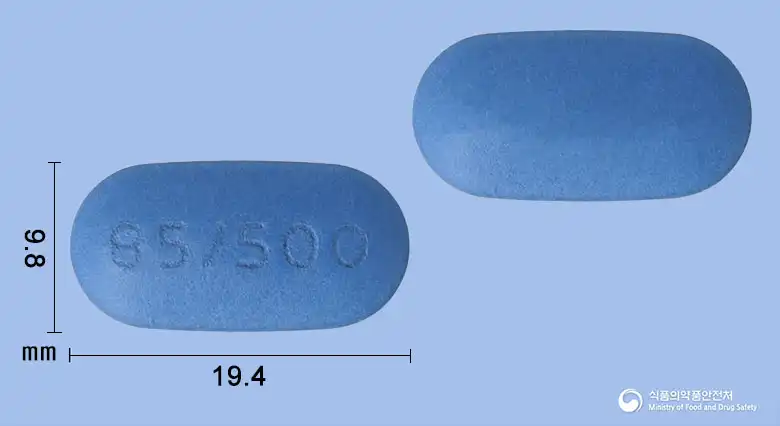
Blue oblong film-coated tablets
Package unit
9 tablets/bottle
Questions about this medicine
No questions yet.
For anything that needs medical judgment, consult a doctor or pharmacist.