
 한국어
 English
 日本語
 中文(简体)
 Viewing now
Dexamethasone 4 mg Tablets
Dexamethasone Micronized 4mg
Tablet · Prescription medication
Daewoong Pharmaceutical Co., Ltd.
MFDS item code 202203949 · Approved 2022.10.31 · Insurance code 641607760
Treatment of inflammatory and allergic diseases, endocrine, hematologic, neoplastic, neurologic, and edematous disorders, and severe infections
This medication is used for various endocrine disorders, such as primary and secondary adrenal insufficiency and adrenal crisis. It also helps prevent acute exacerbations of rheumatic disorders, particularly rheumatoid arthritis, polyarthritis, osteoarthritis, and acute gouty arthritis. In connective tissue diseases, it is effective in treating conditions like systemic lupus erythematosus and acute rheumatic myocarditis. It is used for skin disorders, such as pemphigus or severe psoriasis, atopic dermatitis, and is widely applied to allergic diseases to improve symptoms like bronchial asthma and urticaria. Furthermore, it is used for ophthalmic diseases, gastrointestinal diseases, hematological disorders, and some neoplastic and edematous diseases. It acts effectively on various diseases and helps improve patients' symptoms.
Administer 4 mg of dexamethasone orally once daily. The safety and efficacy of combination or divided administration of this product have not been established.
This medication should not be used in certain patients. For example, patients allergic to this drug or its components, patients who have received live vaccines, patients with herpes simplex virus, herpes zoster, varicella, and those with infections or systemic fungal infections not adequately treated with antimicrobial agents should not take this medication. Additionally, this medication contains lactose, so patients with genetic lactose intolerance should not take it. Some patients should use this medication with caution. Those with specific disorders or past medical history, such as glaucoma, tuberculosis, hypertension, thrombosis, peptic ulcer, psychosis, or osteoporosis should be particularly careful. This medication can suppress immune function, increasing the risk of worsening infections. Diabetic patients may have difficulty controlling blood sugar, requiring caution. Long-term use of this medication may lead to adrenal insufficiency, and sudden discontinuation can result in serious side effects, so the dosage should be gradually reduced. During the use of this medication, live vaccinations should be avoided and care should be taken to prevent infections, as susceptibility may increase. This medication may interact with several other drugs, so patients must inform their doctor or pharmacist of any concomitant medications. Pregnant or breastfeeding women should carefully consider the necessity and risks of using this medication, as it may affect the fetus or newborn, and discontinuing breastfeeding is advisable. Children and the elderly may be more sensitive to the side effects of this medication, so doses should be minimized and conditions should be closely monitored. Finally, if abnormal symptoms occur during the use of this medication, such as vision changes, infection symptoms, or changes in mental status, it is essential to consult a healthcare professional immediately.
Induction of infection, exacerbation of infection, secondary adrenal insufficiency, diabetes, menstrual irregularities, suppression of adrenocorticotropic hormone secretion, Cushing's syndrome, buffalo hump, peptic ulcer, gastrointestinal bleeding, pancreatitis, diarrhea, nausea, vomiting, abdominal pain, heartburn, abdominal distension, thirst, loss of appetite, increased appetite, mental disorders, depression, euphoria, insomnia, headache, dizziness, convulsions, osteoporosis, avascular necrosis of the femoral and humeral epiphysis, myopathy, myalgia, arthralgia, loss of muscle mass, muscle weakness, spinal compression fractures, tendon rupture, nitrogen equilibrium, fatty liver, edema, hypertension, blood pressure elevation, hypokalemic alkalosis, sodium retention, fluid retention, tumor lysis syndrome, iritis, lens opacity, keratitis, optic neuritis, increased intraocular pressure, glaucoma, subcapsular cataract, secondary eye infections due to fungi or viruses, retinal disorders, exophthalmos, blurred vision, leukocytosis, thrombosis, acne, hirsutism, alopecia, pigmentation, subcutaneous bleeding, purpura, ancestors, itching, abnormal sweating, facial erythema, delayed wound healing, thin and fragile skin, adipose tissue inflammation, urticaria, vascular neurogenic edema, allergic dermatitis, rash, anaphylaxis, fever, fatigue, steroid-induced nephropathy, weight gain, changes in sperm count or motility, hiccups, malaise, acute adrenal insufficiency, fever, headache, loss of appetite, weakness, myalgia, arthralgia, shock symptoms, visual impairment, blurred vision
Not everyone experiences these, and they can vary from person to person.
This medication should be stored in a tightly closed container to protect it from air and moisture. It is recommended to maintain the storage temperature between 1 degree and 30 degrees at room temperature.
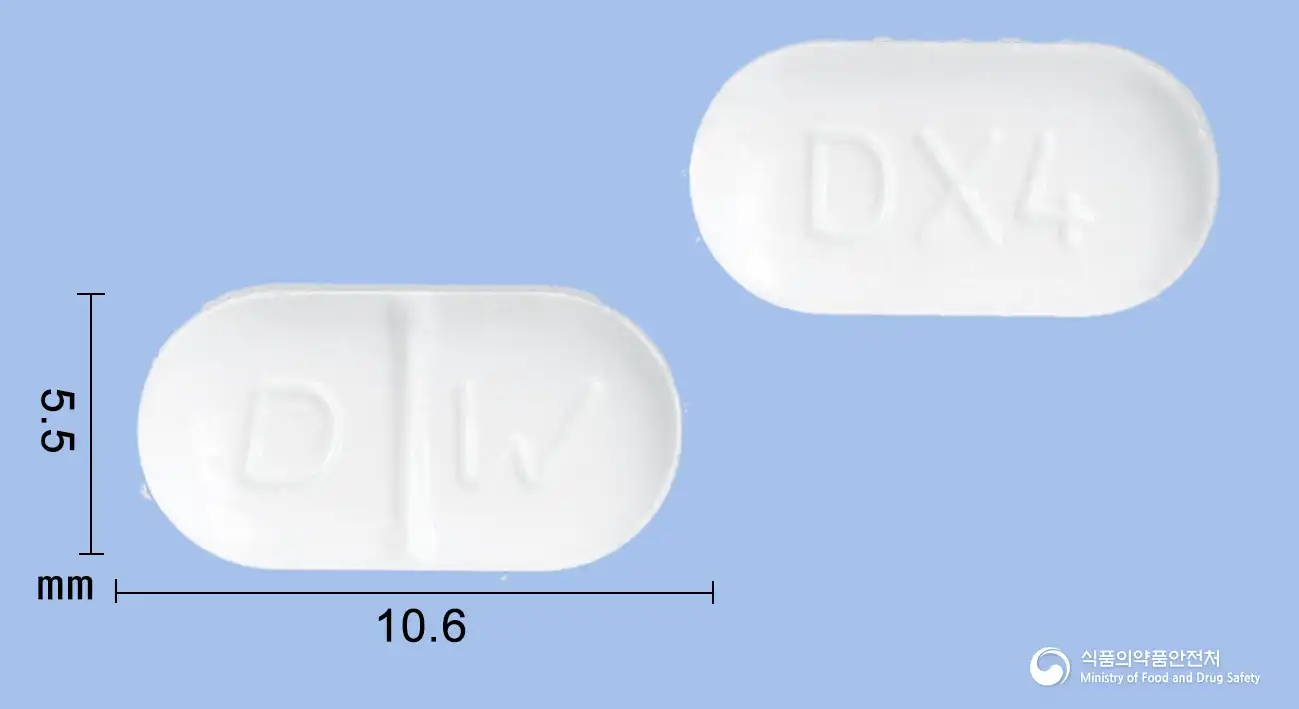
White egg-shaped tablet
30 tablets/bottle, 100 tablets/bottle
Even with the same ingredient, strength, dosage form and how it is taken can differ.
Even with the same ingredient, the dose and directions can differ by strength and dosage form. Talk to a doctor or pharmacist before switching from a medication you are already taking.
No questions yet.
For anything that needs medical judgment, consult a doctor or pharmacist.
This drug information is based on data provided by the Korea Ministry of Food and Drug Safety.
Consult a doctor or pharmacist for accurate dosage, administration, and usage instructions.