
 한국어
한국어 English
 日本語
日本語 中文(简体)
 Viewing nowCombination
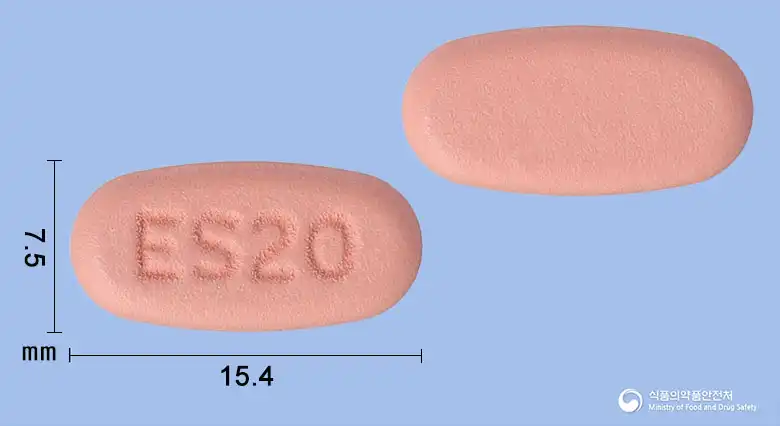
Esomeprazole Plus Tablet 20/350 mg
Esomeprazole Magnesium Trihydrate 22.25mg · Magnesium Hydroxide 350mg
Tablet · Prescription medication · Combination
Hanmi Pharmaceutical Co., Ltd.
MFDS item code 202201119 · Approved 2022.03.21 · Insurance code 643508500
Treatment of erosive esophagitis and prevention of recurrence, relief of gastroesophageal reflux disease symptoms
Gastroesophageal reflux disease (GERD) is a disorder that occurs when the contents of the stomach flow back into the esophagus. This medication is effective for the treatment of erosive esophagitis and also helps as a maintenance therapy to prevent recurrence in esophagitis patients requiring long-term use. Furthermore, it is used to relieve symptoms caused by reflux even in the absence of esophagitis. By taking this medication, it helps improve uncomfortable symptoms caused by reflux and contributes to preventing recurrence.
This medication should be taken at least 1 hour before meals on an empty stomach. When taking this medication, swallow it whole with at least half a cup of water. Do not take with other beverages other than water. This medication should not be chewed or crushed. 1. Adults 1) Gastroesophageal reflux disease (GERD). - Treatment of erosive esophagitis: Administer 1 time a day, 1 tablet of 40/350 mg for 4 weeks. If esophagitis is not cured or symptoms persist, continue for another 4 weeks. - Long-term maintenance therapy to prevent recurrence in esophagitis patients: 1 time a day, 1 tablet of 20/350 mg - Symptomatic treatment for gastroesophageal reflux disease without esophagitis · Administer 1 time a day, 1 tablet of 20/350 mg. If symptoms are not controlled after 4 weeks, further medical care is required. · Once symptoms are relieved, for subsequent symptoms, administer 1 time a day, 1 tablet of 20/350 mg to control. · In adults, it may be administered as needed, 1 time a day, with 1 tablet of 20/350 mg. For patients at high risk of developing gastric or duodenal ulcers due to non-steroidal anti-inflammatory drug administration, it is not recommended to administer as needed for continued symptom control. 2. Hepatic impairment: No dosage adjustment is required for patients with mild to moderate hepatic impairment. Patients with severe hepatic impairment should not exceed the 20/350 mg dosage.
This medication should not be used in certain patients. Patients with hypersensitivity to this medication, its components, or benzimidazole derivatives, or those who have experienced such reactions in the past, should not be administered this medication. Additionally, patients taking atazanavir, nelfinavir, or rilpivirine, as well as nursing mothers, should avoid this medication. Patients with severely impaired renal function may experience hypermagnesemia, so they should avoid taking this medication, and patients with diarrhea should exercise caution. Patients with heart function issues or those who already have hypermagnesemia should use this medication cautiously. Taking this medication may result in various side effects. Gastrointestinal symptoms such as headache, dizziness, abdominal pain, diarrhea, nausea, vomiting, as well as neuropsychiatric symptoms such as insomnia, mental confusion, and depression may occur. Rarely, blood disorders, severe allergic reactions, liver function abnormalities, skin rashes, hair loss, muscle weakness, etc., have also been reported. Moreover, prolonged use of this medication can lead to hypomagnesemia, which, in severe cases, can result in serious symptoms such as muscle cramps or arrhythmia, requiring regular check-ups. This medication suppresses gastric acid secretion, thereby altering the gastric environment, which may slightly increase the risk of gastrointestinal bacterial infections. In particular, in hospitalized patients, the risk of diarrhea due to Clostridium difficile may increase, so if diarrhea persists, immediate consultation with healthcare personnel is necessary. Long-term use of this medication may increase the risk of osteoporotic fractures, so patients at risk of osteoporosis should undergo appropriate monitoring such as bone density tests. This medication interacts with several other drugs, so if currently taking other medications, it is crucial to inform your doctor or pharmacist. In particular, caution should be exercised when used in conjunction with antiviral medications, anticoagulants, anticonvulsants, antidepressants, etc., as blood concentration levels of some medications may change, potentially requiring regular testing. Pregnant women have limited data on the safety of this medication, so it is advisable to consult with a physician before taking it during pregnancy. Nursing mothers should avoid this medication since it is uncertain whether it is excreted in breast milk. In the case of overdose, there is no specific antidote, so appropriate treatment according to symptoms and following medical personnel's instructions should be undertaken. This medication must be kept out of reach of children, and caution should be taken as transferring to another container may deteriorate its quality.
Urticaria, angioedema, anaphylactic reaction/shock, hypomagnesemia, microscopic colitis, jaundice, hepatitis, liver failure, encephalopathy, Stevens-Johnson syndrome, toxic epidermal necrolysis (Lyell syndrome), acute generalized exanthematous pustulosis, erythema multiforme, drug reaction with eosinophilia and systemic symptoms (DRESS syndrome), interstitial nephritis, gynecomastia, Clostridium difficile-associated diarrhea, rhabdomyolysis, severe
Headache, dizziness, paresthesia, drowsiness, taste disturbance, blurred vision, bronchospasm, abdominal pain, constipation, diarrhea, abdominal bloating, nausea, vomiting, dry mouth, stomatitis, dermatitis, itching, rash, hair loss, photosensitivity, arthralgia, myalgia, asthenia, increased sweating, allergic reactions, facial swelling, flushing, fatigue, fever, malaise, pain, tachycardia, hypertension, goiter, indigestion, psychological symptoms (insomnia, anxiety, mental confusion)
Not everyone experiences these, and they can vary from person to person.
This medication may be sensitive to air and moisture; therefore, it must be stored in a tightly sealed container. Additionally, it is best to avoid extremes of heat or cold, keeping it at room temperature between 1°C and 30°C.
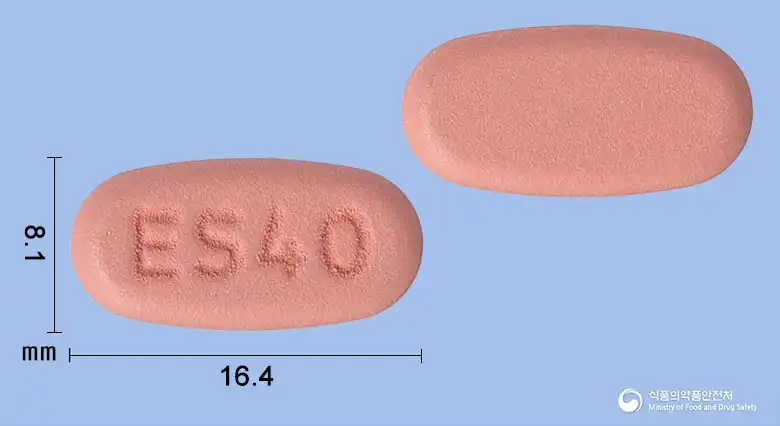
Pink oval film-coated tablet
30 tablets/bottle
Even with the same ingredient, strength, dosage form and how it is taken can differ.
Viewing nowCombinationEsomeprazole Magnesium Trihydrate 22.25mg · Magnesium Hydroxide 350mg
Tablet · Prescription medication · Combination
Hanmi Pharmaceutical Co., Ltd.
 Combination
Esomeprazole Magnesium Trihydrate 44.5mg · Magnesium Hydroxide 350mg
Tablet · Prescription medication · Combination
Hanmi Pharmaceutical Co., Ltd.
Even with the same ingredient, the dose and directions can differ by strength and dosage form. Talk to a doctor or pharmacist before switching from a medication you are already taking.
No questions yet.
For anything that needs medical judgment, consult a doctor or pharmacist.
This drug information is based on data provided by the Korea Ministry of Food and Drug Safety.
Consult a doctor or pharmacist for accurate dosage, administration, and usage instructions.