
 한국어
 English
 日本語
 中文(简体)
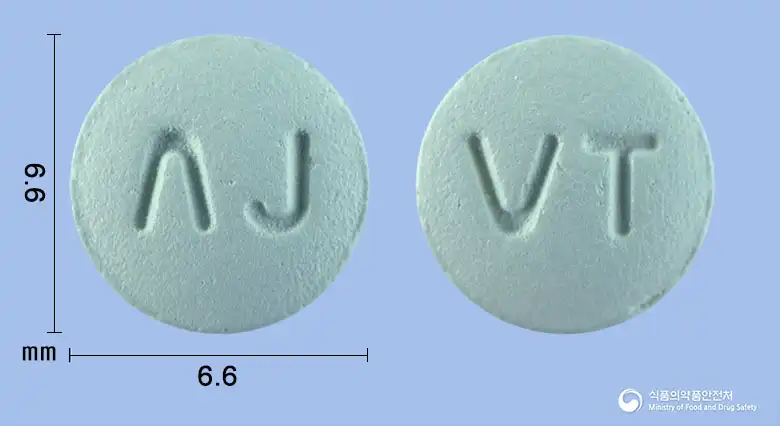
Dosage form image
Viewing nowAlcoxib Tablet 30 mg (Etoricoxib)
Etoricoxib 30mg
Tablet · Prescription medication
Korea Hyutex Pharmaceutical Co., Ltd.
MFDS item code 202103439 · Approved 2021.04.27 · Insurance code 649105280
Relief of symptoms of osteoarthritis (degenerative arthritis)
This medication is used to relieve the symptoms or signs of osteoarthritis, specifically degenerative arthritis. It selectively inhibits the COX-2 enzyme to reduce inflammation and pain. However, it is important to thoroughly assess the overall health status and risk factors of individual patients before administration. This helps minimize the possibility of side effects and allows for safe treatment. This medication effectively improves the discomfort associated with osteoarthritis.
Adults: The recommended dose is 30 mg once daily. Do not exceed 30mg per day. If there is no therapeutic benefit at the recommended dose, discontinue this medication and consider an appropriate alternative treatment. Patients with hepatic impairment: No dosage adjustment is necessary in patients with mild or moderate hepatic impairment (Child-Pugh score 5-9). However, use caution because experience with this medication in patients with moderate hepatic impairment is limited. Do not use this medication in patients with severe hepatic impairment (Child-Pugh score >9), as there is no experience with its use in these patients. Patients with renal impairment: No dosage adjustment is necessary in patients with mild or moderate renal impairment (creatinine clearance of 30 mL/min or greater). Do not use this medication in patients with severe renal impairment (creatinine clearance below 30 mL/min). Elderly patients: No dosage adjustment is necessary in elderly patients.
This medication may cause gastrointestinal bleeding in individuals who regularly consume more than three glasses of alcohol daily; therefore, it must be discussed with a doctor or pharmacist. This medication may affect the cardiovascular system, increasing the risk of serious problems such as blood clots, myocardial infarction, and stroke, thus patients with a history or risk factors for cardiovascular diseases should exercise particular caution. Gastrointestinal ulcers or bleeding may occur, and individuals who are elderly or have a history of gastrointestinal diseases should use it more cautiously. This medication is contraindicated or requires caution in patients with certain diseases or conditions. For example, individuals with a history of allergic reactions, uncontrolled hypertension, heart failure, severe liver or kidney impairment, and pregnant or breastfeeding women should not take it. Patients with poor liver or kidney function, hypertension, asthma, heart failure, diabetes, etc., should be managed carefully following a physician's instructions when using this medication. While taking this medication, blood pressure, liver and kidney function, and blood tests should be regularly monitored, and any unusual symptoms should be promptly reported to healthcare professionals. This medication can cause various side effects, commonly including indigestion, headaches, hypertension, swelling, dizziness, and skin rashes. If skin rashes, blisters, fever, etc., develop, the medication should be discontinued immediately, and a doctor should be consulted. Drug interactions may occur; thus, patients taking anticoagulants such as warfarin, ACE inhibitors, diuretics, methotrexate, oral contraceptives, etc., should inform healthcare professionals and exercise caution. Pregnant women or those planning to become pregnant should consult beforehand as this medication may affect fertility. Children and adolescents under 18 years of age should preferably avoid this medication since its safety and efficacy have not been established. Elderly patients may have decreased renal, liver, and heart function; hence, close monitoring is essential during use. In case of overdose, symptoms such as vomiting, drowsiness, lethargy, and gastrointestinal bleeding may occur, and immediate medical attention should be sought.
Gastrointestinal bleeding, serious cardiovascular thrombotic reactions, myocardial infarction, stroke, bleeding from the stomach or intestine, ulcers, perforation, osteomyelitis, gastroenteritis, upper respiratory tract infection, urinary tract infection, anemia, leukopenia, thrombocytopenia, hypersensitivity reactions, angioedema, anaphylaxis, shock, edema, fluid retention, increased appetite, decreased appetite, weight gain, anxiety, depression, diminished mental capacity, hallucinations, confusion, restlessness, dizziness, headache, taste disturbance, insomnia, sensory disturbances, sensory loss, drowsiness, intracranial bleeding, blurred vision, conjunctivitis, tinnitus, vertigo, palpitations, arrhythmia, atrial fibrillation, tachycardia, congestive heart failure, nonspecific ECG changes, angina, hypertension, flushing, cerebrovascular events, transient ischemic attack, hypertensive crisis, vasculitis, deep vein thrombosis, bronchospasm, cough, shortness of breath, nosebleed, pulmonary embolism, abdominal pain, constipation, distension, gastritis, heartburn, acid reflux, diarrhea, dyspepsia, upper abdominal discomfort, nausea, vomiting, esophagitis, oral ulceration, abdominal bloating, changes in bowel movements, dry mouth, gastric duodenal ulcer, gastrointestinal perforation, peptic ulcer, irritable bowel syndrome, pancreatitis, increased alanine aminotransferase, increased aspartate aminotransferase, hepatitis, liver failure, jaundice, purpura, facial edema, pruritus, rash, erythema, urticaria, Stevens-Johnson syndrome, toxic epidermal necrolysis, fixed drug eruption, muscle cramps, musculoskeletal pain, musculoskeletal stiffness, proteinuria, increased serum creatinine, renal failure, renal impairment, weakness, fatigue, cold-like illness, chest pain, increased blood urea nitrogen, increased creatine phosphokinase, hyperkalemia, increased uric acid, decreased serum sodium, facial swelling, chest discomfort, tremors, visual disturbances
Not everyone experiences these, and they can vary from person to person.
This medication should be stored in a tightly sealed container to avoid exposure to air or moisture. It is important to maintain a storage temperature between 1°C and 30°C room temperature. Storing it this way will help maintain the drug's efficacy and prevent deterioration.
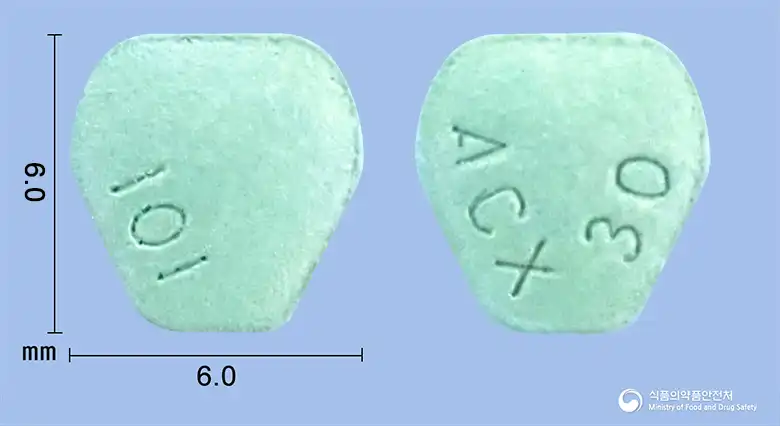
Greenish round double-convex film-coated tablet
30 tablets/box [(10 tablets/PTP x 3)]
Even with the same ingredient, strength, dosage form and how it is taken can differ.
Etoricoxib 30mg
Tablet · Prescription medication
Korea Hyutex Pharmaceutical Co., Ltd.
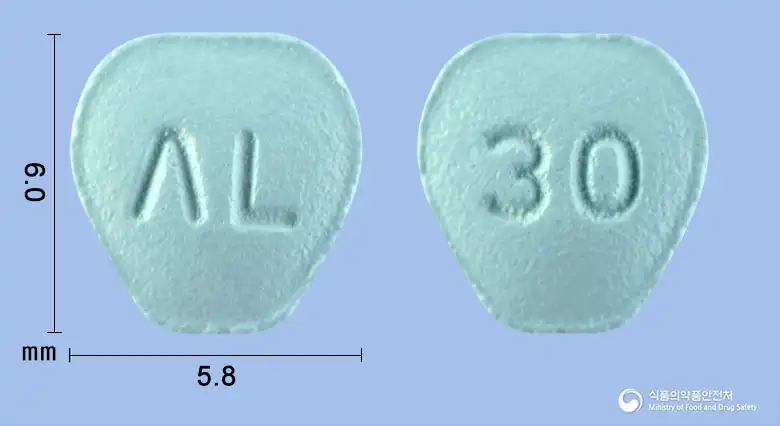
Etoricoxib 30mg
Tablet · Prescription medication
Korea Organon Co., Ltd.
Etoricoxib 30mg
Tablet · Prescription medication
Alcoc Pharmaceutical Co., Ltd.
Etoricoxib 30mg
Tablet · Prescription medication
Boryung Co., Ltd.
Etoricoxib 30mg
Tablet · Prescription medication
IYON Pharmaceutical Co., Ltd.
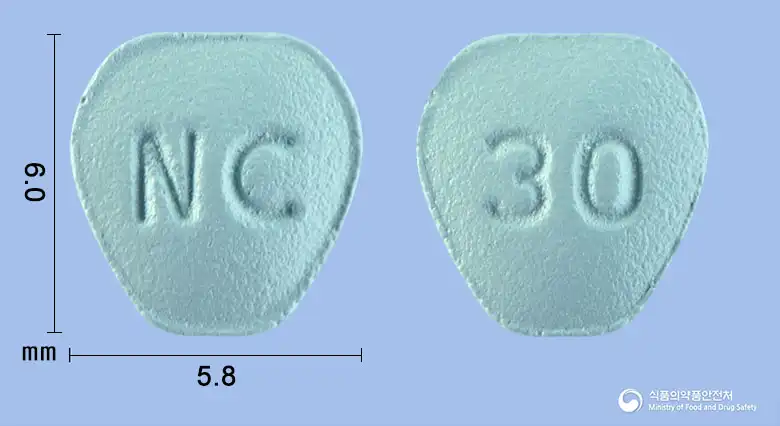
Etoricoxib 30mg
Tablet · Prescription medication
Samil Pharmaceutical Co., Ltd.
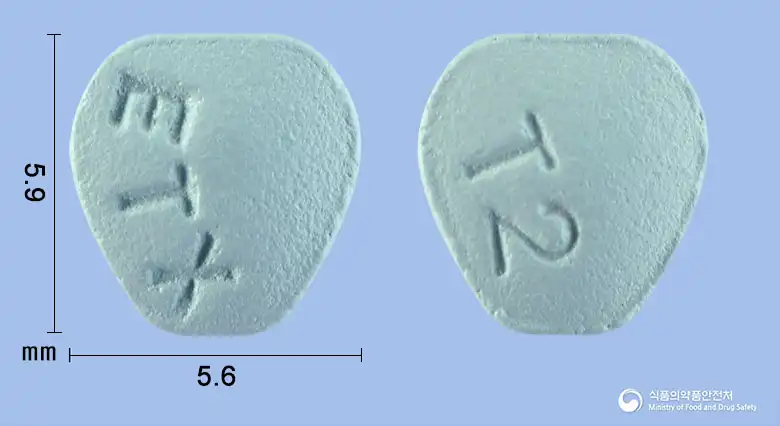
Etoricoxib 30mg
Tablet · Prescription medication
Teragen Etex Co., Ltd.
Etoricoxib 30mg
Tablet · Prescription medication
Aju Pharmaceuticals Co., Ltd.
Even with the same ingredient, the dose and directions can differ by strength and dosage form. Talk to a doctor or pharmacist before switching from a medication you are already taking.
No questions yet.
For anything that needs medical judgment, consult a doctor or pharmacist.
This drug information is based on data provided by the Korea Ministry of Food and Drug Safety.
Consult a doctor or pharmacist for accurate dosage, administration, and usage instructions.