
 한국어
 English
 日本語
 中文(简体)
Dosage form image
Viewing nowDonetina 23 mg (Donepezil Hydrochloride Monohydrate)
Donepezil Hydrochloride Hydrate 24mg
Tablet · Prescription medication
Dongkwang Pharmaceutical Co., Ltd.
MFDS item code 202102919 · Approved 2021.04.05
Treatment of symptoms of moderate to severe Alzheimer’s-type dementia
This medication is used for the treatment of moderate to severe symptoms of Alzheimer's-type dementia.
This medication is taken once daily in the evening immediately before bedtime, and may be taken with or without food. If sleep disturbances such as abnormal dreams, nightmares, or insomnia occur, morning administration of this medication may be considered. Do not split, crush, or chew this medication, as this may increase the rate of absorption. The initial recommended dose of donepezil hydrochloride is 5 mg once daily. Since steady state is reached 15 days after administration and the incidence of adverse reactions may be affected by the rate of dose escalation, administer 5 mg for 4 ~ 6 weeks. After evaluating the clinical response during this period, the dose may be increased to 10 mg. When increasing the dose to 10 mg once daily, administer with caution for gastrointestinal adverse reactions. A dose of 23 mg once daily may be administered to patients who have taken 10 mg once daily for at least 3 months.
This medication should not be used by patients who are allergic to certain ingredients or by women who are pregnant or breastfeeding. Patients with genetic issues such as lactose intolerance should also avoid this medication. Patients with heart disease or bradycardia, as well as those with peptic ulcers or respiratory diseases such as asthma, should use this medication with caution. This medication should also be used with caution in patients who are allergic to certain colorants. Various adverse reactions may occur during treatment, including heart-related problems, gastrointestinal bleeding, liver dysfunction, seizures, and movement disorders, so it is important to monitor symptoms closely. Particularly, gastrointestinal symptoms like dizziness, nausea, vomiting, diarrhea, and anorexia, as well as mental neurological symptoms like insomnia, hallucinations, and depression may occur. This medication may slow down heart rate or cause arrhythmias, so patients with heart disease may require regular electrocardiogram tests. Additionally, this medication can increase gastric acid secretion, worsening peptic ulcers, so patients with a history of gastrointestinal disorders should exercise caution. Dizziness or fatigue may occur when driving or operating machinery, so caution is advised. Women who are pregnant or breastfeeding should not take this medication, and if necessary, should consult a healthcare professional. This medication may interact with other drugs, so it is essential to inform your doctor or pharmacist of any medications currently being taken. In cases of overdose, serious symptoms such as severe vomiting, sweating, bradycardia, and respiratory depression may occur, and immediate medical assistance should be sought. The safety of this medication for children has not been established, so it should not be used in this population. When storing, keep out of reach of children and do not transfer to another container.
Not everyone experiences these, and they can vary from person to person.
This medication should be stored in a tightly sealed container to prevent exposure to air or moisture. The storage temperature should be kept at room temperature between 1 and 30 degrees Celsius.
Red, round, double-coated film tablet
30 tablets/bottle
Even with the same ingredient, strength, dosage form and how it is taken can differ.
Donepezil Hydrochloride Hydrate 24mg
Tablet · Prescription medication
Dongkwang Pharmaceutical Co., Ltd.
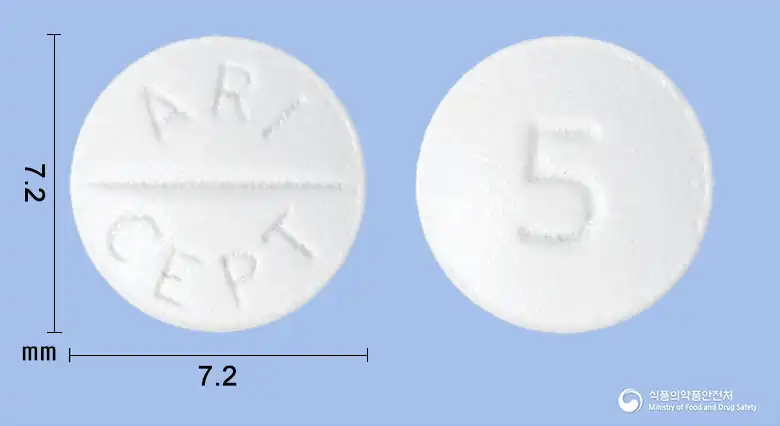
Donepezil Hydrochloride 5mg
Tablet · Prescription medication
HanDoc Co., Ltd.
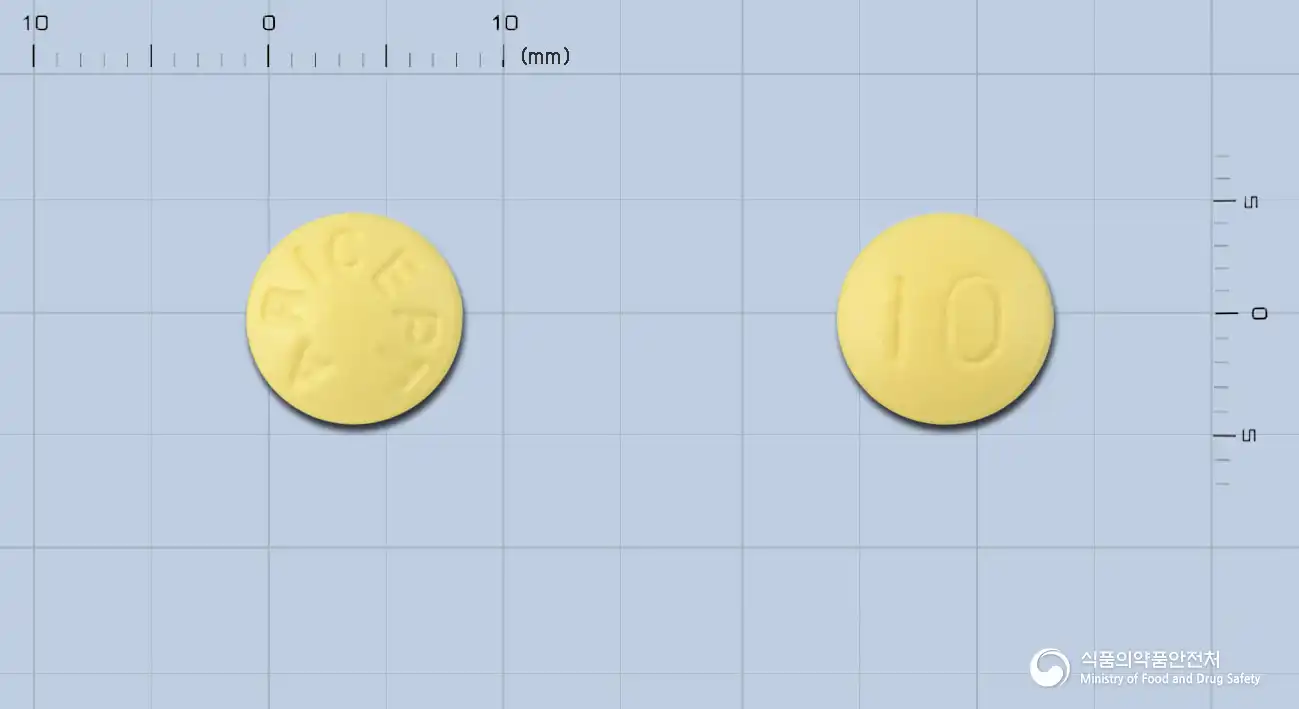
Donepezil Hydrochloride 10mg
Tablet · Prescription medication
Hanmi Pharmaceutical Co., Ltd.
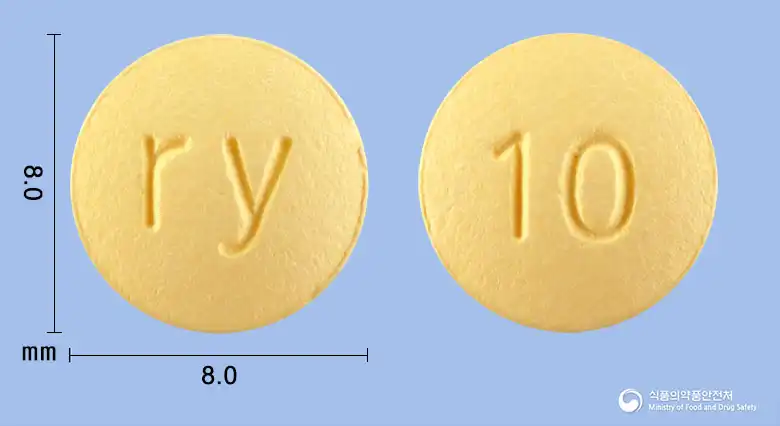
Donepezil Hydrochloride Hydrate 10.43mg
Tablet · Prescription medication
IYun Pharmaceuticals Co., Ltd.
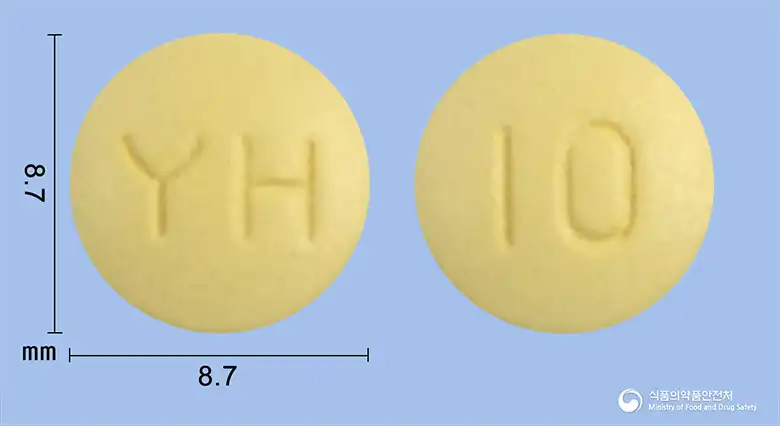
Donepezil Hydrochloride Hydrate 10.43mg
Tablet · Prescription medication
Yuhan Corporation
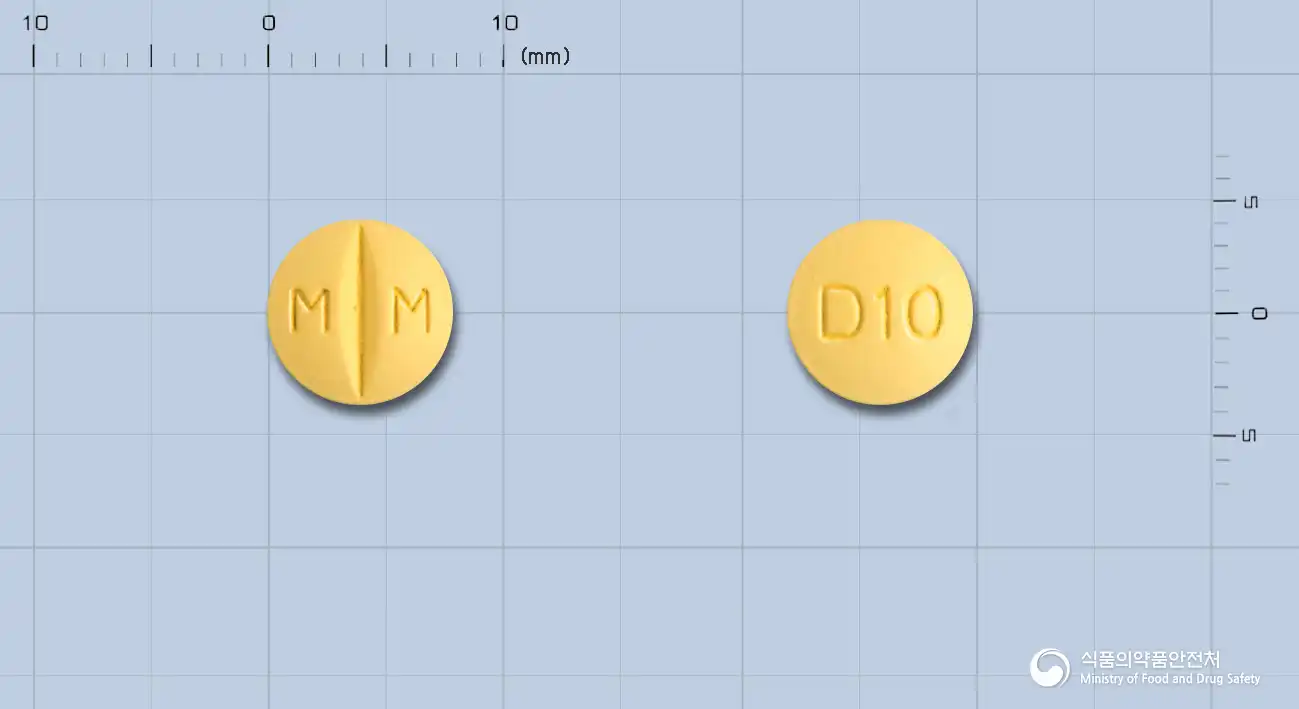
Donepezil Hydrochloride Hydrate 10.43mg
Tablet · Prescription medication
Myungmoon Pharmaceutical Co., Ltd.
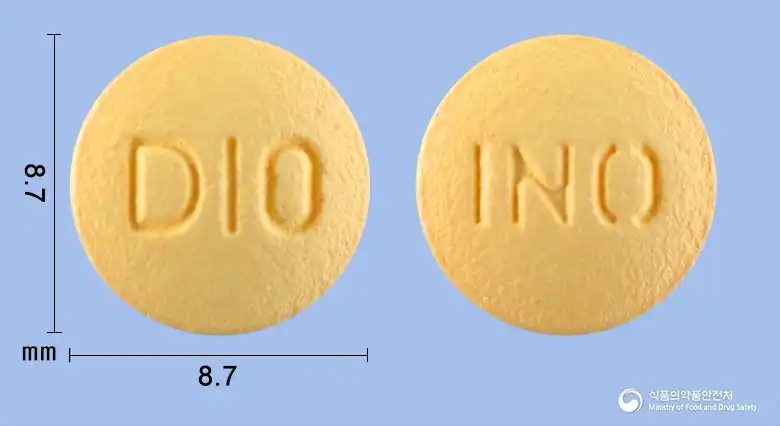
Donepezil Hydrochloride Hydrate 10.43mg
Tablet · Prescription medication
HK inno.N Co., Ltd.
Donepezil Hydrochloride 10mg
Tablet · Prescription medication
Celltrion Pharmaceutical Co., Ltd.
Even with the same ingredient, the dose and directions can differ by strength and dosage form. Talk to a doctor or pharmacist before switching from a medication you are already taking.
No questions yet.
For anything that needs medical judgment, consult a doctor or pharmacist.
This drug information is based on data provided by the Korea Ministry of Food and Drug Safety.
Consult a doctor or pharmacist for accurate dosage, administration, and usage instructions.