This product's status changed to Expired on 2025.05.15. It may no longer be sold, so consult a doctor or pharmacist before taking it.
Summary
Main use
Improvement in blood pressure control for essential hypertension
Who takes it
Adults · Children
Adult dose
The dosage for adults is 1 tablet taken once daily, with or without food. It is advisable to take it at the same time each day (e.g., in the morning). The dosing should follow the titration steps for amlodipine/olmesartan medoxomil/hydrochlorothiazide. The maximum daily dose is 10/40/25mg and adjustments should be made at intervals of more than 2 weeks. For patients with renal impairment, hepatic impairment, or elderly patients, dose adjustments and caution are required.
Child dose
The safety and efficacy of this medication in patients under the age of 18 have not been established; therefore, its use is not recommended.
Improvement in blood pressure control for essential hypertension
Essential hypertension
View approved original textHide original text
This medication is used in cases where blood pressure control is difficult with existing treatments for patients with essential hypertension, through a combination therapy of amlodipine and olmesartan medoxomil. It helps effectively lower blood pressure, thereby reducing the risk of complications due to hypertension.
How to take
Adult dose
The dosage for adults is 1 tablet taken once daily, with or without food. It is advisable to take it at the same time each day (e.g., in the morning). The dosing should follow the titration steps for amlodipine/olmesartan medoxomil/hydrochlorothiazide. The maximum daily dose is 10/40/25mg and adjustments should be made at intervals of more than 2 weeks. For patients with renal impairment, hepatic impairment, or elderly patients, dose adjustments and caution are required.
Child dose
The safety and efficacy of this medication in patients under the age of 18 have not been established; therefore, its use is not recommended.
Precautions
This medication can cause serious harm to the fetus and newborn when taken during pregnancy, especially in the second and third trimesters, so it should be discontinued immediately upon confirmation of pregnancy.
This medication is contraindicated in certain patients, such as those who are allergic to this medication or its components, pregnant or breastfeeding women, patients with severe hypotension or heart valve disease, unstable heart failure following acute myocardial infarction, and patients with severe kidney or liver disease.
Patients with reduced blood volume or electrolyte imbalances may experience hypotension in the early stages of taking this medication and should be closely monitored when starting treatment.
This medication may affect kidney function, so patients with kidney disease or those who have had a kidney transplant should regularly check their kidney function and electrolyte status through blood tests.
Patients with liver disease or specific heart conditions also require special caution when taking this medication, and some patients may react sensitively to it.
This medication may interact with other medications, so it is essential to inform healthcare providers of any other medications being taken, particularly with lithium, non-steroidal anti-inflammatory drugs (NSAIDs), and other antihypertensive agents.
This medication can cause electrolyte imbalances, so electrolyte levels in the blood should be regularly monitored during treatment to manage symptoms such as hypokalemia or hyperkalemia.
Symptoms related to blood pressure reduction, such as dizziness or drowsiness, may occur, so caution is advised when driving or operating hazardous machinery.
This medication may cause the skin to become sensitive to sunlight, so care should be taken to avoid ultraviolet exposure during treatment, and any unusual skin reactions should be reported to a healthcare provider immediately.
In case of overdose, symptoms such as hypotension and palpitations may occur, requiring immediate medical treatment.
The safety and efficacy of this medication in children have not been established, hence it is not recommended. Elderly patients should start on a lower dose considering potential reduced kidney function.
During breastfeeding, components of this medication may be transmitted through breast milk, potentially causing adverse reactions in infants, so it is advisable to either discontinue breastfeeding or stop taking the medication.
Finally, this medication should be stored in a tightly sealed container away from moisture and heat, and not transferred to another container.
Side effects and when to seek care immediately
Serious side effects
Hives, severe swelling (edema), chest tightness, difficulty breathing, cold sweat, pallor, severe rash with high fever, blisters, peeling skin, pain in the mucous membranes of the mouth/eyes, shortness of breath or difficulty breathing, asthma attacks, cough with fever accompanying respiratory distress, yellowing of the skin or eyes (jaundice), generalized malaise, sudden and severe headache, thunderclap headache, seizures, altered consciousness, visual disturbances, paralysis, urinary retention
Mild side effects
Peripheral edema
headache
dizziness
upper respiratory infection
rhinitis
urinary tract infection
sialadenitis
leukopenia
thrombocytopenia
bone marrow suppression
Show 17 moreCollapse
neutropenia/agranulocytosis
hemolytic anemia
aplastic anemia
drug hypersensitivity
hyperkalemia
hypokalemia
loss of appetite
diabetes
hypercalcemia
hyperglycemia
hypomagnesemia
hyponatremia
hypochloremia
hypertriglyceridemia
hypercholesterolemia
hyperuricemia
hypochloremic alkalosis
Not everyone experiences these, and they can vary from person to person.
Storage
This medication must be stored in a tightly sealed container to protect it from air and moisture. It is essential to maintain the storage temperature between 1°C and 30°C (room temperature) to preserve its efficacy and safety.
Appearance and packaging
Appearance
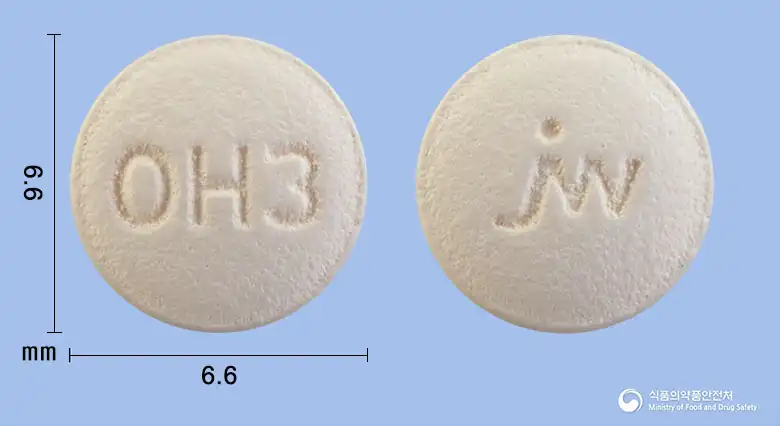
White and orange round film-coated tablet
Package unit
30 tablets/box [10 tablets/Alu-Alu × 3]
Same-ingredient medicines
Even with the same ingredient, strength, dosage form and how it is taken can differ.
Even with the same ingredient, the dose and directions can differ by strength and dosage form. Talk to a doctor or pharmacist before switching from a medication you are already taking.
Questions about this medicine
No questions yet.
For anything that needs medical judgment, consult a doctor or pharmacist.
This drug information is based on data provided by the Korea Ministry of Food and Drug Safety. Consult a doctor or pharmacist for accurate dosage, administration, and usage instructions.

 한국어
한국어 English
 日本語
日本語 中文(简体)