
 한국어
한국어 English
 日本語
日本語 中文(简体)
 Viewing now
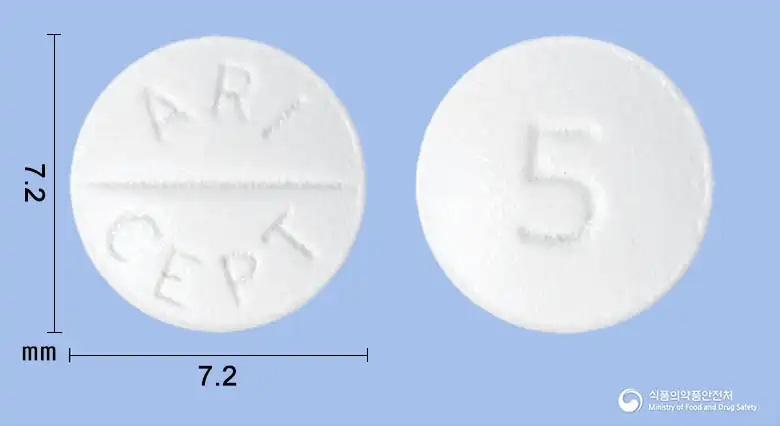
Ariphe Tablet 5 mg (Donepezil Hydrochloride Hydrate)
Donepezil Hydrochloride Hydrate 5.215mg
Tablet · Prescription medication
Seongwon Adcock Pharmaceutical Co., Ltd.
MFDS item code 202001387 · Approved 2020.02.27 · Insurance code 664901930
Improvement of symptoms of Alzheimer's type dementia
This medication is used to treat symptoms of Alzheimer's type dementia.
As Donepezil Hydrochloride, administer 5 mg once daily before bedtime. The dose of 5 mg should be administered for 4 to 6 weeks. After assessing clinical response, the dose may be increased to 10 mg. When increasing to 10 mg per day, attention should be paid to gastrointestinal adverse reactions during administration.
No experience in pediatric use.
This medication contains Donepezil Hydrochloride Hydrate as the main ingredient and is used to treat symptoms of Alzheimer's type dementia. This medication should not be used in certain patients. For example, patients allergic to this medication or its components, women who are pregnant or may become pregnant, and women who are breastfeeding should not take this medication. Additionally, patients with lactose intolerance or genetic disorders affecting lactose metabolism should also refrain from taking this medication. Patients with heart disease, a history of peptic ulcers, a history of asthma or obstructive pulmonary disease, and those with extrapyramidal disorders such as Parkinson's disease should take this medication with caution. Particularly, patients allergic to yellow No. 5 dye contained in this medication should be cautious. While taking this medication, various adverse reactions may occur. Heart-related issues may include bradycardia, heart block, and myocardial infarction, while gastrointestinal issues may include nausea, vomiting, diarrhea, and gastrointestinal bleeding. Additionally, severe adverse reactions such as liver dysfunction, seizures, extrapyramidal symptoms, shortness of breath, acute pancreatitis, and acute renal failure may occur, so it is important to consult a healthcare professional immediately if any unusual symptoms arise. This medication, as an acetylcholinesterase inhibitor, can affect heart rate, potentially causing bradycardia or arrhythmias, so patients with heart disease should be particularly cautious and may require ECG monitoring. Moreover, this medication increases gastric acid secretion and promotes gastrointestinal motility, posing a risk of exacerbating peptic ulcers; therefore, patients with a history of peptic ulcers or those taking non-steroidal anti-inflammatory drugs should carefully monitor their condition. This medication acts on the brain and nervous system, potentially worsening extrapyramidal symptoms similar to those seen in Parkinson's disease, and respiratory symptoms may worsen in patients with asthma or obstructive lung disease, so caution is advised. Women who are pregnant or breastfeeding are generally advised not to take this medication, and if unavoidable, must consult a physician before use. This medication may interact with several other drugs. Particularly, caution is advisable when taken with drugs that affect CYP3A4 and CYP2D6 enzymes, as the efficacy may change. Also, when combined with drugs affecting cardiac conduction, there may be increased risk of arrhythmias requiring ECG monitoring. This medication may impair the ability to drive or operate machinery, so caution is recommended when starting or increasing the dosage. In case of overdose, symptoms such as nausea, vomiting, sweating, bradycardia, hypotension, respiratory suppression, and seizures may occur, which requires immediate medical attention. This medication should be kept out of reach of children, and transferring it to other containers may compromise its quality.
Urticaria, severe swelling (edema), tightness in the chest, difficulty breathing, cold sweat, pallor, severe rash accompanied by high fever, blisters, skin peeling, pain in the mouth/eye mucosa, shortness of breath or difficulty breathing, asthma attacks, respiratory issues accompanied by cough and fever, yellowing of the skin or eyes (jaundice), profound lethargy, sudden and severe headaches, thunderclap headache, seizures, confusion, visual disturbances, paralysis, urinary retention
Not everyone experiences these, and they can vary from person to person.
This medication should be stored in a tightly sealed container to prevent air exposure and at room temperature between 1 degree and 30 degrees Celsius. Storing it this way helps maintain the medication's effectiveness.
Yellow round film-coated tablets
30 tablets/bottle, 100 tablets/bottle
Even with the same ingredient, strength, dosage form and how it is taken can differ.
Viewing nowDonepezil Hydrochloride Hydrate 5.215mg
Tablet · Prescription medication
Seongwon Adcock Pharmaceutical Co., Ltd.
Donepezil Hydrochloride 5mg
Tablet · Prescription medication
HanDoc Co., Ltd.

Donepezil Hydrochloride 10mg
Tablet · Prescription medication
Hanmi Pharmaceutical Co., Ltd.

Donepezil Hydrochloride Hydrate 10.43mg
Tablet · Prescription medication
IYun Pharmaceuticals Co., Ltd.

Donepezil Hydrochloride Hydrate 10.43mg
Tablet · Prescription medication
Yuhan Corporation
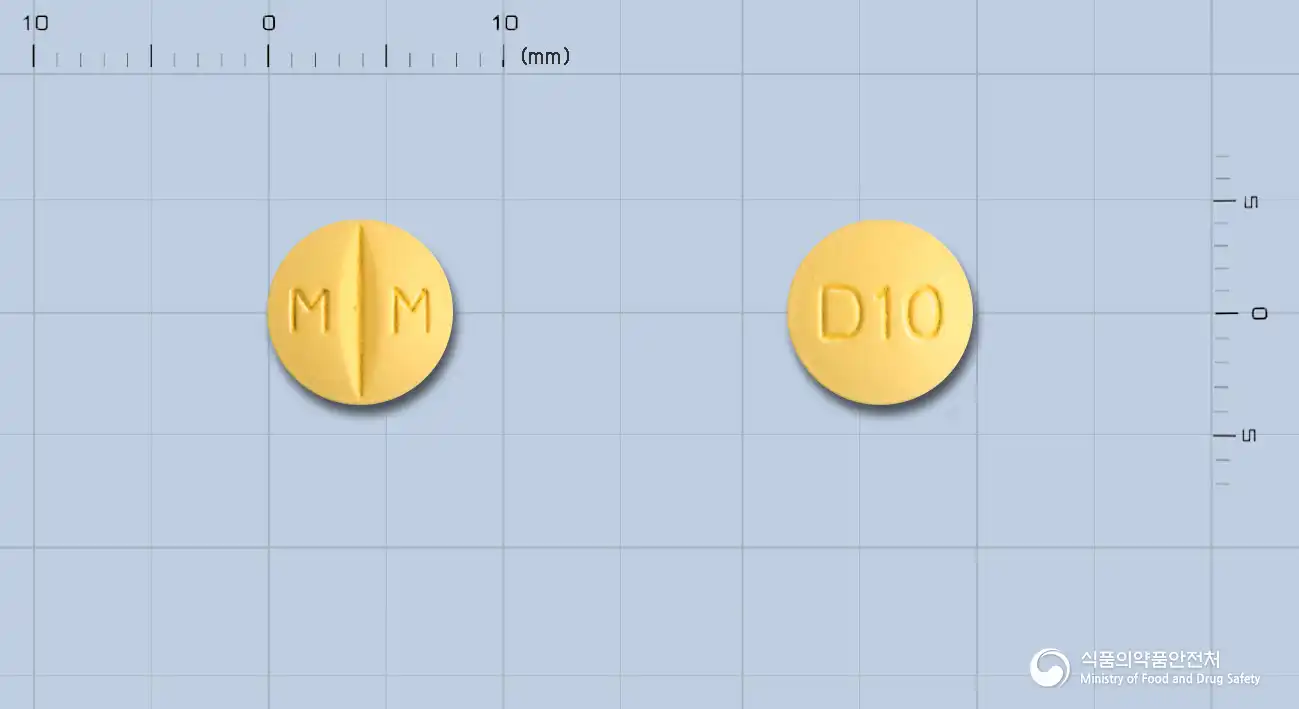
Donepezil Hydrochloride Hydrate 10.43mg
Tablet · Prescription medication
Myungmoon Pharmaceutical Co., Ltd.

Donepezil Hydrochloride Hydrate 10.43mg
Tablet · Prescription medication
HK inno.N Co., Ltd.
Donepezil Hydrochloride 10mg
Tablet · Prescription medication
Celltrion Pharmaceutical Co., Ltd.
Even with the same ingredient, the dose and directions can differ by strength and dosage form. Talk to a doctor or pharmacist before switching from a medication you are already taking.
No questions yet.
For anything that needs medical judgment, consult a doctor or pharmacist.
This drug information is based on data provided by the Korea Ministry of Food and Drug Safety.
Consult a doctor or pharmacist for accurate dosage, administration, and usage instructions.