
 한국어
 English
 日本語
 中文(简体)
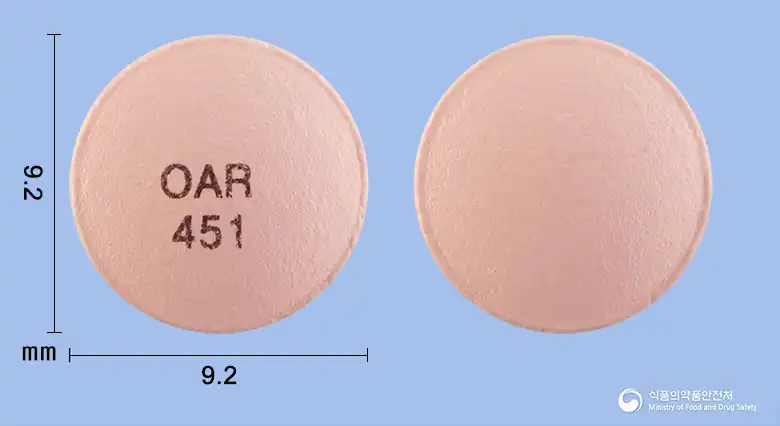 Viewing nowCombination
Olomax Tablet 40/5/10 mg (Olmesartan medoxomil, Amlodipine, Rosuvastatin)
Olmesartan Medoxomil 40mg · Amlodipine Besylate 6.95mg +1 more
Tablet · Prescription medication · Combination
Daewong Pharmaceutical Co., Ltd.
MFDS item code 202000708 · Approved 2020.02.06 · Insurance code 641607190
Treatment of hypertension and dyslipidemia; reduction of atherosclerosis progression and cardiovascular disease risk
This medication is used for patients who need to take both Olmesartan medoxomil/Amlodipine combination and Rosuvastatin. The combination of Olmesartan medoxomil and Amlodipine is effective in treating essential hypertension when it is difficult to control blood pressure alone. Rosuvastatin helps treat hypercholesterolemia and mixed hyperlipidemia that cannot be controlled by diet and exercise and is also used for patients with homozygous familial hypercholesterolemia. Additionally, this medication plays a significant role in lowering total cholesterol and LDL cholesterol levels, delaying the progression of atherosclerosis, and reducing the risk of cardiovascular disease. Rosuvastatin also reduces the risk of complications after stroke, myocardial infarction, and vascular revascularization. Therefore, this medication is used for the management of hypertension and hyperlipidemia and for improving cardiovascular disease risk.
This medicine should be administered once daily as 1 tablet with water, regardless of meals. If possible, it is recommended that it be taken at the same time each day (e.g., in the morning). This medicine is for use in adults only. The dose should be individualized for each patient based on the efficacy and tolerability of the olmesartan medoxomil/amlodipine combination and rosuvastatin. For patients taking olmesartan medoxomil/amlodipine and rosuvastatin concomitantly, they may switch to this medicine (a combination product containing the same amounts of each active ingredient) for convenience. Olmesartan medoxomil/amlodipine combination Before administering this medicine, it is recommended that the doses of the individual components (olmesartan medoxomil or amlodipine) be adjusted. However, if blood pressure is not controlled with monotherapy using either individual component, switching directly to this medicine may be considered. The maximum dose of this medicine is 40/10 mg. Since the maximum blood pressure-lowering effect occurs within 2 weeks after administration, adjust the dose at intervals of at least 2 weeks, taking the patient's blood pressure response into consideration. The recommended doses are as follows. (olmesartan medoxomil/amlodipine) 20/5 mg: For patients whose blood pressure is not adequately controlled with olmesartan medoxomil 20 mg or amlodipine 5 mg monotherapy. 40/5 mg: For patients whose blood pressure is not adequately controlled with 20/5 mg. 40/10 mg: For patients whose blood pressure is not adequately controlled with 40/5 mg. Patients with renal impairment: This medicine has not been studied in patients with renal impairment. However, the maximum dose of olmesartan medoxomil for patients with mild to moderate renal impairment (creatine clearance 20-60mL/min) is 20 mg once daily, and use of this medicine is not recommended in patients with moderate to severe renal impairment (e.g., creatinine clearance < 20 mL/min) or in patients receiving dialysis. Monitoring of potassium and creatinine levels is recommended in patients with moderate renal impairment. Patients with reduced effective intravascular volume: In patients who may have reduced effective intravascular volume (e.g., patients receiving diuretics, particularly those with renal impairment), it is recommended to initiate treatment at a low dose with adequate monitoring of their condition. Patients with hepatic impairment: Use with caution in patients with mild to moderate hepatic impairment. The recommended initial dose of olmesartan medoxomil in patients with moderate hepatic impairment is 10 mg once daily, and the maximum dose is 20 mg once daily. In patients with hepatic impairment who are already receiving other antihypertensive drugs and/or diuretics, blood pressure and renal function should be closely monitored. This medicine should not be administered to patients with severe hepatic impairment. (See the section “Do not administer to the following patients” under Precautions for Use.) Older adults: In general, initiate treatment at a low dose. When adjusting the dose, consider the patient's renal or cardiac function and comorbidities. In older adults, blood pressure should be monitored more closely and more frequently. Rosuvastatin Primary hypercholesterolemia (including heterozygous familial hypercholesterolemia, type IIa), mixed dyslipidemia (type IIb), primary dysbetalipoproteinemia (type III), and homozygous familial hypercholesterolemia Patients should follow a standard cholesterol-lowering diet before and during treatment with rosuvastatin, and continue it throughout the treatment period. Rosuvastatin may be taken at any time of day, regardless of meals. The initial dose for adults is 5 mg once daily. If a greater reduction in LDL cholesterol is required, the dose may be adjusted to the maintenance dose. The maintenance dose is 10 mg once daily, which is adequate for most patients. The maintenance dose should be adjusted appropriately at intervals of 4 weeks or longer according to LDL cholesterol levels, treatment goals, and the patient's response; it may be increased up to a maximum of 20 mg daily. Older adults: No dose adjustment is necessary. Patients with renal impairment: No dose adjustment is necessary in patients with mild to moderate renal impairment. Do not administer to patients with severe renal impairment. Particular caution is required when administering rosuvastatin 20mg to patients with moderate renal impairment. Patients with hepatic impairment: No increase in systemic exposure to rosuvastatin was observed in patients with a Child-Pugh score of 7 or below, but an increase was observed in patients with a Child-Pugh score of 8 or 9. Renal function testing should be considered in these patients. There is no experience with administration to patients with a Child-Pugh score greater than 9. Do not administer rosuvastatin to patients with active liver disease. Race: Because systemic exposure to rosuvastatin is increased in Asian patients, the recommended initial dose is 5 mg. Administration of the 40 mg dose is contraindicated. Patients predisposed to myopathy: The recommended initial dose for patients predisposed to myopathy is 5 mg. Administration of rosuvastatin at a dose of 40 mg is contraindicated in some of these patients.
This medication can cause serious harm to the fetus and newborn, especially during the second and third trimesters of pregnancy, so it should be discontinued immediately upon confirmation of pregnancy. Patients allergic to the active ingredients of this medication or similar medications, pregnant or breastfeeding women, patients with severely impaired liver or kidney function, and patients with specific heart diseases should not take this medication. Patients who are deficient in fluids or salts may experience hypotension when taking this medication, thus their condition should be carefully monitored, and appropriate measures taken if hypotension occurs. Patients with heart valve disease should be especially cautious, as rapid vasodilation can lead to hypotension. Patients with coronary artery disease or heart failure may experience worsened cardiac conditions when taking this medication, so it should be taken carefully under a doctor’s instruction. Patients with impaired renal function or kidney transplant patients should regularly check their kidney function and serum electrolyte levels before and during treatment with this medication. Patients with liver dysfunction may be affected by the metabolism and action of this medication, necessitating dose adjustment and monitoring. This medication may increase serum potassium levels, so patients at risk for hyperkalemia should periodically check their serum potassium levels. If symptoms of muscle pain or weakness occur, inform a doctor immediately and undergo necessary tests, and discontinue the medication if severe. This medication may cause side effects such as liver function abnormalities, gastrointestinal disorders, headache, dizziness, and edema in some patients, so consult healthcare professionals if symptoms persist or worsen. There may be interactions when used in combination with other medications, so if other drugs are being taken, it is important to inform healthcare professionals, especially when used with potassium-sparing diuretics, lithium, or non-steroidal anti-inflammatory drugs. Taking this medication with grapefruit juice may increase its serum concentration, so it is recommended to avoid grapefruit juice consumption. Special care is not specifically required during driving or operating machinery, but caution should be exercised if symptoms such as dizziness occur.
Not everyone experiences these, and they can vary from person to person.
This medication should be stored in a tightly sealed container to avoid exposure to air or moisture. It is important to maintain a storage temperature between 1 and 30 degrees Celsius at room temperature. Storing it this way can help maintain the efficacy and safety of the medication.
Light pink round film-coated tablet
30 tablets/bottle, 300 tablets/bottle
Even with the same ingredient, strength, dosage form and how it is taken can differ.
Viewing nowCombinationOlmesartan Medoxomil 40mg · Amlodipine Besylate 6.95mg +1 more
Tablet · Prescription medication · Combination
Daewong Pharmaceutical Co., Ltd.
Olmesartan Medoxomil · Amlodipine Besylate +1 more
Prescription medication · Combination
Daewoong Pharmaceutical Co., Ltd.
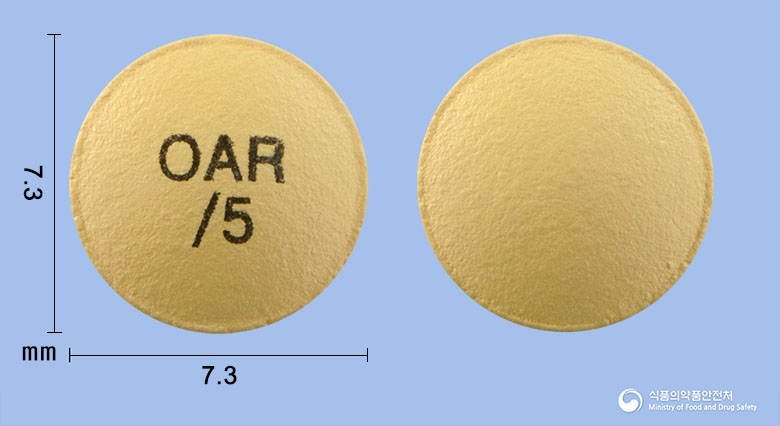 Combination
Olmesartan Medoxomil 20mg · Amlodipine Besylate 6.95mg +1 more
Tablet · Prescription medication · Combination
Daewoong Pharmaceutical Co., Ltd.
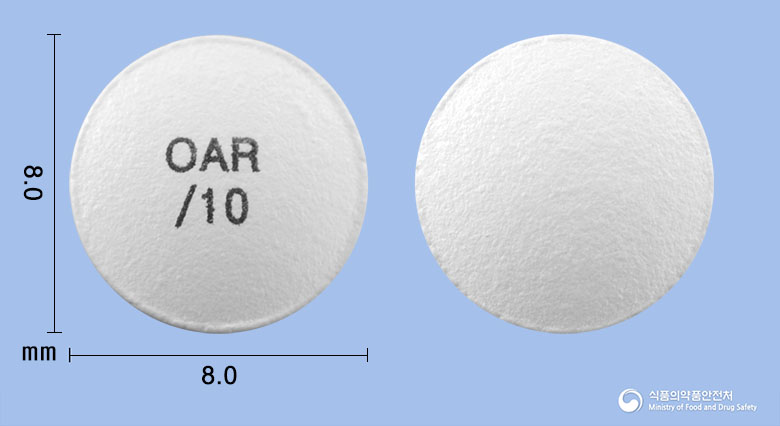 Combination
Olmesartan Medoxomil 20mg · Amlodipine Besylate 6.95mg +1 more
Tablet · Prescription medication · Combination
Daewoong Pharmaceutical Co., Ltd.
Olmesartan Medoxomil · Amlodipine Besylate +1 more
Prescription medication · Combination
Daewoong Pharmaceutical Co., Ltd.
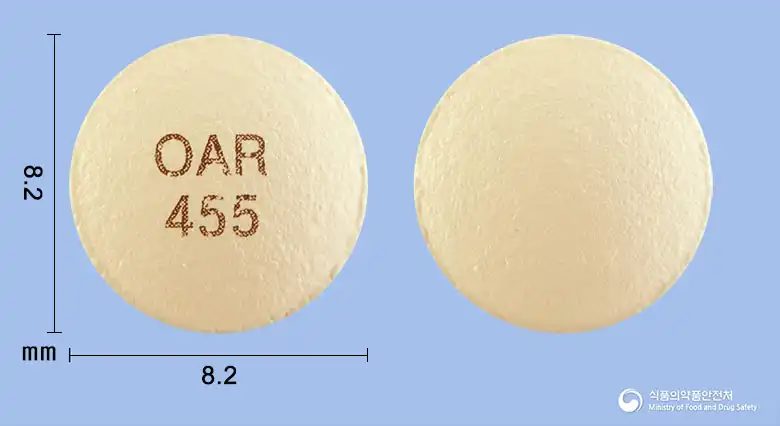 Combination
Olmesartan Medoxomil 40mg · Amlodipine Besylate 6.95mg +1 more
Tablet · Prescription medication · Combination
Daewoong Pharmaceutical Co., Ltd.
Even with the same ingredient, the dose and directions can differ by strength and dosage form. Talk to a doctor or pharmacist before switching from a medication you are already taking.
No questions yet.
For anything that needs medical judgment, consult a doctor or pharmacist.
This drug information is based on data provided by the Korea Ministry of Food and Drug Safety.
Consult a doctor or pharmacist for accurate dosage, administration, and usage instructions.