Improvement of hypertension and dyslipidemia and reduction of cardiovascular disease risk
Who takes it
Adults · Children
Adult dose
This medication should be taken once daily as one tablet with water, regardless of meals. It is recommended to take it at the same time each day (e.g., in the morning). The dosages of Pimasartan/Amlodipine combination and Rosuvastatin should be individualized based on efficacy and tolerability.
- Pimasartan/Amlodipine Combination
Consider switching to the following dosages if blood pressure is not controlled:
- 30/5 mg, 30/10 mg, 60/5 mg
Child dose
Safety and efficacy have not been established for pediatric patients under 18 years of age.
Improvement of hypertension and dyslipidemia and reduction of cardiovascular disease risk
Essential hypertension
primary hypercholesterolemia
heterozygous familial hypercholesterolemia
mixed dyslipidemia
homozygous familial hypercholesterolemia
hypercholesterolemia
primary dysbetalipoproteinemia
coronary artery disease
increased high-sensitivity C-reactive protein
hypertension
low HDL cholesterol levels
smoking
View approved original textHide original text
This medication is used for patients with essential hypertension that is not well controlled with Pimasartan and Amlodipine combination therapy. Rosuvastatin also helps in improving various types of hypercholesterolemia and dyslipidemia. When not controlled by diet and exercise, it is administered as an adjunctive therapy and is effective in reducing the risk of cardiovascular diseases. In particular, by lowering cholesterol levels, it slows the progression of atherosclerosis and reduces the risk of complications following stroke, myocardial infarction, and arterial revascularization. Therefore, this medication is used to improve cardiovascular health through blood pressure and blood lipid management.
How to take
Adult dose
This medication should be taken once daily as one tablet with water, regardless of meals. It is recommended to take it at the same time each day (e.g., in the morning). The dosages of Pimasartan/Amlodipine combination and Rosuvastatin should be individualized based on efficacy and tolerability.
- Pimasartan/Amlodipine Combination
Consider switching to the following dosages if blood pressure is not controlled:
- 30/5 mg, 30/10 mg, 60/5 mg
Child dose
Safety and efficacy have not been established for pediatric patients under 18 years of age.
Precautions
This medication can cause serious harm or death to the fetus and newborn if taken during pregnancy, especially during the second and third trimesters, so it should be discontinued immediately upon confirmation of pregnancy.
Individuals with allergies to any ingredients in this medication, pregnant or breastfeeding women, or women with the potential for pregnancy should not take this medication. Particularly, women of childbearing age not using appropriate contraception should consult a doctor before taking this medication.
Patients with moderate to severe liver dysfunction, obstructive biliary disease, muscle disorders, or severely impaired kidney function should not take this medication.
Patients with reduced blood volume or sodium levels, impaired kidney function, renovascular hypertension, aortic or mitral stenosis, severe hypotension, and elderly patients should take this medication carefully and have their condition closely monitored during treatment.
This medication can cause serious muscle adverse reactions such as myalgia, myopathy, and rarely rhabdomyolysis, so patients should notify their doctor immediately if they experience any pain or weakness in the muscles.
The Pimasartan component can increase potassium levels, so patients at risk of hyperkalemia should have their potassium levels checked regularly.
This medication can affect liver function, so individuals with a history of liver disease or abnormal liver function tests should consult a doctor before taking it, and liver function tests may be necessary during treatment.
Blood pressure may drop too low, so individuals experiencing symptoms of hypotension (such as dizziness or fainting) should notify healthcare providers immediately.
This medication may interact with other drugs, so patients currently taking any other medications must inform their doctor or pharmacist.
Pregnant or breastfeeding individuals should not take this medication, and breastfeeding women should discontinue nursing if they take it.
This medication is not recommended for use in children under 18 years of age due to lack of established safety and efficacy.
Elderly individuals may be more sensitive to this medication, requiring careful dosage adjustments and monitoring during treatment.
In case of overdose, symptoms may include hypotension, cardiac abnormalities, and liver function abnormalities; seek appropriate treatment immediately.
Dizziness may occur during driving or operating machinery while taking this medication, so caution is advised.
Keep this medication out of reach of children and do not transfer it to another container.
Side effects and when to seek care immediately
Serious side effects
Hives, severe swelling (edema), tightness in the chest, difficulty breathing, cold sweat, pallor, severe rash with fever, blisters, skin peeling, pain in oral/eye mucosa, shortness of breath, asthma attack, respiratory abnormalities along with cough and fever, yellowing of the skin or eyes (jaundice), extreme lethargy, sudden and severe headache, thunderclap headache, seizures, confusion, visual disturbances, paralysis, urination issues.
Mild side effects
Nausea
headache
dizziness
weakness
itching
rash
hair loss
fatigue
malaise
pain
Show 25 moreCollapse
weight changes
blood pressure fluctuations
decreased platelet count
thrombocytopenia
vomiting
upper abdominal pain
indigestion
diarrhea
constipation
muscle pain
muscle cramps
muscle weakness
joint pain
arthralgia
back pain
musculoskeletal stiffness
flushing
facial flushing
erectile dysfunction
insomnia
cough
rhinitis
orthostatic hypotension
chest pain
increased blood pressure
Not everyone experiences these, and they can vary from person to person.
Storage
Store this medication in a tightly sealed container to protect it from air and moisture. It is important to maintain storage temperatures between 1 and 30 degrees Celsius to ensure the medication's effectiveness.
Appearance and packaging
Appearance
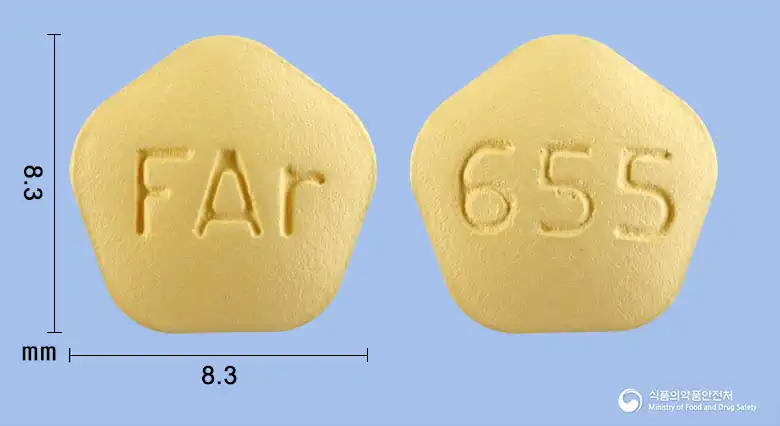
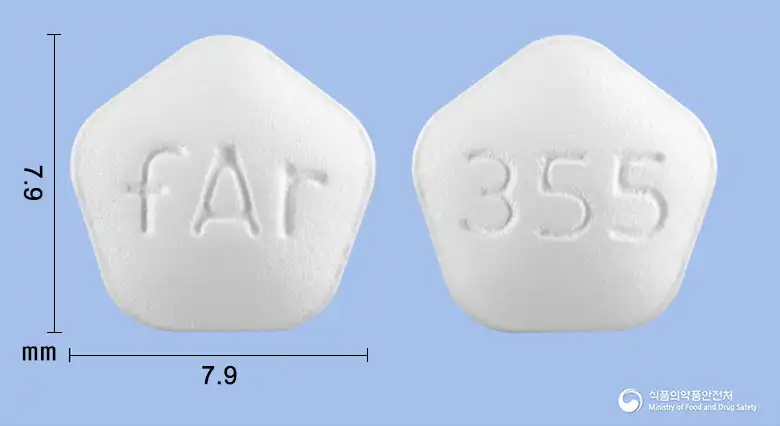
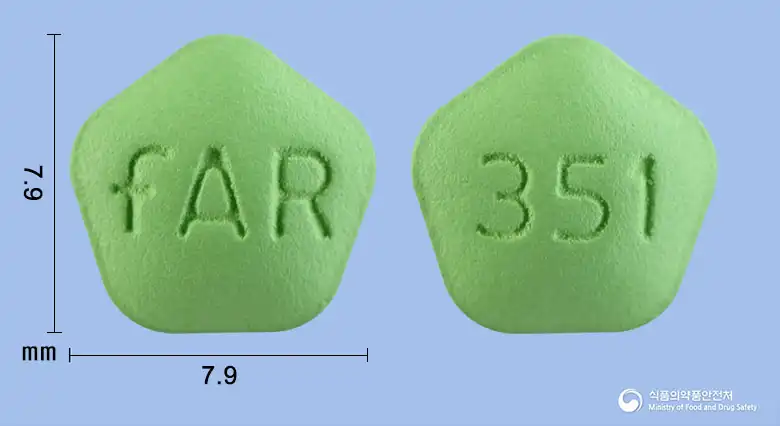
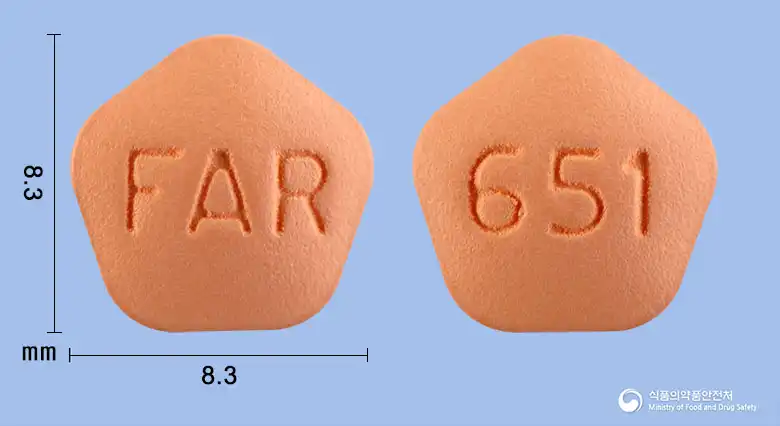
Orange pentagonal film-coated tablet
Package unit
30 tablets/box [10 tablets/PTP*3]
Same-ingredient medicines
Even with the same ingredient, strength, dosage form and how it is taken can differ.
Even with the same ingredient, the dose and directions can differ by strength and dosage form. Talk to a doctor or pharmacist before switching from a medication you are already taking.
Questions about this medicine
No questions yet.
For anything that needs medical judgment, consult a doctor or pharmacist.
This drug information is based on data provided by the Korea Ministry of Food and Drug Safety. Consult a doctor or pharmacist for accurate dosage, administration, and usage instructions.

 한국어
한국어 English
 日本語
日本語 中文(简体)
 Viewing nowCombination