
 한국어
 English
 日本語
 中文(简体)
 Viewing now
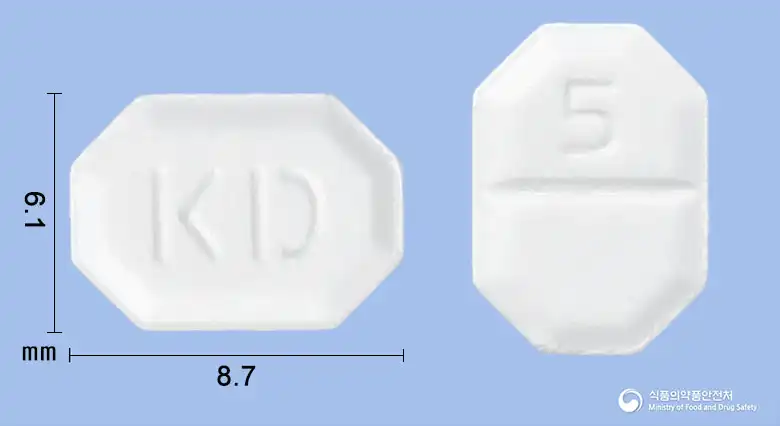
Esamlozil Tablets 5 mg (S-Amlodipine Besilate Hydrate)
S-Amlodipine Besylate Dihydrate 7.38mg
Tablet · Prescription medication
Kyung Dong Pharmaceutical Co., Ltd.
MFDS item code 201905863 · Approved 2019.08.20 · Insurance code 648104830
Treats hypertension and myocardial ischemia; reduces the risk of hospitalization for angina and the need for revascularization
This medication is used for stable angina caused by fixed closure of the coronary arteries along with hypertension, and for myocardial ischemia caused by variant angina due to vascular spasm. It also helps reduce the risk of hospitalization due to angina and the risk of coronary artery revascularization in patients with diagnosed coronary artery disease via angiography but without heart failure and having an ejection fraction greater than 40%. It effectively acts on cardiovascular diseases to improve the patient's health.
Take this medicine with a sufficient amount of water. Adults: The usual dose is 2.5 mg of S-amlodipine orally once daily. Depending on the patient's response, the dose may be increased to a maximum of 5 mg daily. Adjust the dose as appropriate according to symptoms.
This medication should not be used in specific patient groups. Those who have allergies to this medication or its components, or have had hypersensitivity reactions to similar drugs, should not take this medication. Pregnant or potentially pregnant women and nursing mothers should avoid this medication. Patients in a state of cardiac shock or with severe cardiac issues may also be at risk if they use this medication. Patients with severe liver dysfunction or low blood pressure should avoid taking it. Additionally, individuals with lactose intolerance or certain genetic metabolic disorders should not take this medication. Patients with severe kidney disease or those undergoing dialysis, elderly patients, those with acute heart failure, those in hypertensive crisis, and patients with mild to moderate liver dysfunction should use this medication cautiously. This medication is primarily used to lower blood pressure, and users may experience flushing or warmth. Other side effects may include fatigue, edema, palpitations, dizziness, headache, indigestion, drowsiness, ankle swelling, and various adverse reactions such as dry mouth, increased sweating, hypotension, blood-related abnormalities, psychological changes, skin rashes, etc., so immediate consultation with medical staff is necessary if unusual symptoms occur. Discontinuation of this medication should not be done abruptly as symptoms may worsen, and should only be done under a doctor's instruction. Adequate water should be consumed when taking this medication, and when experiencing dizziness or drowsiness, driving or operating dangerous machinery should be avoided. There may be interactions with other medications, so all currently taken medications must be disclosed to the medical staff. Special caution is warranted if taken with certain antibiotics, blood pressure medications, antidepressants, grapefruit juice, etc. Safety has not been established during pregnancy or lactation, so it is better to avoid it. It is usable for children aged 6 and older; safety and efficacy have not been confirmed for children under 6. Elderly patients may experience increased drug concentration in the body, so a lower dose should be initiated and their condition should be closely monitored. In the event of an overdose, serious hypotension, heart abnormalities, and shock may occur, necessitating immediate emergency treatment and careful monitoring of blood pressure and heart condition. This medication should be stored out of reach of children and should not be transferred to other containers.
Not everyone experiences these, and they can vary from person to person.
This medication is sensitive to air and moisture; therefore, it must be stored in a tightly sealed container. Additionally, it should be kept at room temperature between 1°C and 30°C for safety.
White octagonal tablet
30 tablets/bottle, 300 tablets/bottle
Even with the same ingredient, strength, dosage form and how it is taken can differ.
Viewing nowS-Amlodipine Besylate Dihydrate 7.38mg
Tablet · Prescription medication
Kyung Dong Pharmaceutical Co., Ltd.
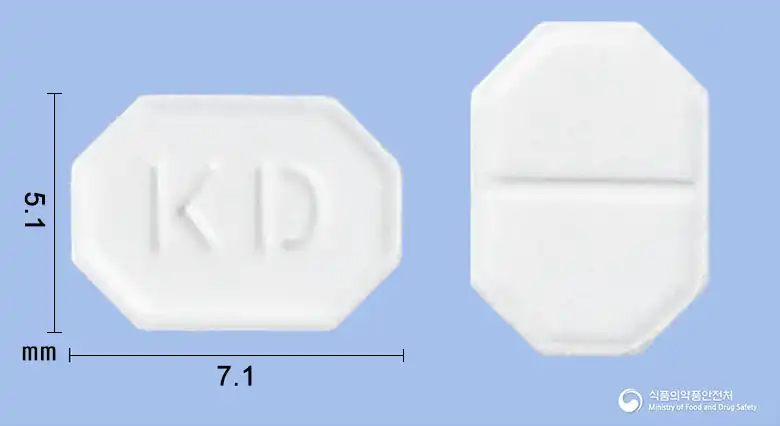
S-Amlodipine Besylate Dihydrate 3.69mg
Tablet · Prescription medication
Kyeongdong Pharmaceutical Co., Ltd.
S-Amlodipine Besylate Dihydrate 3.69mg
Tablet · Prescription medication
IQUR Co., Ltd.
S-Amlodipine Besylate Dihydrate 7.38mg
Tablet · Prescription medication
IQURE Co., Ltd.
Even with the same ingredient, the dose and directions can differ by strength and dosage form. Talk to a doctor or pharmacist before switching from a medication you are already taking.
No questions yet.
For anything that needs medical judgment, consult a doctor or pharmacist.
This drug information is based on data provided by the Korea Ministry of Food and Drug Safety.
Consult a doctor or pharmacist for accurate dosage, administration, and usage instructions.