
 한국어
한국어 English
 日本語
日本語 中文(简体)
Dosage form image
Viewing nowAterol Tablet 50mg (Atenolol)
Atenolol
Prescription medication
Anguk Pharmaceutical Co., Ltd.
MFDS item code 201903117 · Approved 2019.05.14
This product's status changed to Approval withdrawn on 2023.07.18. It may no longer be sold, so consult a doctor or pharmacist before taking it.
Improvement of hypertension and angina
This medication is primarily used for hypertension and angina.
1. Hypertension: The initial adult dose is 50 mg of atenolol once daily as monotherapy or orally with a diuretic (thiazide). If no effect is observed within 1-2 weeks, the dose may be increased to 100 mg once daily. Do not exceed 100 mg per day. 2. Angina: This medication is to be taken at a total of 100 mg daily divided into 1-2 doses. Do not exceed 100 mg per day. 3. Patients with renal impairment
This medication should not be used in patients with specific allergic reactions, serious pulmonary diseases, heart diseases, and hypotension. Special caution is required for patients with bronchial asthma, heart failure, and uncontrollable diabetes, and their condition should be closely monitored during treatment. Side effects such as rash, itching, decreased tear secretion, decreased heart rate, dizziness, gastrointestinal disturbances, and difficulty breathing may occur, and if any unusual symptoms arise, they must be reported immediately. If used long-term, regular tests for heart, liver, and kidney functions should be performed, and sudden discontinuation of the medication should be avoided; instead, the dosage should be gradually reduced. Patients scheduled for surgery should inform their healthcare provider about this medication in advance, and caution should be taken for dizziness when driving or operating machinery. This medication may interact with other drugs, so consultation with a professional is advised when taking it alongside blood pressure medications, diabetes medications, and heart medications. Women who are pregnant or breastfeeding should carefully consider the use of this medication, as it may affect the fetus or neonate, and should avoid it if possible. The safety in children has not been established, and elderly patients should start with a low dose and monitor their condition closely. In cases of overdose, serious symptoms such as slowed heart rate, heart failure, hypotension, difficulty breathing, and hypoglycemia may occur, and immediate medical attention is required. This medication should be stored out of reach of children and not kept at temperatures above 25 degrees Celsius, and it is advisable not to transfer it to other containers.
Hives, severe swelling (edema), chest tightness, difficulty breathing, cold sweat, pallor, severe rash with high fever, blisters, skin peeling, pain in oral/ocular mucosa, shortness of breath or difficulty breathing, asthma attack, respiratory abnormalities accompanied by cough and fever, yellowing of skin or eyes (jaundice), extreme lethargy, sudden and severe headaches, lightning headache, seizure, confusion, visual disturbances, paralysis, urination
Not everyone experiences these, and they can vary from person to person.
This medication should be stored in a tightly sealed container to prevent exposure to air or moisture, ideally at room temperature between 1 to 30 degrees Celsius. By storing it this way, the medication's effectiveness can be maintained and used safely.
White round film-coated tablet
30 tablets/bottle, 500 tablets/bottle
Even with the same ingredient, strength, dosage form and how it is taken can differ.
Atenolol
Prescription medication
Anguk Pharmaceutical Co., Ltd.
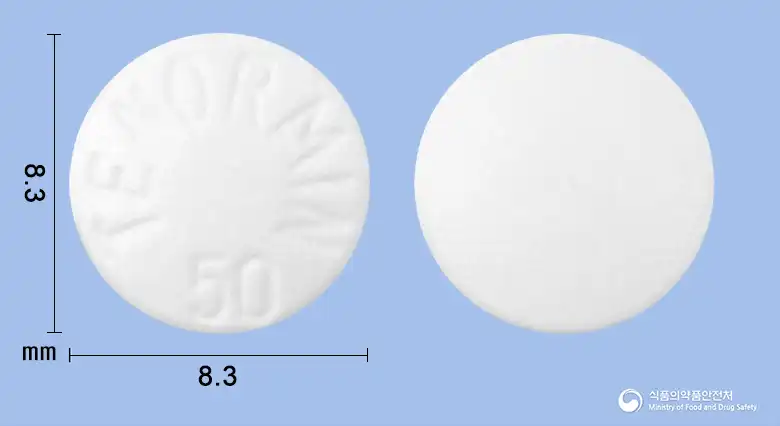
Atenolol 50mg
Tablet · Prescription medication
Hyundai Pharmaceutical Co., Ltd.
Atenolol
Prescription medication
Ildong Pharmaceutical Co., Ltd.
Atenolol 50mg
Prescription medication
Samjin Pharmaceutical Co., Ltd.
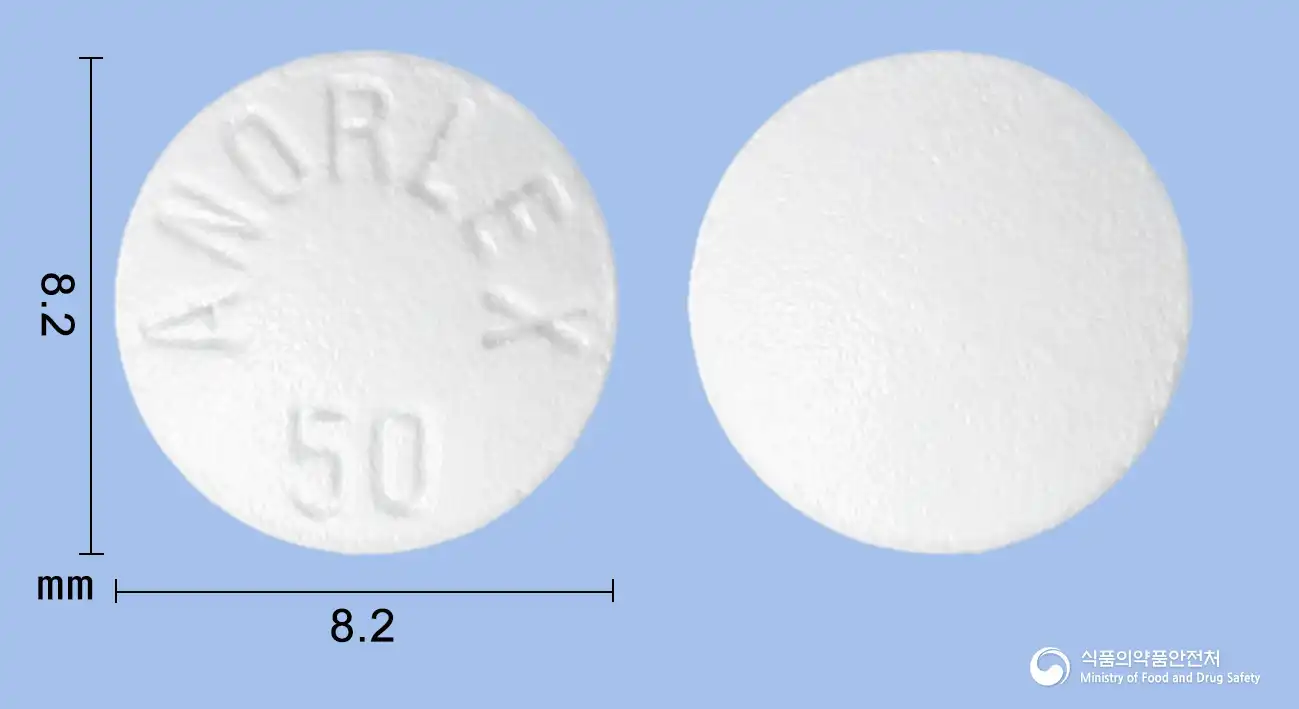
Atenolol 50mg
Tablet · Prescription medication
(CMG Pharmaceutical Co., Ltd.)
Atenolol
Prescription medication
Korea United Pharmaceutical Co., Ltd.
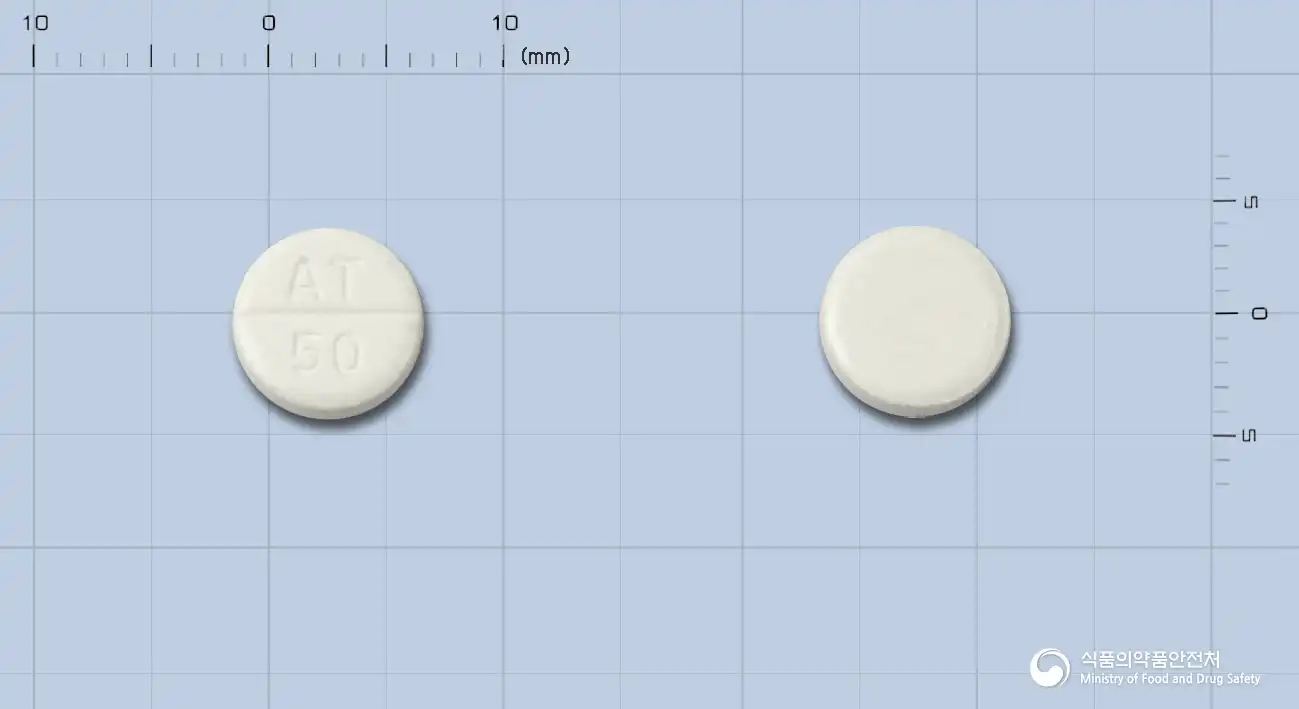
Atenolol 50mg
Tablet · Prescription medication
Daewoo Pharmaceutical Co., Ltd.
Atenolol
Prescription medication
Daewoong Pharmaceutical Co., Ltd.
Even with the same ingredient, the dose and directions can differ by strength and dosage form. Talk to a doctor or pharmacist before switching from a medication you are already taking.
No questions yet.
For anything that needs medical judgment, consult a doctor or pharmacist.
This drug information is based on data provided by the Korea Ministry of Food and Drug Safety.
Consult a doctor or pharmacist for accurate dosage, administration, and usage instructions.