
 한국어
한국어 English
 日本語
日本語 中文(简体)
Dosage form image
Viewing nowAteril Tablets 50mg (Atenolol)
Atenolol
Prescription medication
Anguk New Pharm Co., Ltd.
MFDS item code 201903111 · Approved 2019.05.14
This product's status changed to Approval withdrawn on 2023.05.18. It may no longer be sold, so consult a doctor or pharmacist before taking it.
Improvement of hypertension and angina
This medication is used for hypertension and angina.
Hypertension: In adults, administer 50mg of Atenolol once daily orally, alone or in combination with a diuretic (thiazide). If no effect is observed within 1-2 weeks, increase to 100mg once daily, not exceeding 100mg per day. Angina: Administer 100mg daily in divided doses, not exceeding 100mg per day. Patients with renal impairment: Creatinine clearance 15-35ml/min/1.73m².
This medication should not be administered to certain patients. For example, individuals allergic to this medication's components or excipients, patients with severe asthma or chronic lung disease, and those with severe bradycardia or heart conduction disorders may face risks if taken. Also, patients with diabetic ketoacidosis or metabolic acidosis, as well as those with severe hypotension or peripheral circulation disorders, should not take this medication. This medication should be administered cautiously in some patients. Patients with bronchial asthma or at risk for heart failure, those having difficulty controlling blood sugar levels with diabetes, patients with severely impaired liver or kidney function, and elderly patients should take it under a doctor's supervision. Various side effects may occur when taking this medication. Allergic reactions such as skin rash or itching, decreased tears or visual disturbances, decreased heart rate or hypotension, dizziness or drowsiness, indigestion, breathlessness have been reported. In severe cases, abnormalities of liver or kidney function, hair loss, blood disorders, or erectile dysfunction may occur. If taken for an extended period, regular checks of heart function, blood pressure, and electrocardiograms should be performed. This medication should not be abruptly discontinued, and the dosage should be gradually reduced as directed by a physician, as sudden cessation may worsen symptoms of heart disease. Patients scheduled for surgery must inform their healthcare provider about this medication, and it is recommended to stop taking it within 24 hours before the surgery. Dizziness may occur during the initial period of taking this medication, so it is advisable to avoid driving or operating hazardous machinery. This medication is excreted through the kidneys, so patients with impaired kidney function should adjust the dosage. There may be interactions with other medications, especially when taken together with antihypertensives, antidiabetic agents, anesthetics, calcium channel blockers; consult with a doctor or pharmacist in such cases. Pregnant or breastfeeding women should take this medication with caution, as it may affect the fetus or newborn, but only when deemed necessary by a physician. Safety in children has not been adequately established, so care should be taken when administering to children. Elderly patients should start with a lower dosage and be monitored closely. In case of overdose, symptoms such as severe bradycardia, hypotension, heart failure, bronchospasm, and hypoglycemia may occur, and immediate medical attention should be sought for appropriate treatment. This medication should be kept out of reach of children and stored in a tightly closed container, avoiding high temperatures above 25 degrees Celsius, and should not be transferred to other containers.
Not everyone experiences these, and they can vary from person to person.
This medication may be sensitive to air and moisture, so it must be stored in a tightly sealed container. It is best to maintain storage temperatures between 1 degree and 30 degrees Celsius at room temperature. This helps to preserve the effectiveness of the medication over time.
White round film-coated tablets
30 tablets/bottle, 500 tablets/bottle
Even with the same ingredient, strength, dosage form and how it is taken can differ.
Atenolol
Prescription medication
Anguk New Pharm Co., Ltd.
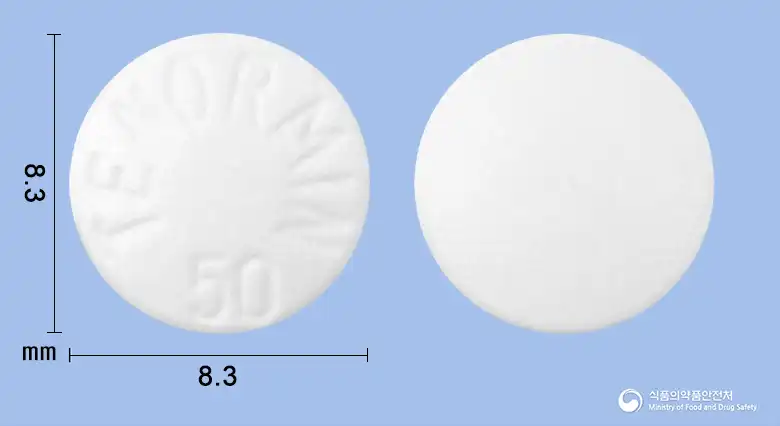
Atenolol 50mg
Tablet · Prescription medication
Hyundai Pharmaceutical Co., Ltd.
Atenolol
Prescription medication
Ildong Pharmaceutical Co., Ltd.
Atenolol 50mg
Prescription medication
Samjin Pharmaceutical Co., Ltd.
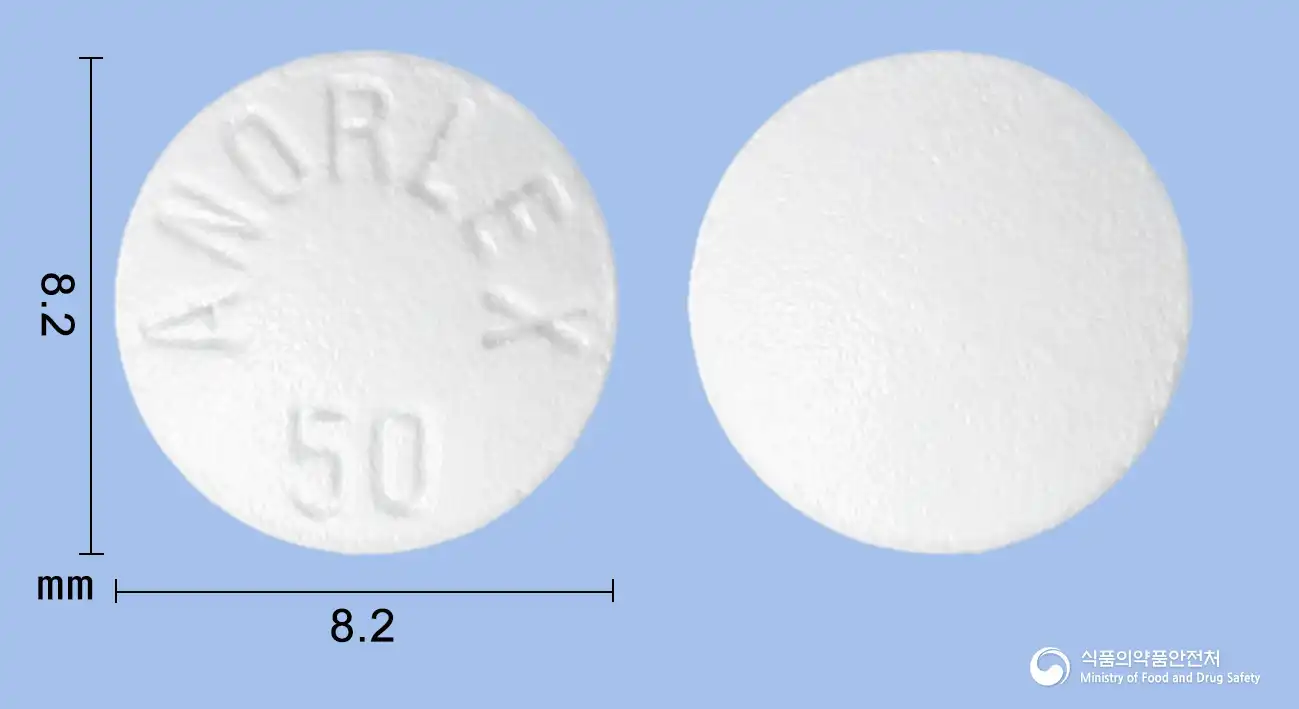
Atenolol 50mg
Tablet · Prescription medication
(CMG Pharmaceutical Co., Ltd.)
Atenolol
Prescription medication
Korea United Pharmaceutical Co., Ltd.
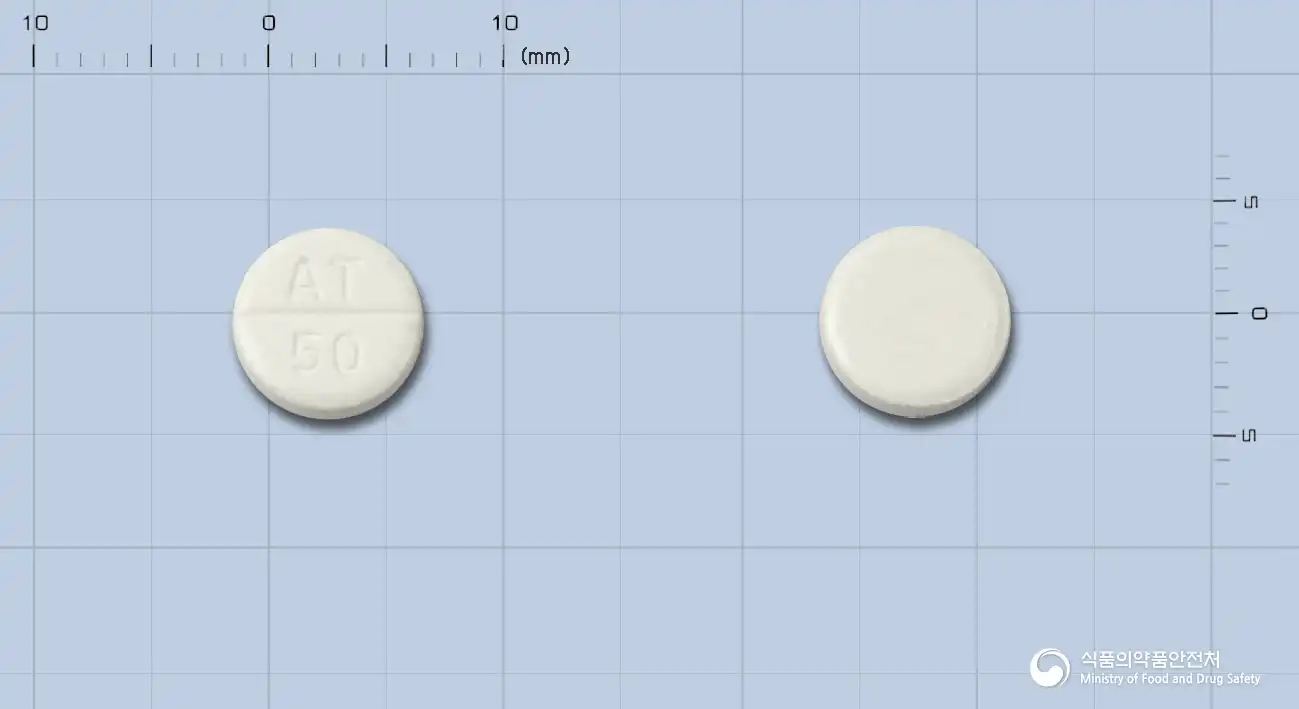
Atenolol 50mg
Tablet · Prescription medication
Daewoo Pharmaceutical Co., Ltd.
Atenolol
Prescription medication
Daewoong Pharmaceutical Co., Ltd.
Even with the same ingredient, the dose and directions can differ by strength and dosage form. Talk to a doctor or pharmacist before switching from a medication you are already taking.
No questions yet.
For anything that needs medical judgment, consult a doctor or pharmacist.
This drug information is based on data provided by the Korea Ministry of Food and Drug Safety.
Consult a doctor or pharmacist for accurate dosage, administration, and usage instructions.