Improvement in blood pressure control in essential hypertension
Who takes it
Adults · Children
Adult dose
This medication should be taken once a day at a dose of one tablet, with water, regardless of meals. It is recommended to take it at the same time daily (e.g., in the morning). The maximum dosage is Amlodipine/Olmesartan Medoxomil/Hydrochlorothiazide at 10/40/25 mg. Doses may be adjusted based on blood pressure control at intervals of at least 2 weeks. Recommended dosing steps are as follows:
- 5/20/12.5 mg
- 5/40/12.
Child dose
Safety and efficacy in pediatric patients under 18 years of age have not been established; therefore, the use of this medication is not recommended.
Improvement in blood pressure control in essential hypertension
Essential hypertension
View approved original textHide original text
This medication helps effectively control blood pressure in patients with essential hypertension whose blood pressure is not adequately controlled even with combined therapy of Amlodipine and Olmesartan Medoxomil.
How to take
Adult dose
This medication should be taken once a day at a dose of one tablet, with water, regardless of meals. It is recommended to take it at the same time daily (e.g., in the morning). The maximum dosage is Amlodipine/Olmesartan Medoxomil/Hydrochlorothiazide at 10/40/25 mg. Doses may be adjusted based on blood pressure control at intervals of at least 2 weeks. Recommended dosing steps are as follows:
- 5/20/12.5 mg
- 5/40/12.
Child dose
Safety and efficacy in pediatric patients under 18 years of age have not been established; therefore, the use of this medication is not recommended.
Precautions
This medication can cause serious harm to the fetus and newborn if taken during the second and third trimesters of pregnancy, so it should be discontinued immediately upon confirmation of pregnancy.
Patients with hypersensitivity to any component of this drug, those with certain cardiac, renal, or liver diseases, as well as pregnant or breastfeeding women, and patients with severe hypotension should not take this drug.
Patients with low blood volume or low sodium may experience hypotension at the start of treatment with this drug; therefore, sufficient status checks before taking this medication and careful observation afterwards are necessary.
This medication can affect kidney function, thus patients with impaired renal function should frequently check their kidney function through blood tests.
Patients with poor liver function or liver disease should be cautious, as hepatic coma may occur with this drug, and it is not recommended for patients with severe hepatic impairment.
As this medication lowers blood pressure, it may cause orthostatic hypotension or dizziness, so caution is advised while driving or operating hazardous machinery.
Patients taking this medication may experience electrolyte imbalances, so it is important to regularly check electrolyte levels through blood tests.
The Hydrochlorothiazide component can cause photosensitivity reactions; therefore, exposure to sunlight or ultraviolet light should be avoided, and if any unusual reactions occur, the medication should be discontinued immediately.
This medication may interact with other antihypertensive medications or certain drugs, so if you are taking other medications, be sure to inform your doctor or pharmacist.
Overdose can lead to severe hypotension or arrhythmia, and if symptoms occur, immediate medical attention should be sought.
This medication is not recommended for use in children, and elderly patients should start with a lower dose considering possible renal and liver function decline.
During breastfeeding, the ingredients of this medication may pass into breast milk, so breastfeeding women should discontinue breastfeeding or consult a physician when taking this drug.
This medication should be stored in a moisture- and heat-free environment and kept out of reach of children. Do not transfer to other containers.
Side effects and when to seek care immediately
Serious side effects
Urticaria, angioedema, Quincke's edema, severe swelling (edema), tightness in the chest, difficulty breathing, anaphylactic reaction, severe rash with fever, blisters, skin shedding, pain in oral/ocular mucosa, Stevens-Johnson syndrome, paralytic ileus, acute renal failure, renal failure, jaundice, hepatitis, acute interstitial pneumonia, jaundice (cholestatic jaundice), acute cholecystitis, acute angle-closure glaucoma, acute respiratory distress syndrome (ARDS)
Mild side effects
Peripheral edema
headache
dizziness
upper respiratory tract infections
rhinitis
urinary tract infections
sialadenitis
leukopenia
thrombocytopenia
bone marrow suppression
Show 17 moreCollapse
neutropenia/agranulocytosis
hemolytic anemia
aplastic anemia
drug hypersensitivity
hyperkalemia
hypokalemia
loss of appetite
diabetes
hypercalcemia
hyperglycemia
hypomagnesemia
hyponatremia
hypochloremia
hypertriglyceridemia
hypercholesterolemia
hyperuricemia
hypochloremic alkalosis
Not everyone experiences these, and they can vary from person to person.
Storage
This medication is sensitive to air and moisture and must be stored in a tightly sealed container. The storage temperature should maintain between 1 degree and 30 degrees Celsius.
Appearance and packaging
Appearance
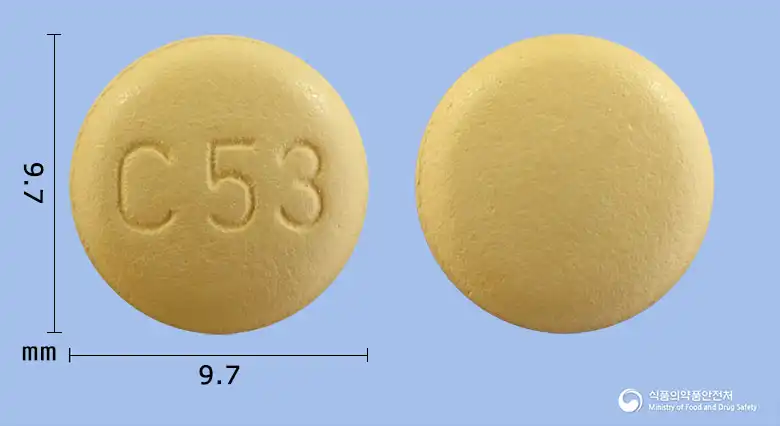
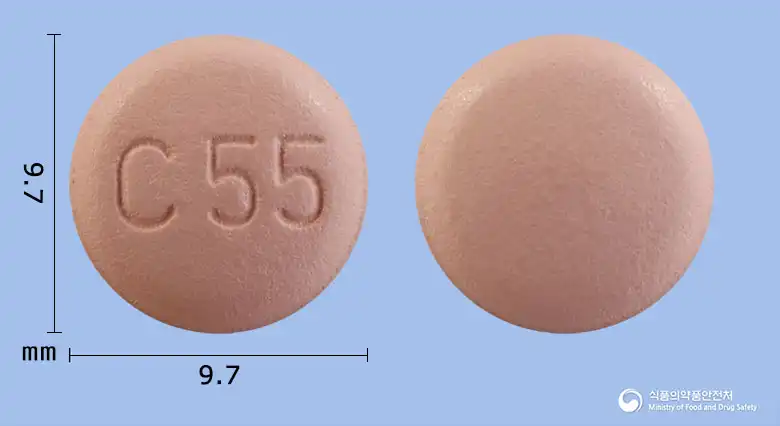
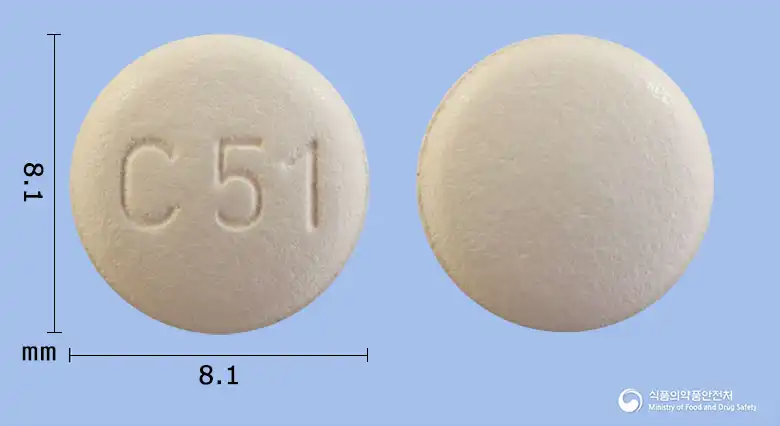
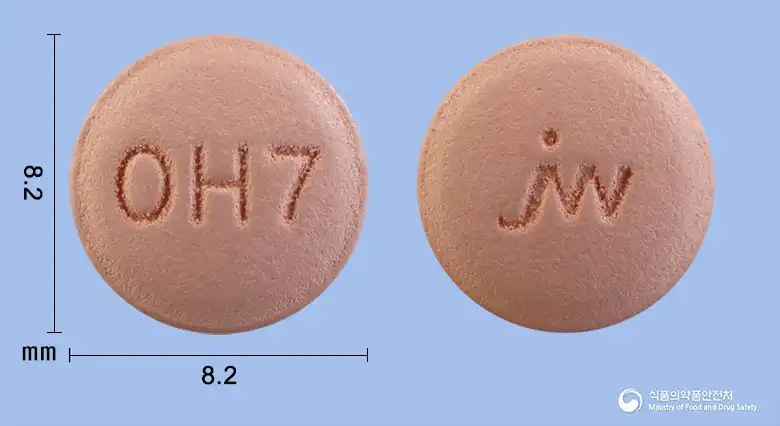
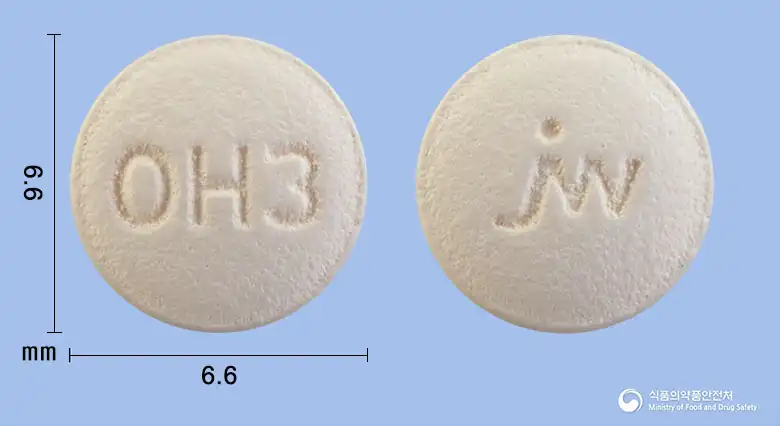
White-orange round film-coated tablets
Package unit
28 tablets (14 tablets/PTP x 2) / carton
Same-ingredient medicines
Even with the same ingredient, strength, dosage form and how it is taken can differ.
Even with the same ingredient, the dose and directions can differ by strength and dosage form. Talk to a doctor or pharmacist before switching from a medication you are already taking.
Questions about this medicine
No questions yet.
For anything that needs medical judgment, consult a doctor or pharmacist.
This drug information is based on data provided by the Korea Ministry of Food and Drug Safety. Consult a doctor or pharmacist for accurate dosage, administration, and usage instructions.

 한국어
한국어 English
 日本語
日本語 中文(简体)
 Viewing nowCombination