
 한국어
 English
 日本語
 中文(简体)
Dosage form image
Viewing nowJateran Capsule 150 mg (Dabigatran etexilate)
Dabigatran Etexilate 150mg
Prescription medication
Jeil Pharmaceutical Co., Ltd.
MFDS item code 201804546 · Approved 2018.11.15
This product's status changed to Expired on 2023.11.15. It may no longer be sold, so consult a doctor or pharmacist before taking it.
Prevention of stroke and systemic embolism; treatment and prevention of recurrence of venous thrombosis and pulmonary embolism
This medication is used to reduce the risk of stroke and systemic embolism in patients with non-valvular atrial fibrillation. It is also effective in the treatment of deep vein thrombosis and pulmonary embolism, and reduces the risk of recurrence of these conditions. In other words, it plays an important role in preventing and treating thrombotic issues related to the cardiovascular system, effectively lowering the risk of thrombosis and helping maintain health.
Administer this medicine with water, regardless of meals. 1. Reduction of the risk of stroke and systemic embolism in patients with non-valvular atrial fibrillation: Take 150 mg orally twice daily. 2. Treatment of deep vein thrombosis and pulmonary embolism/reduction of the risk of recurrence: After using a parenteral anticoagulant for at least 5 days, take 150 mg orally twice daily. 3. Patients who may be at increased risk of bleeding: Administration of 110 mg orally twice daily may be considered. 4. Patients with moderate renal impairment (30 ≤ CrCL < 50 mL/min): Administration of 110 mg twice daily may be considered. 5. Patients aged 75 years or older: Administration of 110 mg twice daily may be considered. If a dose is missed, take it as soon as possible, but no later than 6 hours before the next scheduled dose. Do not take twice the recommended daily dose.
This medication is designed to prevent blood from clotting excessively and to prevent the formation of thrombosis. However, taking this medication may increase the risk of bleeding; therefore, if there are symptoms indicative of bleeding or unexplained anemia, one should visit a hospital immediately. If bleeding is severe, this medication should be discontinued, and the bleeding site should be examined promptly. Particularly, if there is a rapid deterioration in kidney function, this medication should be discontinued. Patients who are allergic to this medication or those with severe renal impairment, significant bleeding, or a recent history of gastrointestinal ulcers or intracranial hemorrhage should not take this medication. Caution is also required if taken with other anticoagulants, as this may pose risks. This medication may increase the risk of bleeding when taken with drugs affecting platelet function; therefore, consultation with a physician is advised. Special care is necessary for elderly patients, those with low body weight, patients with moderate to severe renal impairment, and when taken with certain medications. During treatment, it is advised to regularly check for bleeding symptoms or signs of anemia, and blood tests may be required to monitor drug levels. Before undergoing surgery or invasive procedures, be sure to inform healthcare professionals about this medication use, and discontinue if necessary. Pregnant women or those planning pregnancy should avoid using this medication, and it is recommended to discontinue use while breastfeeding. The safety and efficacy of this medication have not been sufficiently established in children, and it is best not to use it in this population. In cases of overdose, the risk of bleeding significantly increases; therefore, the prescribed dosage must be strictly adhered to, and contact medical institutions immediately if an overdose is suspected. This medication may interact with other drugs, so if other medications are being taken, inform a doctor or pharmacist.
Not everyone experiences these, and they can vary from person to person.
This medication should be stored at room temperature between 1 to 30 degrees Celsius in a tightly sealed container that prevents air ingress. Additionally, moisture should be avoided during storage to maintain efficacy.
A hard capsule with bright blue upper and white lower parts filled with light yellow pellets
60 capsules (10 capsules/PTP x 6)
Even with the same ingredient, strength, dosage form and how it is taken can differ.
Dabigatran Etexilate 150mg
Prescription medication
Jeil Pharmaceutical Co., Ltd.
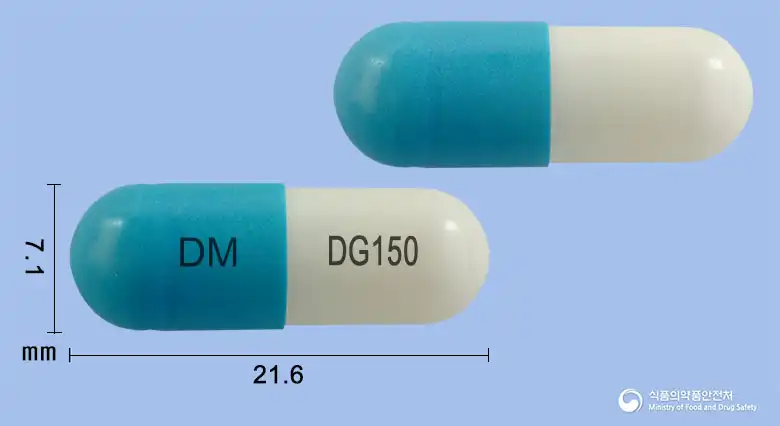
Dabigatran Etexilate 150mg
Hard capsule · Prescription medication
Dasan Pharmaceutical Co., Ltd.
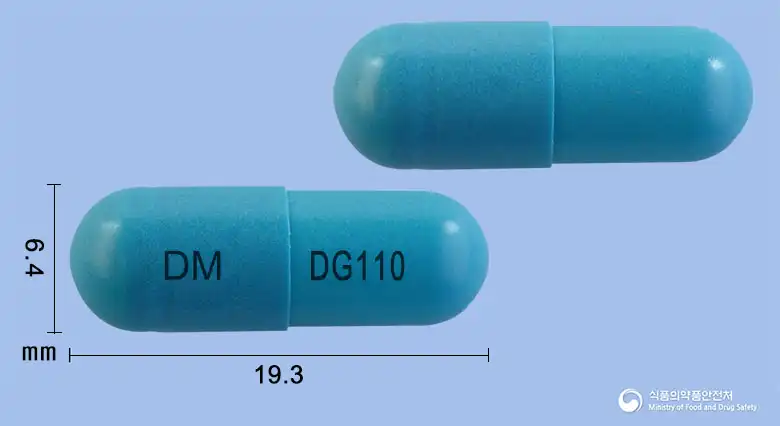
Dabigatran Etexilate 110mg
Hard capsule · Prescription medication
Dasan Pharmaceutical Co., Ltd.
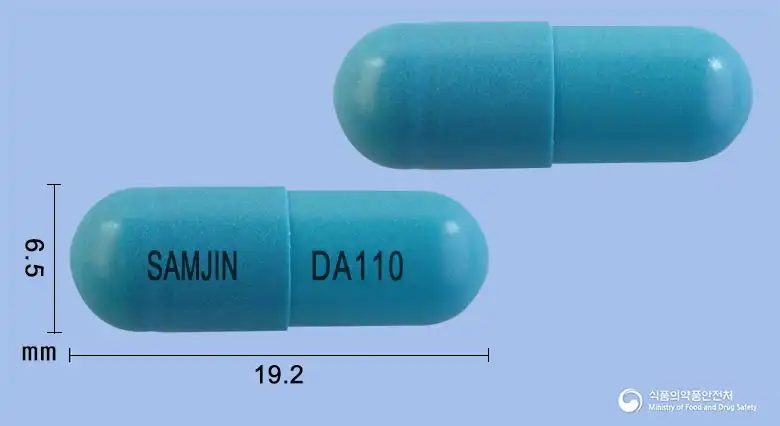
Dabigatran Etexilate 110mg
Hard capsule · Prescription medication
Samjin Pharmaceutical Co., Ltd.
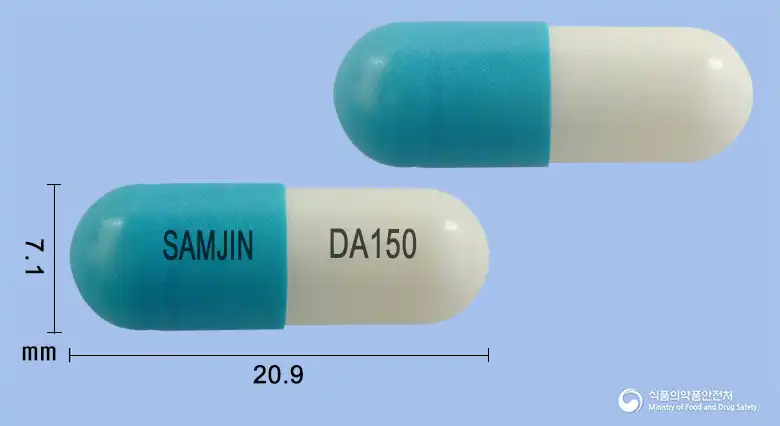
Dabigatran Etexilate 150mg
Hard capsule · Prescription medication
Samjin Pharmaceutical Co., Ltd.
Dabigatran Etexilate 110mg
Prescription medication
Boryeong (Co., Ltd.)
Dabigatran Etexilate 150mg
Prescription medication
Boryung Pharmaceutical Co., Ltd.
Dabigatran Etexilate 150mg
Prescription medication
Daiwon Pharmaceutical Co., Ltd.
Even with the same ingredient, the dose and directions can differ by strength and dosage form. Talk to a doctor or pharmacist before switching from a medication you are already taking.
No questions yet.
For anything that needs medical judgment, consult a doctor or pharmacist.
This drug information is based on data provided by the Korea Ministry of Food and Drug Safety.
Consult a doctor or pharmacist for accurate dosage, administration, and usage instructions.