
 한국어
 English
 日本語
 中文(简体)
 Viewing now
Cloxanthap Soft Capsule (Clonixin Lysinate)
Clonixin Lysinate 125mg
Soft capsule · OTC medication
IYON Pharmaceutical Co., Ltd.
MFDS item code 201804386 · Notified 2018.11.05
Relief of pain (headache, toothache, muscle pain, etc.)
This medication is used to relieve various mild to moderate pains, including muscle pain, neuralgia, pain after trauma and surgery, headaches, toothaches, and earaches.
Adults: Administer 125∼250 mg per dose orally 3 times daily as clonixin lysinate.
Caution should be exercised when this medication is taken by individuals who regularly consume more than three drinks a day as it may cause gastrointestinal bleeding; consultation with a doctor or pharmacist is essential. This medication may increase the risk of cardiovascular disease, therefore individuals with a history of cardiovascular disease or risk factors should take particular care. Due to the inclusion of non-steroidal anti-inflammatory drug components, there may be serious gastrointestinal side effects such as gastrointestinal bleeding, ulcers, and perforations, especially in the elderly or those taking it for an extended period. Patients with peptic ulcers, those with gastrointestinal problems due to medication, and individuals who are allergic to this drug or its components should not take it. Individuals with allergies to aspirin or other non-steroidal anti-inflammatory drugs, or those with a history of asthma or hives, may experience severe allergic reactions when using this medication, and should therefore refrain from its use. Women who are pregnant or may become pregnant, patients with severe liver dysfunction, kidney disease, heart failure, Crohn's disease, or ulcerative colitis should not take this medication. When taken concurrently with other non-steroidal anti-inflammatory drugs, ACE inhibitors, aspirin, diuretics, lithium, methotrexate, warfarin, etc., the risk of side effects may increase or the efficacy may decrease, so it is important not to combine these without consulting a doctor. Individuals with a history of peptic ulcers, the elderly, and those with hypertension, heart failure, liver dysfunction, or kidney dysfunction should definitely consult a healthcare professional before use. During the use of this drug, if symptoms such as gastrointestinal bleeding, skin rashes, difficulty breathing, dizziness, liver dysfunction, etc., appear, immediately stop taking it and consult a physician. This medication should only be used at the minimal dose for the shortest duration necessary; regular blood tests and monitoring of liver and kidney function are required for long-term use. This medication serves as symptomatic treatment to relieve inflammation or pain and should not replace the treatment of underlying causes; appropriate antimicrobial therapy should be combined when treating infectious inflammation. Breastfeeding women are advised to discontinue breastfeeding or the medication since it may be excreted in breast milk. This medication should be stored out of the reach of children and it is safer not to transfer it to another container.
Gastrointestinal bleeding, serious cardiovascular thrombotic reactions, myocardial infarction, stroke, bleeding of the stomach or intestines, ulcers, perforation, nausea, vomiting, diarrhea, constipation, abdominal pain, peptic ulcer, shock, rash, itching, anemia, increased AST, increased ALT, drowsiness, headache, dizziness, cold sweat, chill, abnormal euphoria, jaundice, fulminant hepatitis, hepatic necrosis, liver failure, anemia, exfoliative dermatitis, Steven-Johnson syndrome, toxic epidermal necrolysis, severe bronchospasm
Not everyone experiences these, and they can vary from person to person.
During the administration of this medication, do not take other non-steroidal anti-inflammatory drugs (NSAIDs), ACE inhibitors or angiotensin II receptor antagonists, aspirin, diuretics, lithium, methotrexate, anticoagulants (such as warfarin), cyclosporine and tacrolimus, antiplatelet agents and selective serotonin reuptake inhibitors (SSRIs), or corticosteroids.
This medication may be sensitive to air or moisture, so it should be stored in a tightly sealed container. It is advisable to keep the storage temperature between 1°C and 30°C at room temperature. This way, the efficacy and safety of the medication can be maintained for an extended period.
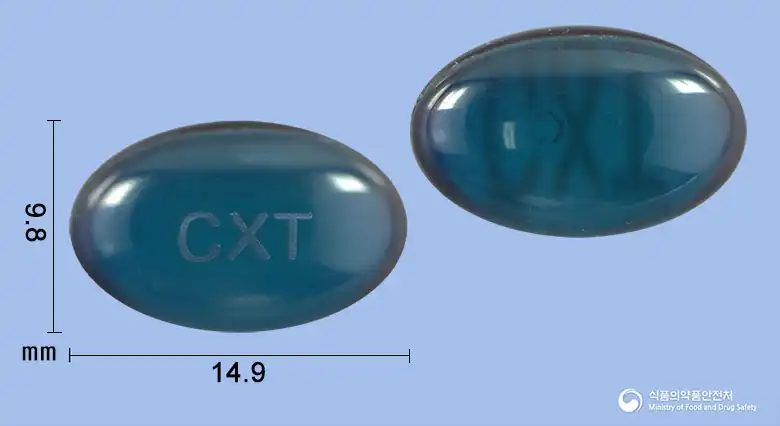
A blue transparent oval soft capsule containing a pale yellow transparent liquid
10 capsules/PTP [10 capsules (10 capsules/PTP X 1)]
Even with the same ingredient, strength, dosage form and how it is taken can differ.
Viewing nowClonixin Lysinate 125mg
Soft capsule · OTC medication
IYON Pharmaceutical Co., Ltd.
Clonixin Lysinate 125mg
OTC medication
International Pharmaceutical Co., Ltd.

Clonixin Lysinate 125mg
Tablet · OTC medication
Youngil Pharmaceutical Co., Ltd.

Clonixin Lysinate 125mg
Tablet · OTC medication
Daehwa Pharmaceutical Co., Ltd.

Clonixin Lysinate 125mg
Tablet · OTC medication
GiEl Pharma Co., Ltd.

Clonixin Lysinate 125mg
Tablet · OTC medication
Highple Life Sciences Co., Ltd.
Clonixin Lysinate 250mg
Tablet · OTC medication
Hyple Life Sciences Co., Ltd.
Clonixin Lysinate 125mg
OTC medication
Youngpoong Pharmaceutical Co., Ltd.
Even with the same ingredient, the dose and directions can differ by strength and dosage form. Talk to a doctor or pharmacist before switching from a medication you are already taking.
QMy stomach hurts and I feel unwell after taking it.
Answers 1 · 2026.09.14
QI am taking high blood pressure medication; can I take this painkiller?
Answers 1 · 2026.09.14
QHow much should I take for toothache at once?
Answers 1 · 2026.09.14
For anything that needs medical judgment, consult a doctor or pharmacist.
This drug information is based on data provided by the Korea Ministry of Food and Drug Safety.
Consult a doctor or pharmacist for accurate dosage, administration, and usage instructions.