
 한국어
한국어 English
 日本語
日本語 中文(简体)
 Viewing now
Jaysept 10mg (Donepezil Hydrochloride Hydrate)
Donepezil Hydrochloride Hydrate 10mg
Tablet · Prescription medication
NBK Pharm Co., Ltd.
MFDS item code 201804351 · Approved 2018.10.31 · Insurance code 054800220
Improvement of Alzheimer's disease symptoms
This medication is used for the treatment of symptoms of Alzheimer's disease.
As Donepezil Hydrochloride, take 5 mg once daily before bedtime. If unusual dreams, nightmares, or sleep disturbances occur, consider taking in the morning. Initially administered at 5 mg for 4 to 6 weeks to evaluate clinical response, then may increase to 10 mg. When increasing to 10 mg once daily, care should be taken for gastrointestinal side effects. For frail women over 85 years of age, the daily dose should not exceed 5 mg.
There is no experience in using this drug in children.
This medication contains Donepezil Hydrochloride Hydrate as its active ingredient and is used for the treatment of Alzheimer's disease symptoms. This medication should not be administered to certain patients. For example, it should not be used by individuals allergic to this medication or similar substances, pregnant women or those who may become pregnant, nursing mothers, and those with certain genetic lactase deficiency disorders. Caution should be exercised when administering this medication to patients with heart conditions or issues with heart rhythm, those with a history of peptic ulcer, those currently taking non-steroidal anti-inflammatory drugs, those with a history of asthma or obstructive pulmonary disease, and those with extrapyramidal disorders like Parkinson's disease. This medication can cause various adverse reactions. Cardiac problems (bradycardia, heart block, myocardial infarction, etc.), gastrointestinal issues (gastric ulcers, bleeding, etc.), liver dysfunction, cerebrovascular problems, movement disorders, difficulty in breathing, acute pancreatitis, acute kidney failure, and sudden death have all been reported. Additionally, commonly occurring side effects include nausea, vomiting, diarrhea, dizziness, insomnia, headache, and fatigue, while some patients may experience hallucinations, agitation, or aggressive behavior. This medication is not approved for other types of dementia or cognitive disorders aside from Alzheimer's disease, and its use requires the diagnosis and supervision of a healthcare professional. Patients with cardiovascular diseases may require regular ECG monitoring due to potential heart rhythm abnormalities. This medication can stimulate gastric acid secretion and increase gastrointestinal motility which may worsen symptoms of peptic ulcers, so patients with a history of gastric ulcers should be careful. It can affect the central nervous system, exacerbating symptoms of Parkinson's disease or triggering seizures, and caution is also necessary for patients with respiratory diseases. Pregnant or nursing mothers are advised not to take this medication, and if necessary, they should consult a healthcare professional. This medication is metabolized by CYP3A4 and CYP2D6 enzymes, so caution is needed when taken with drugs that inhibit or induce these enzymes, as there may be changes in effectiveness. Moreover, interactions may occur when taken with other muscle relaxants or cholinergic drugs, so care should be taken. It can affect driving or operating machinery, so caution is required at the beginning of treatment or when changing dosages. In case of overdose, severe symptoms such as nausea, vomiting, bradycardia, hypotension, respiratory suppression, and seizures may occur, necessitating immediate medical attention; atropine may serve as an antidote. This medication should be kept out of reach of children and transferring it to other containers should be avoided as it may lead to decreased quality or incidents.
Not everyone experiences these, and they can vary from person to person.
This medication should be stored in a tightly closed container to prevent exposure to air and moisture, ideally between 1 to 30 degrees Celsius at room temperature. Proper storage will help preserve the medication's effectiveness for a longer period.
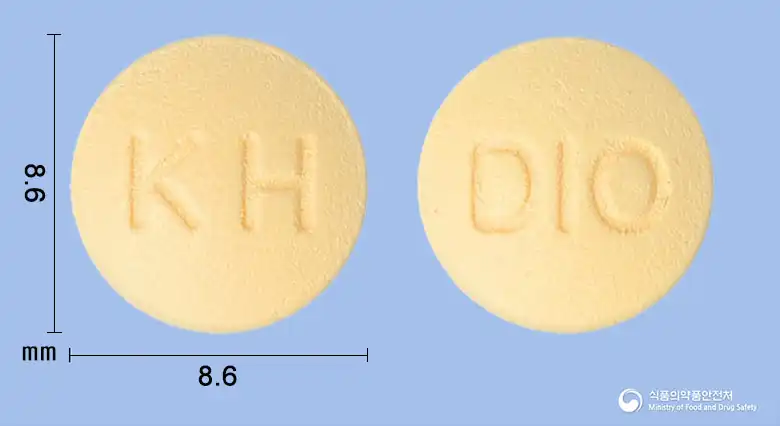
Yellow round film-coated tablet
For internal use - 30 tablets/bottle, For internal use - 100 tablets/bottle
Even with the same ingredient, strength, dosage form and how it is taken can differ.
Viewing nowDonepezil Hydrochloride Hydrate 10mg
Tablet · Prescription medication
NBK Pharm Co., Ltd.
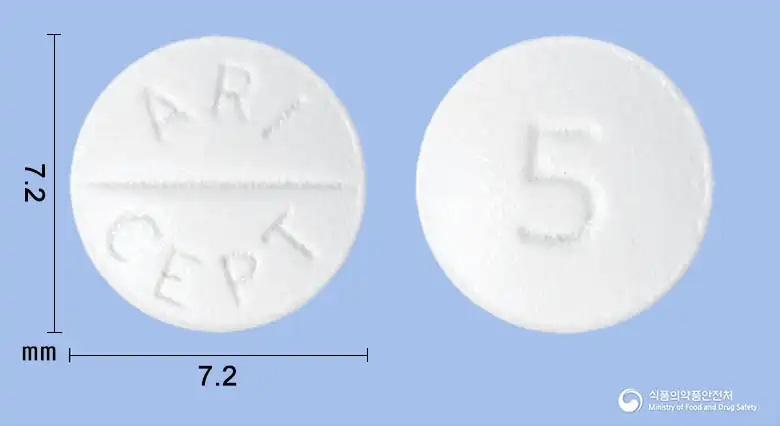
Donepezil Hydrochloride 5mg
Tablet · Prescription medication
HanDoc Co., Ltd.
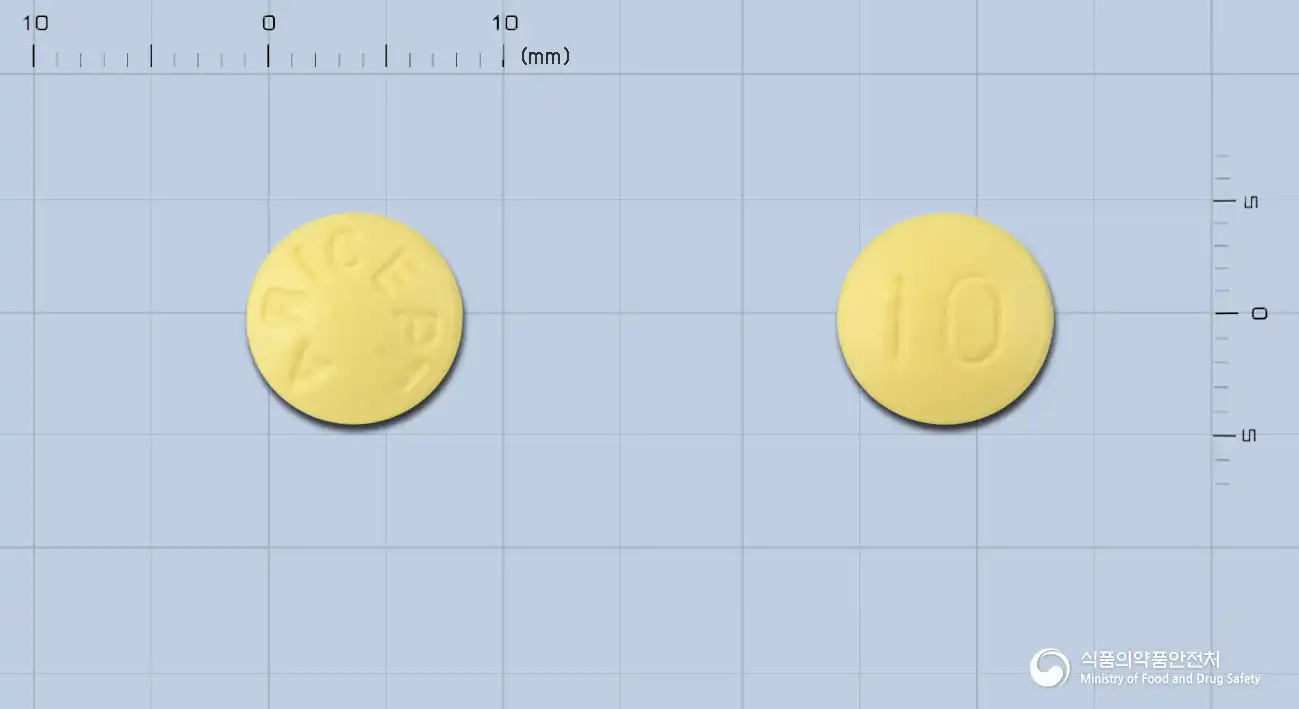
Donepezil Hydrochloride 10mg
Tablet · Prescription medication
Hanmi Pharmaceutical Co., Ltd.

Donepezil Hydrochloride Hydrate 10.43mg
Tablet · Prescription medication
IYun Pharmaceuticals Co., Ltd.
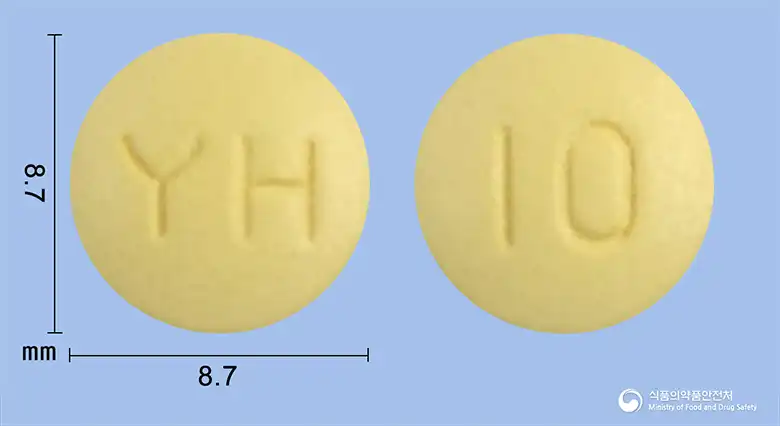
Donepezil Hydrochloride Hydrate 10.43mg
Tablet · Prescription medication
Yuhan Corporation
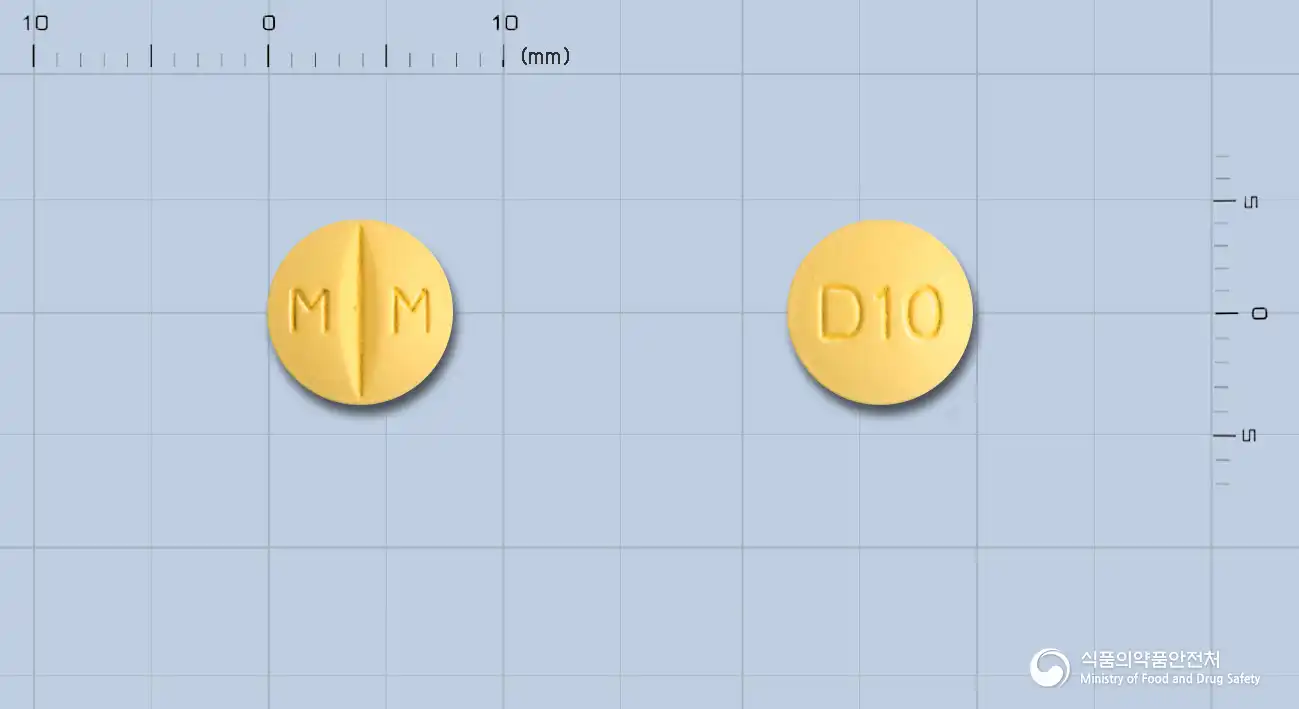
Donepezil Hydrochloride Hydrate 10.43mg
Tablet · Prescription medication
Myungmoon Pharmaceutical Co., Ltd.
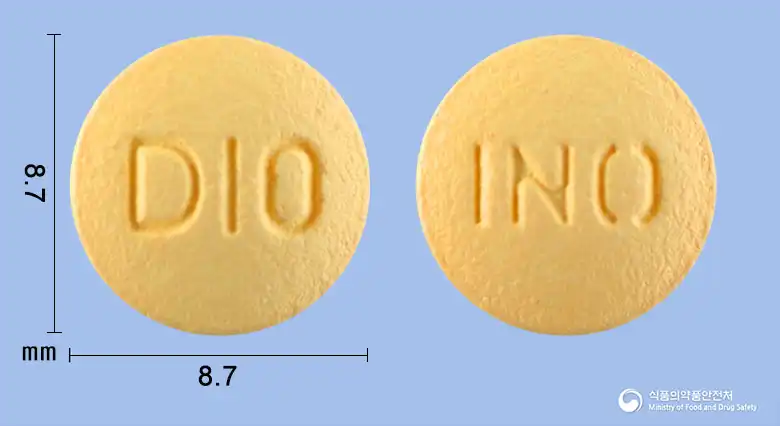
Donepezil Hydrochloride Hydrate 10.43mg
Tablet · Prescription medication
HK inno.N Co., Ltd.
Donepezil Hydrochloride 10mg
Tablet · Prescription medication
Celltrion Pharmaceutical Co., Ltd.
Even with the same ingredient, the dose and directions can differ by strength and dosage form. Talk to a doctor or pharmacist before switching from a medication you are already taking.
No questions yet.
For anything that needs medical judgment, consult a doctor or pharmacist.
This drug information is based on data provided by the Korea Ministry of Food and Drug Safety.
Consult a doctor or pharmacist for accurate dosage, administration, and usage instructions.