
 한국어
 English
 日本語
 中文(简体)
 Viewing now
Pharmgen Magnesium Oxide Tablet
Magnesium Oxide 250mg
Tablet · OTC medication
Pharmgen Science Co., Ltd.
MFDS item code 201804159 · Notified 2018.10.22 · Insurance code 670104300
Relief of constipation; antacid treatment and improvement of symptoms of gastrointestinal disorders (gastritis, excess stomach acid, etc.)
This medication acts as an antacid to relieve symptoms caused by gastric and duodenal ulcers, gastritis, and excess stomach acid, and also helps improve constipation. Therefore, it is used effectively for treating gastrointestinal disorders and constipation.
1) Gastric and duodenal ulcers, gastritis, and hyperacidity: Administer 0.5-1g of magnesium oxide orally in several divided doses per day. (Take by mouth.) 2) Constipation: Administer 2g orally in 1-2 divided doses per day. (Take by mouth.) However, take the minimum dose initially and gradually increase or decrease it while monitoring the appearance and consistency of the stool.
This medication should not be used in patients with severely impaired kidney function, as excessive magnesium buildup in the body can be dangerous. Additionally, it is advisable not to administer this medication to patients with diarrhea, as diarrhea can affect the efficacy or side effects of the drug. Patients with weak heart function, high magnesium levels, and those aged over 65 should use this medication with caution, as they have a higher risk of side effects. Taking this medication may occasionally cause gastrointestinal issues such as diarrhea. If a large quantity is taken for a long time, blood magnesium levels may increase, so careful monitoring is required, and if abnormalities are found, dosage reduction or temporary cessation of the drug may be necessary. If symptoms such as dizziness, slowed heartbeat, severe drowsiness, clouded consciousness, shortness of breath, or muscle weakness occur after taking the medication, use should be stopped immediately, and a doctor or pharmacist should be consulted. It is advisable to bring the medication leaflet during consultation. If signs of magnesium toxicity occur, potassium salt injections may be needed, so follow medical advice. This medication may interfere with the absorption of certain antibiotics, specifically tetracycline antibiotics, so it is recommended not to take them together. Additionally, this medication may alter the gastrointestinal environment, affecting the absorption or excretion of other medications, so caution is advised when taken together. If taken excessively with large amounts of milk or calcium preparations, a condition known as milk-alkali syndrome may develop. This syndrome is characterized by elevated levels of calcium and nitrogen in the blood and a shift toward alkalinity in the body; if these symptoms arise, the medication should be discontinued.
Not everyone experiences these, and they can vary from person to person.
This medication should not be taken together with tetracycline antibiotics.
This medication should be discussed with a doctor or pharmacist if taken with large amounts of milk and calcium preparations.
This medication should be stored in an airtight container to prevent air from entering and kept at room temperature between 1 and 30 degrees Celsius. Storing it this way helps maintain the medication's effectiveness for a longer time.
White round tablet
1000 tablets/bottle
Even with the same ingredient, strength, dosage form and how it is taken can differ.
Viewing nowMagnesium Oxide 250mg
Tablet · OTC medication
Pharmgen Science Co., Ltd.
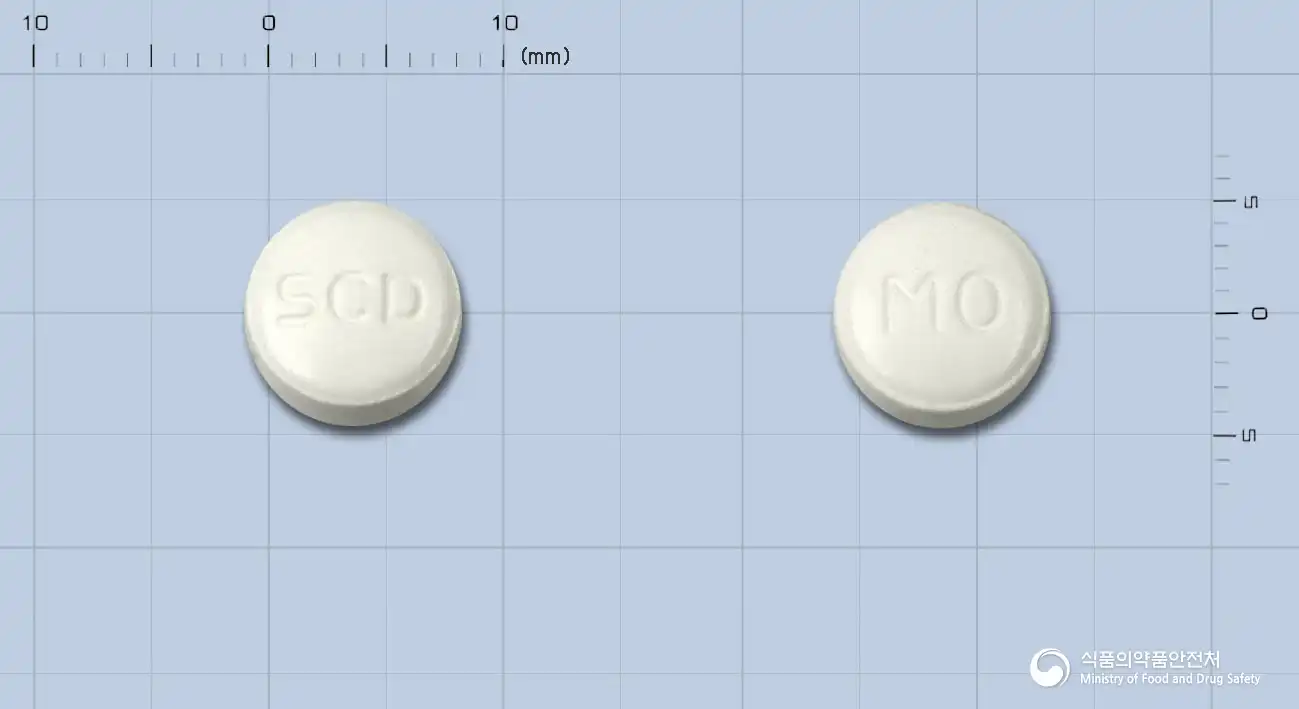
Magnesium Oxide 250mg
Tablet · OTC medication
Samcheondang Pharmaceutical Co., Ltd.

Magnesium Oxide 250mg
Tablet · OTC medication
Korea United Pharmaceutical Co., Ltd.
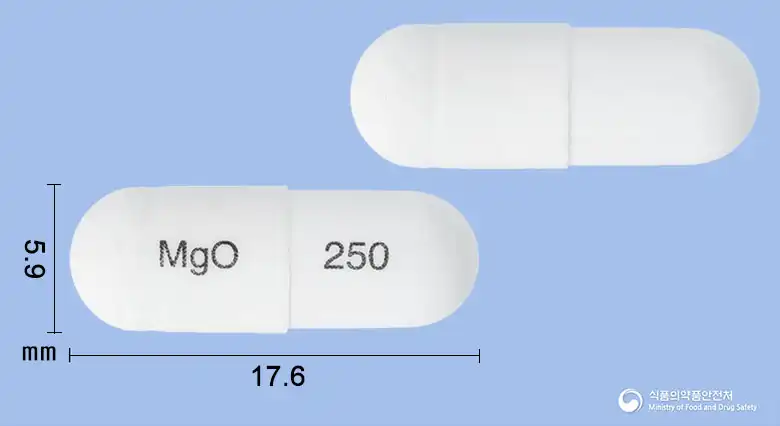
Magnesium Oxide 250mg
Hard capsule · OTC medication
Korea Pharma Co., Ltd.

Magnesium Oxide 500mg
Hard capsule · OTC medication
Korea Pharma Co., Ltd.

Magnesium Oxide 250mg
Tablet · OTC medication
Samnam Pharmaceutical Co., Ltd.
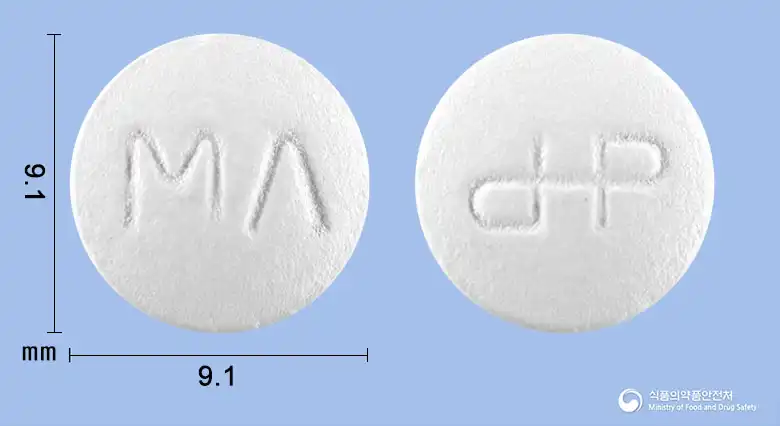
Magnesium Oxide 250mg
Tablet · OTC medication
Daehwa Pharmaceutical Co., Ltd.
Even with the same ingredient, the dose and directions can differ by strength and dosage form. Talk to a doctor or pharmacist before switching from a medication you are already taking.
QI tend to drink a lot of milk; is that okay?
Answers 1 · 2026.09.14
QHow should I take it for constipation?
Answers 1 · 2026.09.14
For anything that needs medical judgment, consult a doctor or pharmacist.
This drug information is based on data provided by the Korea Ministry of Food and Drug Safety.
Consult a doctor or pharmacist for accurate dosage, administration, and usage instructions.