한국어
 English
 日本語
 中文(简体)
 Viewing now
Fenokorin Capsule (Fenofibrate Choline)
Choline Fenofibrate 178.8mg
Hard capsule · Prescription medication
Korea Pharma Co., Ltd.
MFDS item code 201802531 · Approved 2018.06.18 · Insurance code 653006210
Treatment of primary hyperlipidemia (e.g., hypercholesterolemia and hypertriglyceridemia)
This medication is used in the treatment of primary hyperlipidemia. It is particularly effective for hypercholesterolemia (Type IIa), and for mixed types with concurrent hypercholesterolemia and hypertriglyceridemia (Type IIb, III) as well as isolated hypertriglyceridemia (Type IV). This drug helps to manage blood lipid levels and reduces the risk of cardiovascular disease.
○ Adults: Administer fenofibric acid 135mg (1 capsule) orally once daily, regardless of meals, and always follow dietary measures. ○ Older adults: Dose reduction is generally not necessary if renal function is not impaired. ○ Patients with renal impairment: Do not administer this medicine to patients with moderate to severe renal impairment (serum creatinine level 2.5mg/dL or higher).
○ Children: Clinical data on the use of this medicine in children are not yet available.
This medication should not be used in patients with poor liver function. Caution is needed when administered to patients with moderate to severe renal dysfunction as it may lead to muscle tissue damage resulting in rhabdomyolysis. This medication should not be taken by women who are pregnant or may become pregnant, as well as nursing women. Patients with allergy reactions to this drug or its components should avoid its use. Patients with gallbladder disease or gallstones should also avoid this medication as it may worsen gallstones. Patients who had skin reactions due to phototoxicity while taking fibrate drugs or ketoprofen should not use this medication. It is not indicated for pediatric patients. Caution is necessary for patients with sclerosing cholangitis or pancreatitis when using this drug. Patients with mild renal impairment should reduce the dosage or extend the dosing interval and undergo regular kidney function tests. Administration should be conducted carefully in patients with abnormal liver function tests or a history of liver disease. Patients with hypoalbuminemia also require caution. Patients with a history of gallstones should be cautious as the risk of gallstone exacerbation exists. Patients on anticoagulants should have their blood coagulation monitored regularly as bleeding risks may increase. Concurrent use with statins may increase the risk of liver dysfunction and muscle damage, so administration should be according to a physician's guidance. Elderly patients should be especially cautious as they are likely to have decreased liver and kidney functions and an increased risk of adverse reactions. This medicine can cause various side effects including liver dysfunction, skin rash, muscle pain, gastrointestinal disturbances, and rarely, pulmonary issues, hence consultation with a physician is necessary immediately upon the emergence of abnormal symptoms. If there is severe muscle pain or weakness, rhabdomyolysis should be suspected and this medication should be discontinued, followed by a visit to the hospital. Liver enzyme levels may elevate in blood tests, requiring liver function tests at the start of treatment and regularly thereafter. If gallstones are suspected, gallbladder examination should be performed, and if gallstones are found, this medication should be discontinued. This medication may affect blood coagulation functions, so caution is needed in conjunction with anticoagulants to prevent increased bleeding risks. There are many drug interactions, therefore, it is essential to inform health care professionals of any concurrent medications. During pregnancy or breastfeeding, this medication should be avoided as it may be harmful to the fetus or infant. This medication is not used in children, and elderly patients should particularly have their kidney functions checked periodically. In the case of overdose, there are no specific antidotes, so adherence to the prescribed dosage is crucial, and it should be stored out of reach of children. It is important to consult a physician before taking this medication to verify that it is suitable for your health condition.
Rhabdomyolysis, jaundice, complications of cholelithiasis (cholecystitis, cholangitis, biliary colic), elevated serum aminotransferase levels, hepatomegaly, cholestatic hepatitis, gallstones, rash, itching, photosensitivity reactions, skin erythema, vesicular formation, skin nodules, hair loss, erythema multiforme, Stevens-Johnson syndrome, toxic epidermal necrolysis, malaise, hyperthermia, dizziness, headache, peripheral neuropathy, thromboembolic events (pulmonary embolism, deep vein thrombosis), elevated creatine kinase, myalgia, muscle cramps, arthralgia, urticaria, photosensitivity dermatitis, gastrointestinal disturbances (abdominal pain, nausea, vomiting, diarrhea, abdominal distension), pancreatitis, seizures, decreased hemoglobin, decreased white blood cells, eosinophilia, elevated serum creatinine and urea, eosinophilic pneumonia, ventricular arrhythmias, fatigue, sexual dysfunction, weight gain
Not everyone experiences these, and they can vary from person to person.
This medication may be sensitive to air and moisture, so it should be stored in a tightly sealed container. It is advisable to maintain a storage temperature between 15 degrees to 30 degrees Celsius to prolong the effectiveness of the drug.
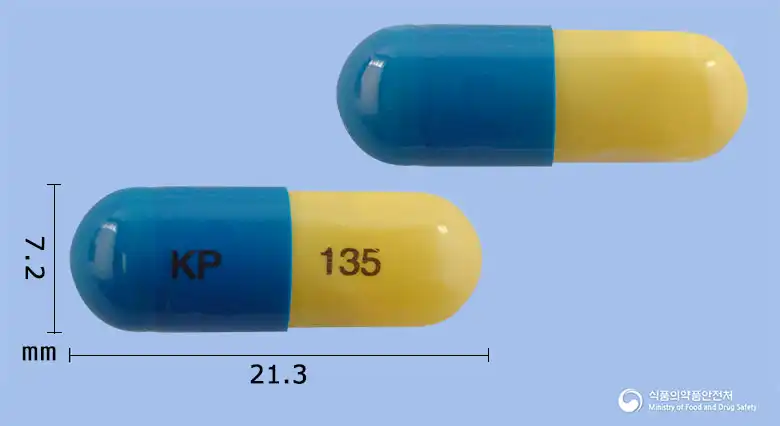
A hard capsule with a small white sustained-release tablet inside, with a blue upper part and a yellow lower part.
30 capsules/bottle, 90 capsules/bottle
Even with the same ingredient, strength, dosage form and how it is taken can differ.
Even with the same ingredient, the dose and directions can differ by strength and dosage form. Talk to a doctor or pharmacist before switching from a medication you are already taking.
No questions yet.
For anything that needs medical judgment, consult a doctor or pharmacist.
This drug information is based on data provided by the Korea Ministry of Food and Drug Safety.
Consult a doctor or pharmacist for accurate dosage, administration, and usage instructions.