
 한국어
 English
 日本語
 中文(简体)
 Viewing nowCombination
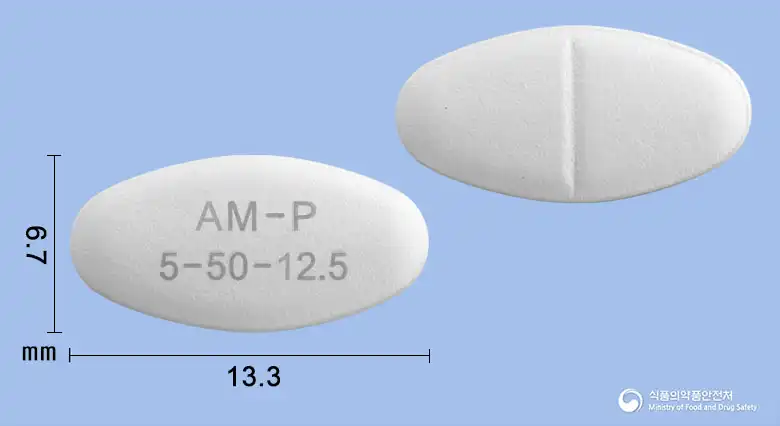
AmoZaltan Plus Tablet 5/50/12.5 mg (Amlodipine, Losartan, Chlorthalidone)
Amlodipine Camsylate 7.84mg · Chlorthalidone 12.5mg +1 more
Tablet · Prescription medication · Combination
Hanmi Pharmaceutical Co., Ltd.
MFDS item code 201705044 · Approved 2017.06.29 · Insurance code 643507800
Treatment of essential hypertension not controlled with combined amlodipine and losartan therapy
For patients with essential hypertension who find it difficult to control their blood pressure with a combination of amlodipine and losartan therapy, it is important to consult for additional treatment options for appropriate blood pressure management. Essential hypertension can increase the risk of cardiovascular diseases, so continuous medication and lifestyle modifications should be combined. These medications help lower blood pressure and dilate blood vessels to aid in blood pressure control. However, if the effect is insufficient with just one drug, it is advisable to consult a physician to consider dosage adjustments or the use of other medications. Overall, such treatment is used to manage blood pressure appropriately and prevent the occurrence of complications.
Take 1 tablet once daily with water, regardless of food. If possible, it is recommended to take it at the same time each day (e.g., in the morning). Before administering this medicine, it is recommended that the dose of the individual components (losartan and amlodipine as monotherapy or combination therapy) be adjusted. For patients whose blood pressure is not controlled with amlodipine/losartan combination therapy, administer this medicine 5/50/12.5 mg and adjust the dose at intervals of 2 weeks or longer, taking the patient’s blood pressure response into account. The maximum dose of this medicine is 5/100/25 mg. For patients receiving an amlodipine/losartan combination product and chlorthalidone as a single agent concomitantly, they may switch to this medicine (a combination product with the same amounts of each active ingredient) for convenience.
This medication can cause serious harm to the fetus if taken during pregnancy, especially in the second and third trimesters, so usage should be stopped immediately upon confirmation of pregnancy. Patients with liver dysfunction or those with ongoing liver disease must be cautious as severe side effects such as hepatic coma may occur when taking this medication. Patients with severe kidney disease should use this medication cautiously, as some components may accumulate in the body and worsen kidney function. Patients who have hypersensitivity to any of the ingredients in this drug or specific allergies should not take it. Patients with severe hypotension or severe liver failure and kidney failure may also be at risk if using this drug, so it should not be administered. Patients with a history of specific heart valve diseases or vascular edema should avoid taking this medication. This medicine contains lactose, so it is safer for patients with lactose intolerance to avoid its use. Diabetic patients or those with moderate to severe kidney dysfunction should be cautious when taking this medication in combination with specific other medicines. Elderly patients or those at risk of electrolyte imbalances should periodically check their blood pressure and electrolyte status while taking this medication. This drug has a strong blood-pressure-lowering effect, so side effects such as dizziness, headache, and hypotension may occur; caution is required during driving or operating machinery. Adverse reactions while taking this drug can include dyspepsia, constipation, muscle pain, dizziness, headache, and skin rash; if symptoms are severe, consultation with a doctor is recommended. Taking potassium supplements or potassium-rich foods indiscriminately during the use of this medication can raise potassium levels in the blood to dangerous levels and should be discussed with a doctor. In case of overdose, severe hypotension, tachycardia, and coma may occur, so it is important to adhere to the prescribed dosage and contact a healthcare institution immediately if an overdose occurs. The safety and efficacy of this medication in children and adolescents under 18 years have not been established, and its use is not recommended. For breastfeeding women, it is advisable to stop breastfeeding when using this medication, as it may be excreted in breast milk. This medication should be stored in a cool place, away from direct sunlight and moisture, and out of the reach of children. It is crucial to consult a physician or pharmacist before use to verify interactions with other medications and individual health conditions.
Not everyone experiences these, and they can vary from person to person.
This medication must be stored in a tightly closed container to prevent contact with air or moisture. Storing it at room temperature, between 1 to 30 degrees Celsius, is recommended.
White oval film-coated tablet
30 tablets/bottle
Even with the same ingredient, strength, dosage form and how it is taken can differ.
Viewing nowCombinationAmlodipine Camsylate 7.84mg · Chlorthalidone 12.5mg +1 more
Tablet · Prescription medication · Combination
Hanmi Pharmaceutical Co., Ltd.
 Combination
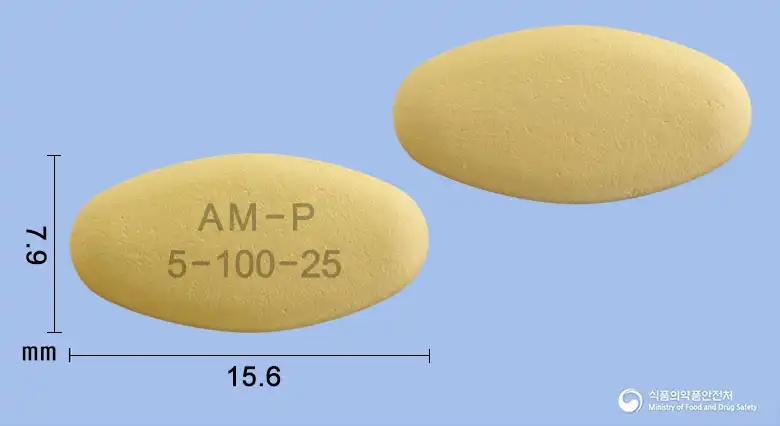
Amlodipine Camsylate 7.84mg · Chlorthalidone 25mg +1 more
Tablet · Prescription medication · Combination
Hanmi Pharmaceutical Co., Ltd.
 Combination
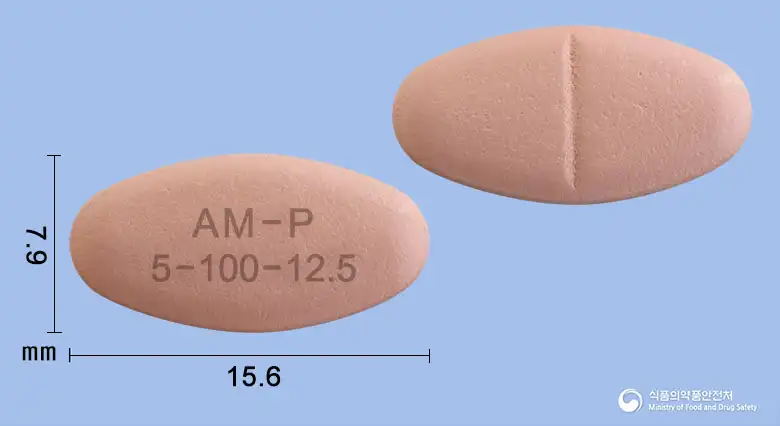
Amlodipine Camsylate 7.84mg · Chlorthalidone 12.5mg +1 more
Tablet · Prescription medication · Combination
Hanmi Pharmaceutical Co., Ltd.
Even with the same ingredient, the dose and directions can differ by strength and dosage form. Talk to a doctor or pharmacist before switching from a medication you are already taking.
No questions yet.
For anything that needs medical judgment, consult a doctor or pharmacist.
This drug information is based on data provided by the Korea Ministry of Food and Drug Safety.
Consult a doctor or pharmacist for accurate dosage, administration, and usage instructions.