
 한국어
한국어 English
 日本語
日本語 中文(简体)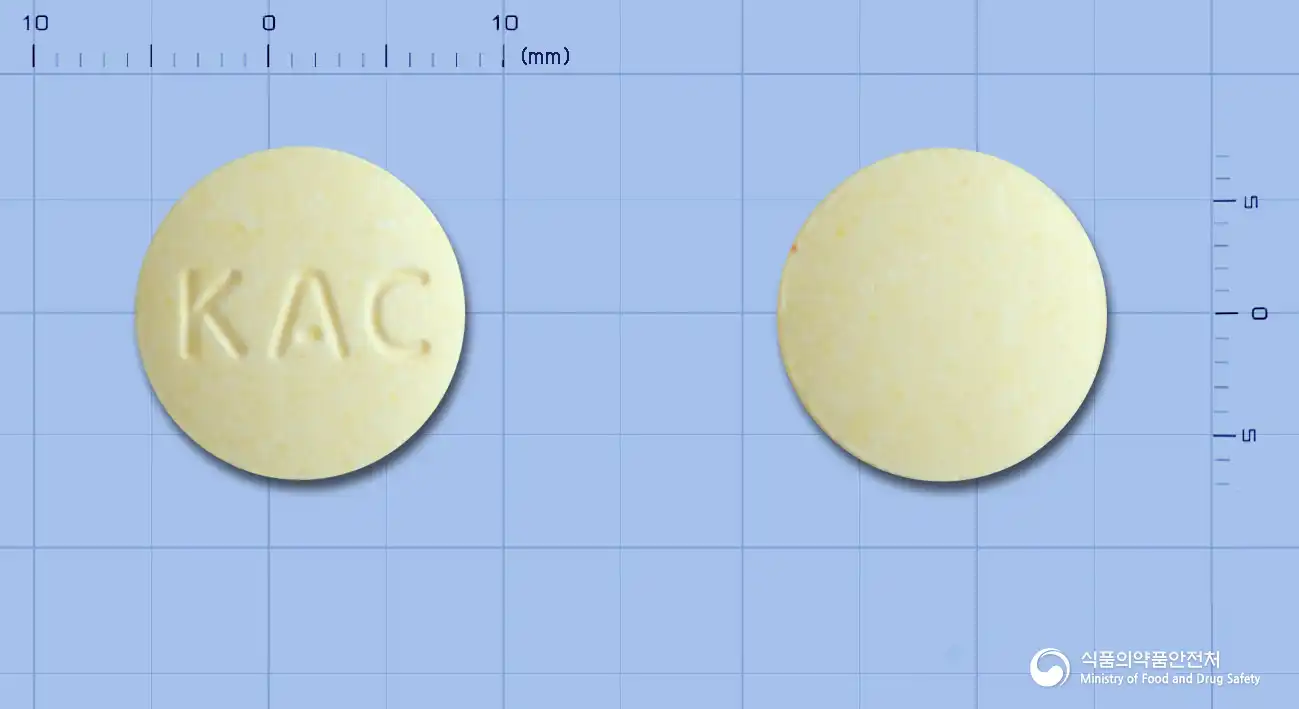
Summary
- Main use
- Relief of dry eyes, improvement of night blindness, prevention of rickets and poor bone development
- Who takes it
- Adults · Children
- Adult dose
- For children aged 8 years and older, and adults: 2 tablets per dose, 3 times a day Take after meals, dissolving or chewing in the mouth.
- Child dose
- For children aged 36 months or older and under 8 years: 1 tablet per dose, 3 times a day Take after meals, dissolving or chewing in the mouth.
Ingredients
- Retinol Palmitate Granules2mg / 1 tablet
- Cholecalciferol Granules1.15mg / 1 tablet
- Thiamine Nitrate0.65mg / 1 tablet
- Riboflavin Sodium Phosphate0.75mg / 1 tablet
- Pyridoxine Hydrochloride0.9mg / 1 tablet
- Cyanocobalamin Powder 0.1%2mg / 1 tablet
- Ascorbic Acid Coated20.62mg / 1 tablet
- Tocopherol Acetate Powder 50%10mg / 1 tablet
- Folic Acid0.08mg / 1 tablet
- Nicotinamide3mg / 1 tablet
- Calcium Pantothenate5.4mg / 1 tablet
- Calcium Gluconate Hydrate20mg / 1 tablet
- Magnesium Glycerophosphate10mg / 1 tablet
- Manufacturer
- 부광약품(주)
Efficacy & effects
Relief of dry eyes, improvement of night blindness, prevention of rickets and poor bone development
- Physical fatigue
- reduced physical strength
- dry eyes
- night blindness
- poor development
View approved original textHide original text
The vitamins A, D, E, B1, B2, B6, and C contained in this medicine support health during periods of physical fatigue, pregnancy and breastfeeding, during and after illness, growth phases, and old age. Additionally, vitamin A helps relieve dry eyes and prevents night blindness, while vitamin D plays a significant role in promoting healthy bone and dental development and preventing rickets. The combined action of these vitamins is employed to support bodily functions and enhance health.
How to take
Adult dose
For children aged 8 years and older, and adults: 2 tablets per dose, 3 times a day Take after meals, dissolving or chewing in the mouth.
Child dose
For children aged 36 months or older and under 8 years: 1 tablet per dose, 3 times a day Take after meals, dissolving or chewing in the mouth.
Precautions
This medication should not be administered to women in the first 3 months of pregnancy or those who may become pregnant, with doses of vitamin A exceeding 5,000 I.U. Excessive vitamin A intake carries a risk of causing congenital malformations. The artificial sweetener aspartame contained in this medication is broken down into phenylalanine in the body, so patients with the hereditary condition phenylketonuria should not take it. Individuals with conditions such as hypercalcemia, sarcoidosis, renal diseases, kidney stones, or severe renal failure should not take this medication. Additionally, those with allergic reactions to this medication, infants under 12 months of age, or patients with lactose intolerance or related genetic disorders should avoid taking it. During the course of taking this medicine, it is recommended not to take medications such as phosphates, calcium salts, tetracycline antibiotics, antacids, and levodopa simultaneously. Infants under 1-year-old, patients undergoing treatment, children exposed to sunlight frequently, patients with hyperoxaluria, pregnant or nursing mothers, and those with weakened heart or kidney function must consult a specialist before use. If abnormal symptoms appear during the use of this medication, such as nausea, vomiting, skin itching, joint pain, diarrhea, rash, hypotension, or irregular heartbeat, it should be discontinued immediately, and a specialist consulted. Use with caution, as long-term high-dose use may lead to nerve damage, blood disorders, peptic ulcers, liver damage, hypercalcemia, and an increased risk of osteoporosis. The prescribed dosage and method of administration must be strictly followed, and children should take it under parental supervision. Vitamin A in this medication can be sufficiently obtained from a normal diet; therefore, care should be taken to not exceed 5,000 IU per day during supplemental therapy. The use of this medication may affect blood glucose test results, and urine color may change; users should be aware of this. It is advisable to avoid tannin-containing beverages, such as green tea or black tea, before and after taking this medication.
Side effects and when to seek care immediately
Mild side effects
- Nausea
- vomiting
- itching
- dry and rough skin
- painful joint swelling
- diarrhea
- stomach discomfort
- constipation
- rash
- redness
Show 6 moreCollapse
- loose stools
- hypotension
- facial flushing
- irregular heartbeat
- heart failure (cardiac arrest)
- central nervous system dysfunction
Not everyone experiences these, and they can vary from person to person.
Interactions
Drug interactions
This medication should not be taken with phosphates, calcium salts, oral tetracycline preparations, antacids, or levodopa. It is also advisable to consult a doctor or pharmacist if taken with oral contraceptives containing estrogen, anti-aldosterone drugs, triamterene, or cardiac glycosides.
Food interactions
This medication should be avoided before and after use with teas containing tannins, such as green tea and black tea.
Storage
This medication should be stored in a sealed container that can block light and kept at a temperature between 1°C and 30°C. Storing it this way will maintain the effectiveness of the medication and prevent deterioration.
Appearance and packaging
Appearance
White to pale yellow round tablets
Package unit
180 tablets/bottle, 360 tablets (180 tablets/bottle × 2)
Questions about this medicine
No questions yet.
For anything that needs medical judgment, consult a doctor or pharmacist.