
 한국어
한국어 English
 日本語
日本語 中文(简体)
 Viewing nowCombination
Glovis Tablet
Ranitidine Hydrochloride 84mg · Tripotassium Bismuth Dicitrate 100mg +1 more
Tablet · Prescription medication · Combination
Kips Biopharma Co., Ltd.
MFDS item code 201406075 · Approved 2014.12.26
This product's status changed to Expired on 2024.12.26. It may no longer be sold, so consult a doctor or pharmacist before taking it.
Effective in treating gastric and duodenal ulcers and gastritis (including gastroesophageal reflux) and in the prevention of Mendelson's syndrome.
This medication is used for the treatment of gastric and duodenal ulcers, gastritis, Zollinger-Ellison syndrome, and gastroesophageal reflux. It is also administered to prevent Mendelson's syndrome before anesthesia and is effective in treating ulcers resulting from surgery and non-steroidal anti-inflammatory drugs (NSAIDs). It helps alleviate and treat symptoms of various gastrointestinal disorders.
Typically administered orally, 2 tablets twice daily, regardless of meals, in the morning and at bedtime. 1) Gastric and duodenal ulcers: Administer 2 tablets twice daily or 4 tablets once daily at bedtime. Especially for patients with duodenal ulcers, give 4 tablets twice daily in the morning and at bedtime. Use the same dosage for ulcers resulting from NSAID use or during long-term therapy. Usually, gastric and duodenal ulcers caused by NSAIDs heal within 8 weeks; however, healing periods may vary among patients. For recurrent ulcer patients who showed excellent results with short-term therapy, maintenance therapy of 2 tablets once daily at bedtime is recommended. 2) Gastroesophageal reflux disease: Administer 2 tablets twice daily for 8 weeks or 4 tablets once daily at bedtime. In cases of severe gastroesophageal reflux disease, the dosage may be increased to 4 tablets four times daily. 3) Zollinger-Ellison syndrome: Initiate treatment with an initial dosage of 2 tablets three times daily, and can increase as needed. In severe cases, as per the physician's instruction, doses up to 6 g per day may be administered as ranitidine. 4) Peptic ulcers, acute stress ulcers, and upper gastrointestinal bleeding due to acute mucosal lesions: When oral administration is possible, switch from injection to oral administration, taking 2 tablets twice daily. 5) Pre-anesthetic administration (to prevent Mendelson’s syndrome): Administer 2 tablets 2 hours before anesthesia induction. It is also beneficial to administer 2 tablets the night before surgery.
This medication should not be used by patients receiving dialysis treatment or those who are allergic to this drug or its components. It should also be avoided in patients with a history of acute porphyria, impaired kidney function, patients who have undergone upper gastrointestinal surgery, pregnant women or those who may become pregnant, and premature infants or newborns. Patients who are on a potassium-restricted diet should also exercise caution. Patients with poor liver function, those with a history of drug allergies, the elderly, and patients with a history of kidney dysfunction should use this medication carefully. If taken with non-steroidal anti-inflammatory drugs, particularly elderly patients or those with a history of peptic ulcers should undergo regular examinations. This medication can mask symptoms of stomach cancer; thus, it should be used only after confirming that patients with gastric ulcers or recently emerged dyspepsia symptoms do not have malignant conditions. Patients with Helicobacter pylori infections and gastric/duodenal ulcers should undergo concomitant treatment to eradicate the bacteria. Caution is also needed when prescribing this medication to severely ill patients in the intensive care unit, hypophosphatemic patients, or those who have difficulty swallowing. Rarely, serious allergic reactions such as anaphylactic shock may occur upon using this medication, therefore it is advised to discontinue use and seek treatment immediately upon noticing symptoms. Allergic symptoms such as skin rashes, urticaria, angioedema, fever, and bronchospasm may also arise, requiring caution. Blood tests may show decreased white blood cell or platelet counts; if liver dysfunction or jaundice symptoms develop, the medication must be stopped immediately. Symptoms of cardiac rhythm abnormalities, gastrointestinal symptoms (nausea, vomiting, constipation, diarrhea, etc.), dizziness, drowsiness, mental confusion, and seizures have also been reported, necessitating caution. Symptoms such as gynecomastia, increased milk secretion, erectile dysfunction, and decreased libido may rarely occur. If accompanied by muscle pain or arthralgia, consider the possibility of rhabdomyolysis and consult healthcare professionals immediately. Skin-related adverse reactions such as rashes or hair loss have also been rarely reported. This medication should not be used long-term, and during treatment, careful observation of the progress and minimal dosing is recommended. Especially, the elderly or those with chronic lung disease, diabetes, or weakened immunity may have an increased risk of pneumonia, so caution is advised. If dizziness or drowsiness occurs after taking this medication, avoid driving or operating hazardous machinery. This medication can interact with other drugs, therefore it is important to inform healthcare professionals about any concurrent medications. Particularly, when taking anticoagulants such as warfarin, regular monitoring of blood coagulation test results is necessary. Additionally, when taken with certain antibiotics or antiepileptic drugs, antacids, dosing intervals should be spaced out to avoid affecting drug absorption. Pregnant or breastfeeding women should refrain from using this medication for safety, and safety and efficacy in children have not been established, thus its use is inadvisable. This medication may affect some clinical test results, so it's advisable to inform the healthcare professionals about this during examinations. In case of overdose, emergency measures such as vomiting or gastric lavage may be necessary, and if needed, removal via hemodialysis is possible. Finally, note that this medication can reduce gastric acid secretion, promoting bacterial growth in the gastrointestinal tract; thus, routine check-ups, including ophthalmic examinations, are needed during long-term use.
Urticaria, severe swelling (including angioedema), tightness in the chest, difficulty breathing, cold sweat, pallor (severe allergic reaction), fever with severe rashes, blisters, skin peeling, pain in mouth/eye mucosa (severe skin adverse reaction), shortness of breath or difficulty breathing, asthma attacks, respiratory abnormalities accompanied by cough and fever, yellowing of skin or eyes (jaundice), extreme lethargy (liver dysfunction), sudden and
Skin rash, mild urticaria, angioedema, fever, hypotension, chest pain, nausea, vomiting, constipation, diarrhea, abdominal bloating, abdominal pain, loss of appetite, dizziness, drowsiness, confusion, excitation, insomnia, headache, heaviness in the head, malaise, anxiety, depression, hallucinations, visual disturbances presumed to be due to control changes, involuntary movements, gynecomastia, excessive milk secretion, erectile dysfunction, decreased sexual desire, arthralgia, myalgia, itchy skin, glossitis, and tongue discoloration.
Not everyone experiences these, and they can vary from person to person.
This medication should be stored in a tightly sealed container to prevent air exposure, and kept at a temperature between 1 degree and 30 degrees Celsius. Proper storage helps maintain the medication's efficacy and prevents deterioration.
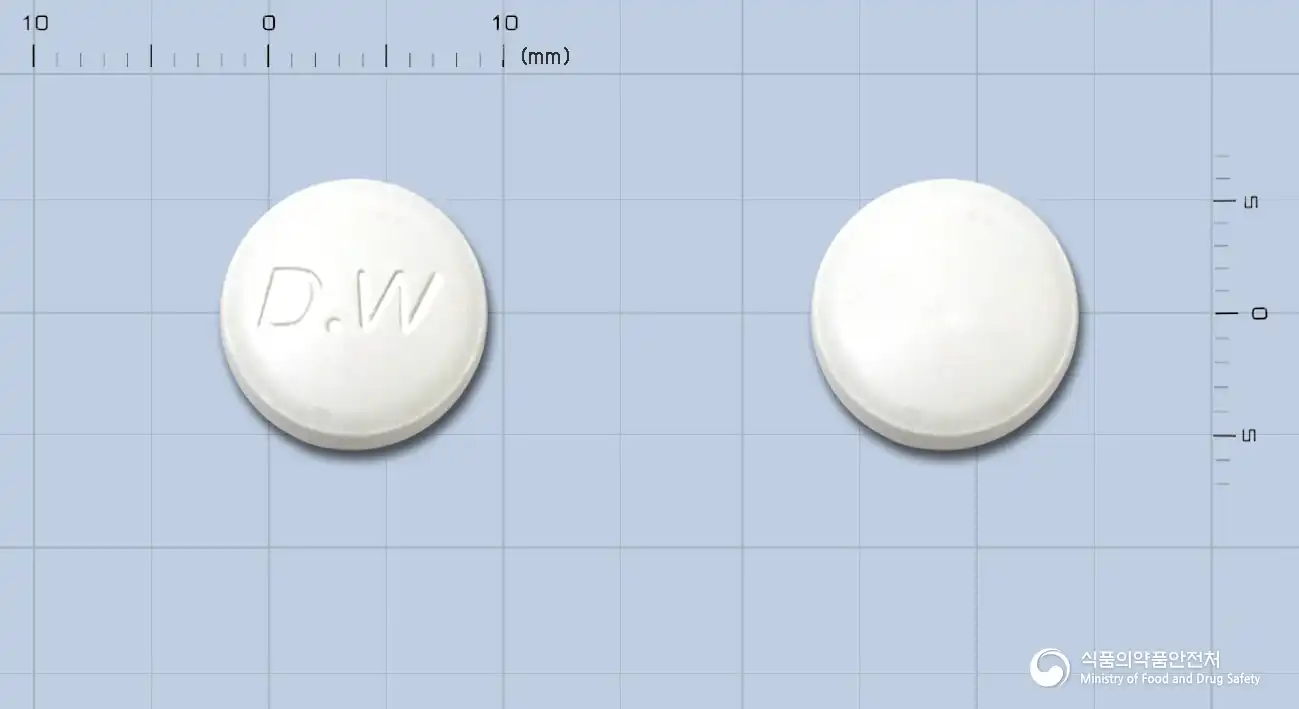
Round white film-coated tablet
30 tablets/bottle, 300 tablets/bottle
Even with the same ingredient, strength, dosage form and how it is taken can differ.
Viewing nowCombinationRanitidine Hydrochloride 84mg · Tripotassium Bismuth Dicitrate 100mg +1 more
Tablet · Prescription medication · Combination
Kips Biopharma Co., Ltd.
 Combination
Ranitidine Hydrochloride 84mg · Tripotassium Bismuth Dicitrate 100mg +1 more
Tablet · Prescription medication · Combination
Daewoong Pharmaceutical Co., Ltd.
Ranitidine Hydrochloride 84mg · Tripotassium Bismuth Dicitrate 100mg +1 more
Tablet · Prescription medication · Combination
Nexpharm Korea Co., Ltd.
 Combination
Ranitidine Hydrochloride 84mg · Tripotassium Bismuth Dicitrate 100mg +1 more
Tablet · Prescription medication · Combination
HUONS BioScience Co., Ltd.
 Combination
Ranitidine Hydrochloride 84mg · Tripotassium Bismuth Dicitrate 100mg +1 more
Tablet · Prescription medication · Combination
Daewoong Bio Co., Ltd.
 Combination
Ranitidine Hydrochloride 84mg · Tripotassium Bismuth Dicitrate 100mg +1 more
Tablet · Prescription medication · Combination
Teragen Etex Co., Ltd.
Ranitidine Hydrochloride 84mg · Sucralfate Hydrate 300mg +1 more
Tablet · Prescription medication · Combination
Korea Pavise Pharmaceutical Co., Ltd.
Ranitidine Hydrochloride 84mg · Sucralfate Hydrate 300mg +1 more
Tablet · Prescription medication · Combination
Kwangdong Pharmaceutical Co., Ltd.
Even with the same ingredient, the dose and directions can differ by strength and dosage form. Talk to a doctor or pharmacist before switching from a medication you are already taking.
No questions yet.
For anything that needs medical judgment, consult a doctor or pharmacist.
This drug information is based on data provided by the Korea Ministry of Food and Drug Safety.
Consult a doctor or pharmacist for accurate dosage, administration, and usage instructions.