
 한국어
 English
 日本語
 中文(简体)
Dosage form image
Viewing nowMobicox Capsule (Meloxicam)
Meloxicam 7.5mg
Hard capsule · Prescription medication
Ilhwa Co., Ltd.
MFDS item code 201405026 · Approved 2014.10.29
This product's status changed to Expired on 2024.10.29. It may no longer be sold, so consult a doctor or pharmacist before taking it.
Relief of symptoms of rheumatoid arthritis, acute exacerbations of osteoarthritis, and ankylosing spondylitis
This medication is used for the short-term symptomatic treatment of acute exacerbation of osteoarthritis associated with pain and motor disorders. It is also effective in relieving symptoms caused by rheumatoid arthritis and ankylosing spondylitis. It alleviates pain and inflammation caused by arthritis, thus improving the quality of life for patients. It is used to reduce uncomfortable symptoms associated with these conditions to help support a comfortable daily life.
1. Acute exacerbation of osteoarthritis (degenerative arthritis): ○ Adults: Administer 7.5 mg of meloxicam orally once daily. If symptoms do not improve, the dose may be increased to up to 15 mg daily as needed. 2. Rheumatoid arthritis, ankylosing spondylitis: ○ Adults: Administer 15 mg of this medicine orally once daily. The dose may be reduced to 7.5 mg daily depending on the response to treatment. This medicine should not be administered at a dose exceeding 15 mg per day, and should be taken with water or another beverage during a meal. ○ In elderly patients or those at increased risk of adverse reactions, treatment is usually started at a dose of 7.5 mg daily. ○ Patients with severe renal impairment receiving hemodialysis should not be given more than 7.5 mg daily.
This medication can lead to serious side effects such as gastrointestinal bleeding if taken by individuals who regularly consume more than three alcoholic beverages daily, so it is essential to consult a doctor or pharmacist. As a non-steroidal anti-inflammatory drug, this medication may increase the risk of cardiovascular events and the potential for serious issues such as myocardial infarction or stroke. Particularly, those with cardiovascular disease or risk factors must exercise extra caution, and if symptoms like chest pain or shortness of breath occur, discontinue use immediately. This medication can cause gastrointestinal issues like bleeding, ulcers, or perforation, so those with a history of stomach disorders, elderly patients, and those on anticoagulants should use it carefully. Severe allergic reactions or life-threatening hypersensitivity responses, such as dermatitis or anaphylaxis, may occur, so if any skin abnormalities arise, discontinue use immediately. It may affect liver or kidney function, so individuals with liver dysfunction or renal impairment should consult a doctor before use and require regular examinations. This medication may reduce fertility, so women who are planning to conceive are advised not to use it, and it should not be taken by pregnant or breastfeeding women. Individuals with allergic tendencies or hypersensitivity to aspirin and other non-steroidal anti-inflammatory drugs should not take this medication. Additionally, adolescents under 15 years old, patients with severe heart failure or hypertension, and those with active gastric ulcers should not use this medication. This medication may cause drowsiness or dizziness when driving or operating machinery, so caution is advised. Due to numerous drug interactions, especially with anticoagulants, lithium, methotrexate, diuretics, and antihypertensives, strict adherence to a physician’s instructions is essential when taken concurrently. In cases of overdose, symptoms such as nausea, vomiting, or gastrointestinal bleeding may occur, and immediate medical attention is necessary. Store this medication out of reach of children and keep it in the original container. Maintain the duration and dosage of administration at a minimum, observing for adverse reactions through regular blood tests and assessments of liver and kidney function.
Not everyone experiences these, and they can vary from person to person.
This medication is sensitive to light, so it should be stored in an opaque container. The storage temperature should be maintained between 1 and 30 degrees Celsius to ensure that the medication's efficacy is preserved and to prevent degradation.
Green hard capsule containing yellow to pale yellow powder
30 capsules/bottle, 100 capsules/bottle
Even with the same ingredient, strength, dosage form and how it is taken can differ.
Meloxicam 7.5mg
Hard capsule · Prescription medication
Ilhwa Co., Ltd.
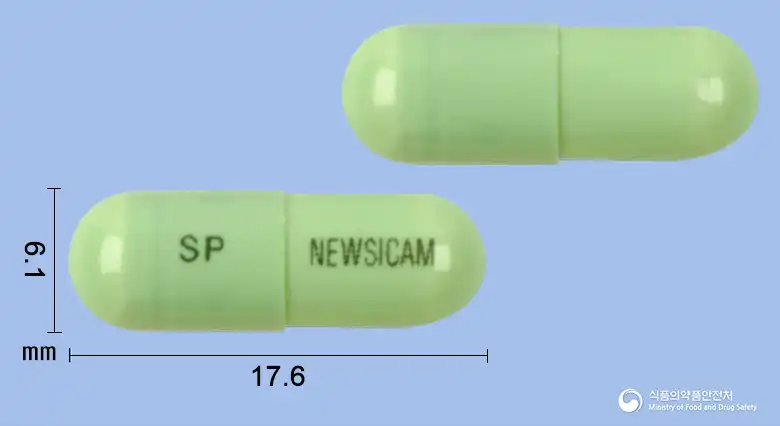
Meloxicam 7.5mg
Hard capsule · Prescription medication
Shinpoong Pharmaceutical Co., Ltd.
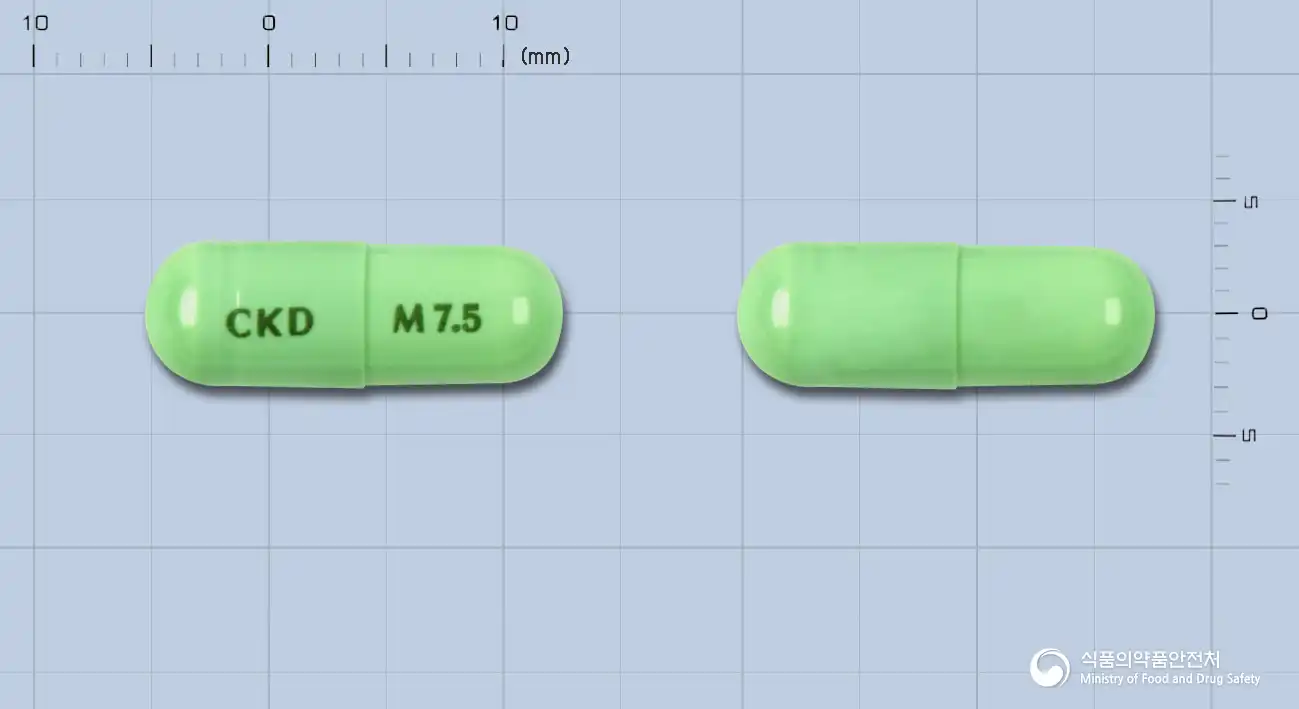
Meloxicam 7.5mg
Hard capsule · Prescription medication
Jongkundang Co., Ltd.
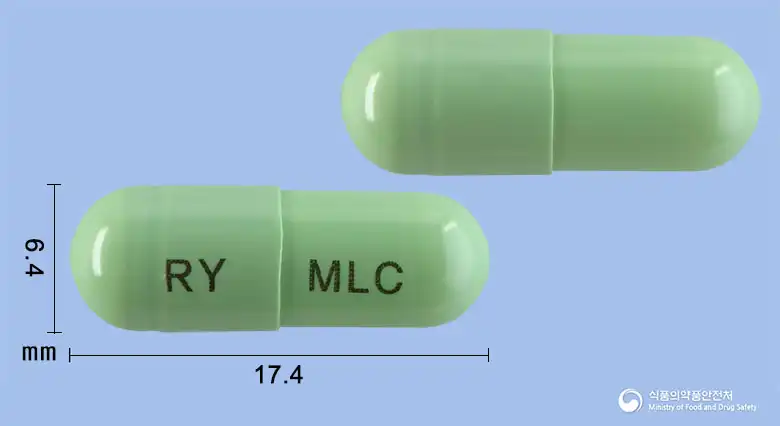
Meloxicam 7.5mg
Hard capsule · Prescription medication
IYUN Pharmaceutical Co., Ltd.
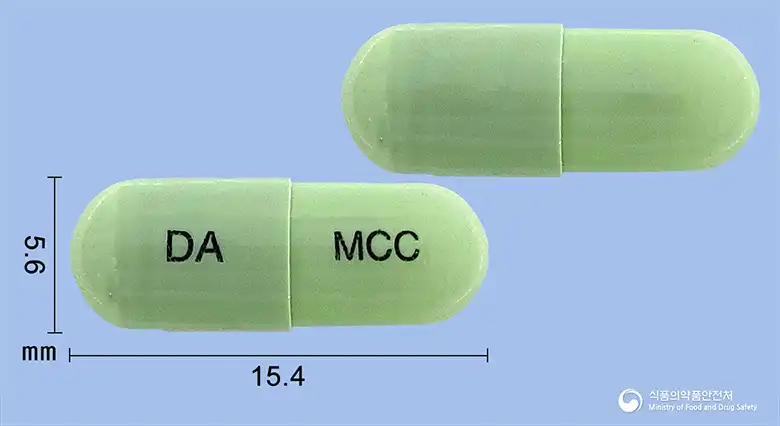
Meloxicam 7.5mg
Hard capsule · Prescription medication
Dong-A ST Co., Ltd.
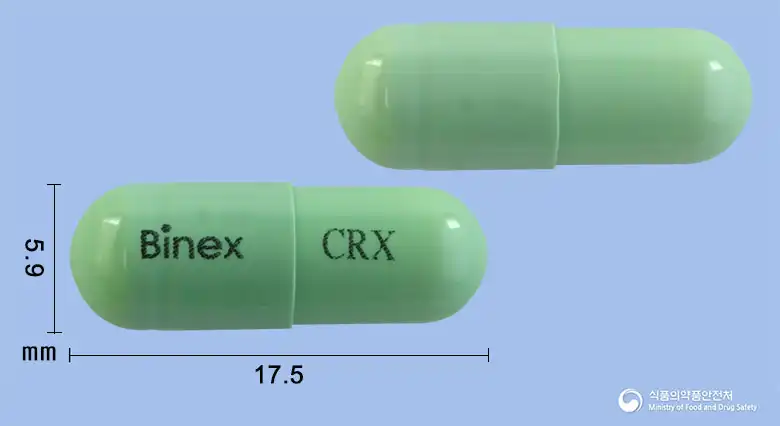
Meloxicam 7.5mg
Hard capsule · Prescription medication
Bionex Co., Ltd.
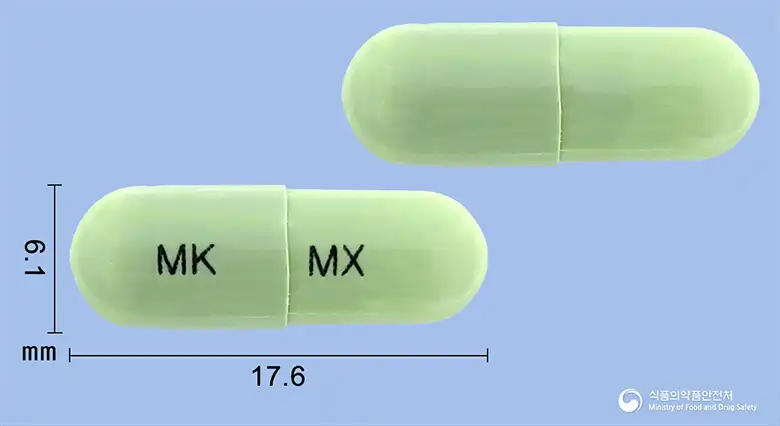
Meloxicam 7.5mg
Hard capsule · Prescription medication
Medica Korea Co., Ltd.
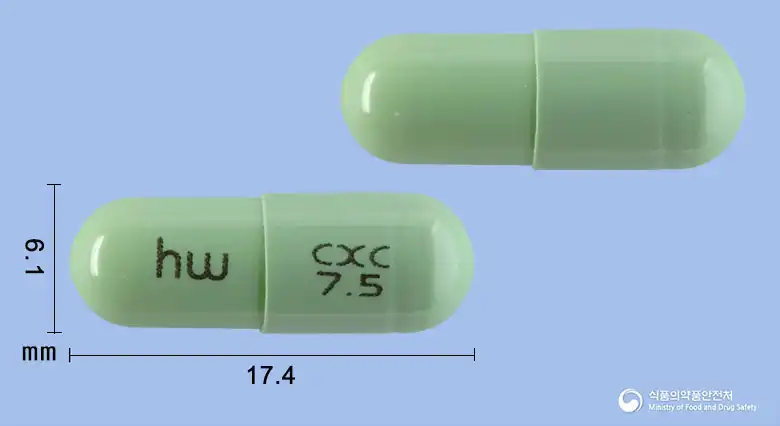
Meloxicam 7.5mg
Hard capsule · Prescription medication
Hawon Pharmaceutical Co., Ltd.
Even with the same ingredient, the dose and directions can differ by strength and dosage form. Talk to a doctor or pharmacist before switching from a medication you are already taking.
No questions yet.
For anything that needs medical judgment, consult a doctor or pharmacist.
This drug information is based on data provided by the Korea Ministry of Food and Drug Safety.
Consult a doctor or pharmacist for accurate dosage, administration, and usage instructions.