
 한국어
한국어 English
 日本語
日本語 中文(简体)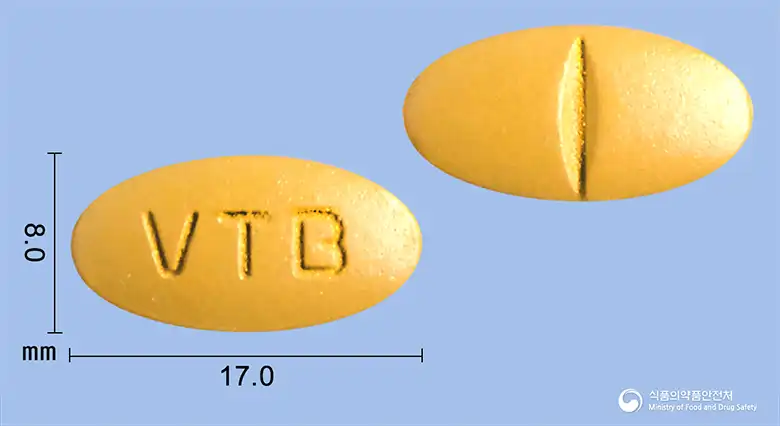
Summary
- Main use
- Relief of physical fatigue and neuralgia, muscle pain, and improvement of symptoms such as dermatitis
- Who takes it
- Adults
- Adult dose
- Ages 12 and older and adults: 1 to 2 tablets once a day after meals
Ingredients
- Benfotiamine69.15mg / 1 tablet
- Riboflavin50mg / 1 tablet
- Pyridoxine Hydrochloride50mg / 1 tablet
- Biotin0.25mg / 1 tablet
- Nicotinamide50mg / 1 tablet
- Calcium Pantothenate50mg / 1 tablet
- Cyanocobalamin Powder 0.1%50mg / 1 tablet
- Inositol50mg / 1 tablet
- Folic Acid0.2mg / 1 tablet
- Choline Tartrate50mg / 1 tablet
- Tocopherol Acetate Powder 50%20mg / 1 tablet
- Ascorbic Acid Coated52.1mg / 1 tablet
- Zinc Oxide24.9mg / 1 tablet
- Gamma-Oryzanol5mg / 1 tablet
- Manufacturer
- 한국코러스(주)
Efficacy & effects
Relief of physical fatigue and neuralgia, muscle pain, and improvement of symptoms such as dermatitis
- Physical fatigue
- decreased stamina
- neuralgia
- muscle pain
- joint pain
- beriberi
- eye fatigue
- glossitis
- cheilitis
- stomatitis
- lingual inflammation
- eczema
View approved original textHide original text
This medication contains vitamins B1, B2, B6, C, E, and zinc, and is used for nutritional supplementation when experiencing physical fatigue, during pregnancy and nursing, during illness or recovery, as well as for the nutritional needs of the elderly. It also helps relieve neuralgia, muscle pain, and joint pain (such as back pain, shoulder stiffness, etc.), and improves symptoms of beriberi and eye fatigue. It is effective for relieving oral inflammations such as glossitis, cheilitis, stomatitis, and lingual inflammation, as well as skin-related symptoms such as eczema and dermatitis. The various vitamins and minerals in this product serve to improve various discomforts in the body and enhance health.
How to take
Adult dose
Ages 12 and older and adults: 1 to 2 tablets once a day after meals
Precautions
This medication should not be taken by patients with hypercalcemia, patients with sarcoidosis (an unknown cause of systemic inflammatory disease), or patients with kidney disorders. Also, those who are allergic to any of the ingredients in this medication or exhibit hypersensitivity reactions, infants under 12 months, patients with kidney stones, and patients with severe renal failure should avoid taking this medication. It is also important not to take this medication simultaneously with certain medications such as phosphate, calcium salts, oral tetracycline preparations, antacids, and levodopa. Since it contains the dye known as Yellow No. 5, patients with allergies or hypersensitivity to this ingredient should use this medication with caution. Patients receiving medical treatment or exposed to sunlight frequently, patients with hyperoxalemia, pregnant women or those who may become pregnant, nursing mothers, premature infants, infants, patients with cardiac and circulatory disorders, renal disorders, hypoproteinemia, those taking cardiac glycosides, gout patients, or those with kidney stones should consult a specialist before taking this medication. If symptoms such as abdominal discomfort, diarrhea, constipation, skin rashes, nausea, vomiting, low blood pressure, facial flushing, arrhythmia, gastrointestinal disorders, or pulmonary edema occur during use, stop taking the medication immediately and consult a specialist. Also, menstrual cycles may become faster or bleeding may persist for a longer time, so caution is required. For patients taking oral contraceptives containing estrogen or those with a tendency to form blood clots, taking this medication together with vitamin E may increase the risk of thrombosis. Prolonged high-dose use may lead to tolerance, and long-term high-dose pyridoxine use may result in neurological symptoms. Patients who are deficient in folic acid should be careful when taking more than a certain amount of vitamin B12, as it may cause blood abnormalities. High-dose use may aggravate peptic ulcers and induce glucose intolerance, hyperuricemia, and liver damage. In cases of large doses, symptoms such as nausea, vomiting, hypernatremia, congestive heart failure, and edema may occur, so caution is necessary. Long-term use may lead to hypercalcemia and urolithiasis, and caution is needed when used in combination with certain diuretics due to the risk of hyperkalemia. If taking too much or if symptoms do not improve after using for more than one month, consult a specialist immediately. This medication must be taken according to the prescribed regimen and dose, and supervision by an adult is required when administered to children. During use, it can affect blood glucose measurements in urine tests, and the urine color may change to yellow, which can influence clinical test results. Additionally, it is advisable to avoid tea containing tannins such as green tea and black tea before and after taking this medication. This medication should be stored out of reach of children, away from direct sunlight, and in a cool, dry place. For quality maintenance, it is important not to transfer it to another container.
Side effects and when to seek care immediately
Serious side effects
- Pulmonary edema
- edema
- arrhythmia
Mild side effects
- Abdominal discomfort
- diarrhea
- constipation
- rashes
- redness
- nausea
- vomiting
- loose stools
- low blood pressure
- facial flushing
Show 21 moreCollapse
- arrhythmia
- skin rash
- gastrointestinal disorders
- digestive disorders
- epigastric pain
- pulmonary edema
- changes in menstruation
- increased bleeding
- neurological symptoms
- hematological adverse reactions
- glucose intolerance
- hyperuricemia
- liver damage
- nausea
- vomiting
- hypernatremia
- congestive heart failure
- edema
- hypercalcemia
- urolithiasis
- hyperkalemia
Not everyone experiences these, and they can vary from person to person.
Interactions
Drug interactions
Do not take with phosphate, calcium salts, oral tetracycline preparations, antacids, or levodopa. Consult your doctor or pharmacist if taking with cardiac glycosides, oral contraceptives containing estrogen, antialdosterones, or triamterene.
Food interactions
Avoid tea containing tannins like green or black tea during and before/after taking the medication.
Storage
This medication is sensitive to air and moisture, so it should be stored in a sealed container. It is also safe to store it at room temperature, i.e., between 1 degree and 30 degrees Celsius. By doing so, the effectiveness of the medication can be maintained and degradation prevented.
Appearance and packaging
Appearance
Yellow oval film-coated tablets
Package unit
1 tablet/package, 100 tablets (1 tablet/package X 100)/carton, 120 tablets (1 tablet/package X 120)/carton, 90 tablets/bottle/carton, 180 tablets/bottle/carton
Questions about this medicine
No questions yet.
For anything that needs medical judgment, consult a doctor or pharmacist.