한국어
 English
 日本語
 中文(简体)
 Viewing now
Samsca 30 mg (Tolvaptan Dried Powder for Spray)
Tolvaptan Spray Dry Powder 45mg
Tablet · Prescription medication
Otsuka Pharmaceutical Co., Ltd.
MFDS item code 201106063 · Approved 2011.09.01 · Insurance code 649900300
Treatment of hyponatremia; inhibition of progression of autosomal dominant polycystic kidney disease
This medication is used to treat hyponatremia, which is an abnormally low sodium concentration in the blood in patients with heart failure or syndrome of inappropriate antidiuretic hormone secretion (SIADH). It is particularly effective when the serum sodium concentration is below 125 mEq/L or when correcting hyponatremia is difficult with fluid restriction. Additionally, it helps slow the progression of cyst formation and renal function decline in adult patients with rapidly progressing autosomal dominant polycystic kidney disease (ADPKD) among chronic kidney disease stages 1-4. In summary, this medication is used for the treatment of hyponatremia and preservation of renal function in polycystic kidney disease patients.
1. Hyponatremia The recommended initial dose in adults is 15mg once daily. Increase the dose to 30mg once daily at intervals of at least 24 hours, up to a maximum of 60mg once daily. This medicine is generally taken in the morning. Swallow it whole with water without chewing, regardless of meals. 2. Autosomal dominant polycystic kidney disease (ADPKD) The initial dose is 60mg daily, divided into 45mg before breakfast and 15mg 8 hours later, given twice daily. Increase the dose at intervals of at least 1 week to 90mg daily (60mg+30mg), and then increase it to 120mg daily (90mg+30mg). Always swallow this medicine whole with water without chewing. Reduce the dose when taking a strong CYP3A inhibitor; dose adjustment is also necessary when taking a moderate CYP3A inhibitor.
This medication can cause a rapid increase in serum sodium levels, so serum sodium levels must be closely monitored through blood tests at the hospital when starting or resuming treatment. A rapid rise in serum sodium concentration can lead to severe neurological complications, requiring careful management through frequent checks of sodium levels and fluid status. It may affect liver function, so patients with liver disease or signs of liver damage should not use this medication or should discontinue it immediately. When treating specific kidney diseases, prescription is only possible under the guidance of a specialist, and liver enzyme levels and signs of liver damage must be regularly checked. Patients allergic to this medication, those needing to raise serum sodium levels urgently, those in a dehydrated or hypovolemic state, as well as pregnant or nursing women should not take this medication. Patients with dehydration, blood volume reduction, diabetes, cardiovascular diseases, hyperkalemia, urinary obstruction, or impaired kidney function should be particularly cautious when taking this medication, and symptoms and blood tests must be checked frequently. During treatment, proper fluid intake is recommended to prevent dehydration when experiencing thirst, and blood pressure and electrolyte status should be continuously monitored. This medication can cause drowsiness, weakness, or fainting, so caution is needed when driving or operating machinery. Drug interactions can occur, especially when taken with certain antifungals, antibiotics, diuretics, or antihypertensives; patients should consult with their physician or pharmacist, and dosage adjustments may be required. During pregnancy, this medication may be harmful to the fetus, so it should be avoided, and women of childbearing age must use contraception while taking it. In case of nursing, the potential for the drug to be passed through breast milk should be considered, leading to the need to either stop breastfeeding or discontinue drug use. In the event of overdose, symptoms such as dehydration, blood concentration, and electrolyte imbalance may occur, and immediate medical help should be sought as there is no specific antidote. Regular examinations of liver and kidney function, as well as electrolyte status, are necessary during the use of this medication, and any unusual symptoms should be reported to healthcare providers immediately.
Not everyone experiences these, and they can vary from person to person.
Store this medication in a tightly closed container to prevent air or moisture ingress. It is important to maintain storage temperature between 1 and 30 degrees Celsius.
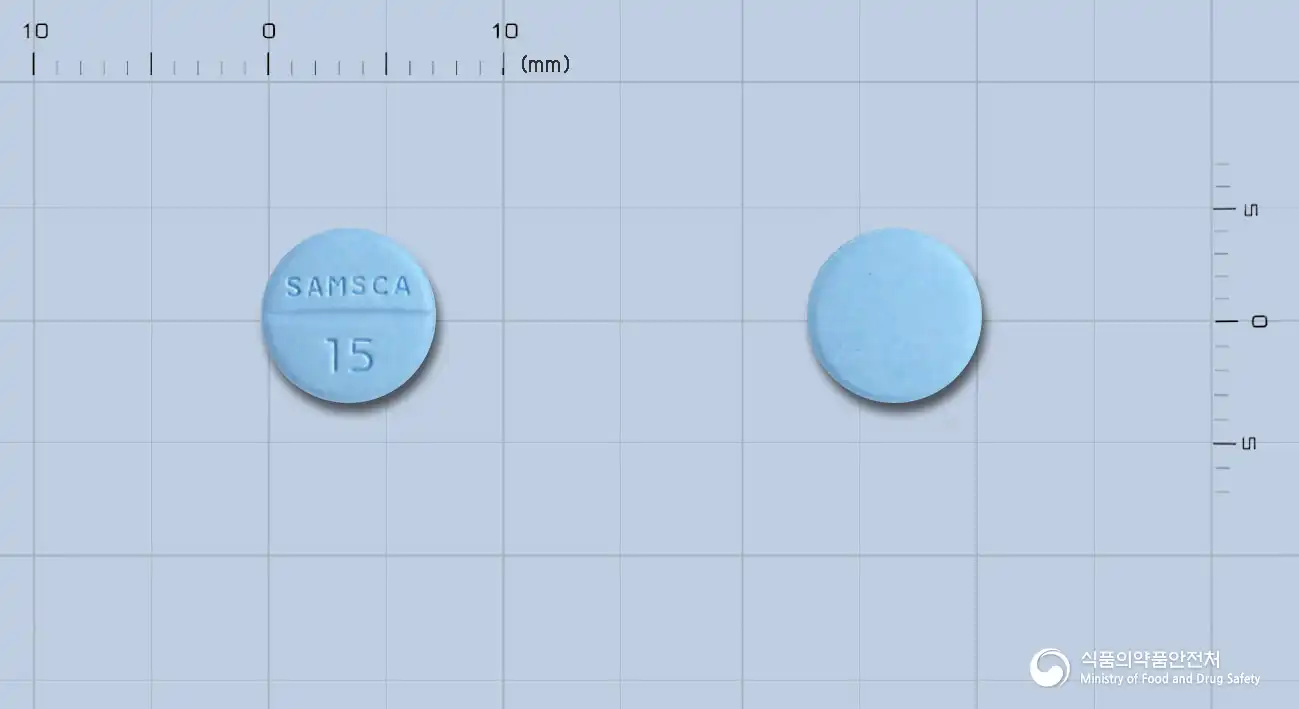
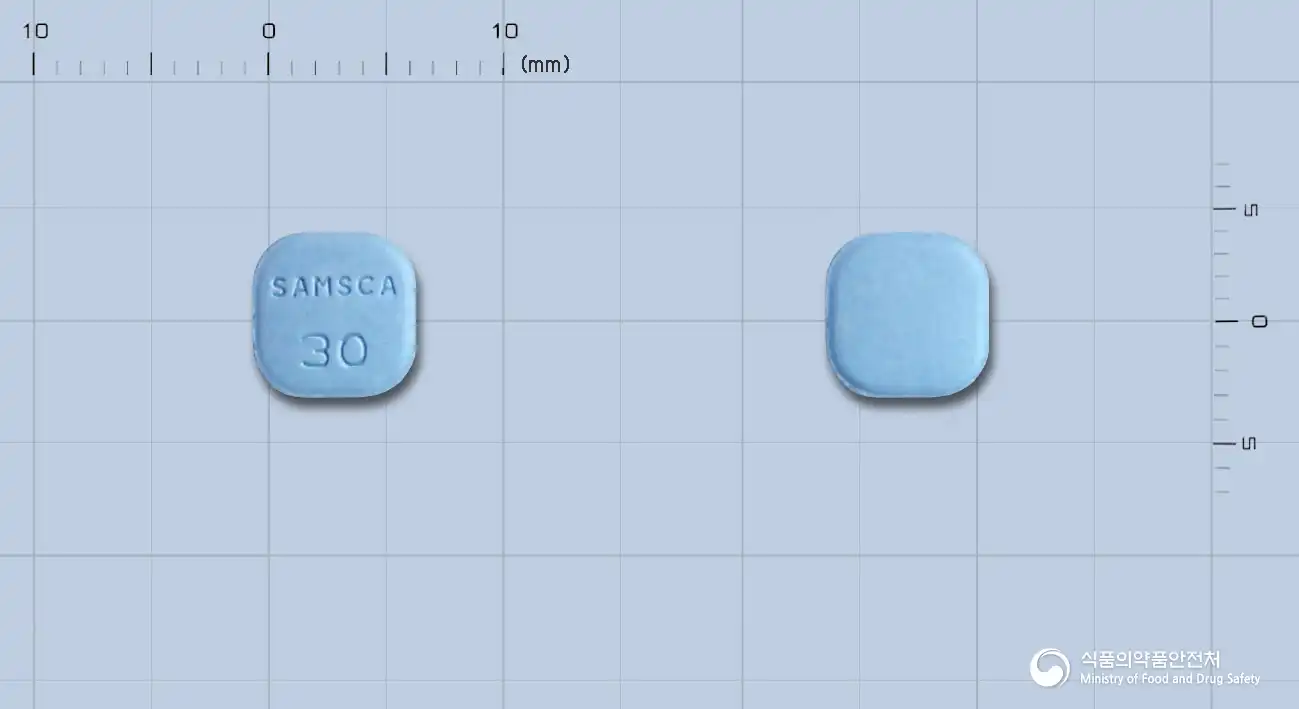
Blue square tablet (inscription: SAMSCA, 30)
10 tablets/box [10 tablets/PTP X 1], 30 tablets/box [10 tablets/PTP X 3], 60 tablets/bottle
Even with the same ingredient, strength, dosage form and how it is taken can differ.
Even with the same ingredient, the dose and directions can differ by strength and dosage form. Talk to a doctor or pharmacist before switching from a medication you are already taking.
No questions yet.
For anything that needs medical judgment, consult a doctor or pharmacist.
This drug information is based on data provided by the Korea Ministry of Food and Drug Safety.
Consult a doctor or pharmacist for accurate dosage, administration, and usage instructions.