
 한국어
한국어 English
 日本語
日本語 中文(简体)
 Viewing now
Indomethacin Capsule (Indomethacin)
Indometacin 25mg
Hard capsule · Prescription medication
Korea PMG Co., Ltd.
MFDS item code 201104878 · Notified 2011.08.02
Relief of pain from rheumatoid arthritis and osteoarthritis (degenerative joint disease)
This medication is effective for the treatment of rheumatoid arthritis, osteoarthritis (degenerative joint disease), and acute gouty arthritis. It is also used for relieving pain associated with ankylosing spondylitis and post-surgical or post-traumatic pain. It helps improve symptoms of arthritis and reduce pain.
For rheumatoid arthritis, osteoarthritis, ankylosing spondylitis, post-operative and post-traumatic pain: Take 25 mg per dose, 2-3 times a day with food. The maximum daily dose is 200 mg. For acute gouty arthritis: Take 50 mg per dose, 3 times a day with food. Reduce the dose promptly when symptoms improve, adjusting according to age and symptoms.
This medicine can cause gastrointestinal bleeding in individuals who regularly consume more than three alcoholic drinks per day, so it is essential to consult a doctor or pharmacist. This medication may increase the risk of cardiovascular disease, so patients with a history or risk factors for heart disease or stroke should use it with caution. Gastrointestinal adverse reactions such as bleeding, ulcers, and perforation may occur, and elderly patients or those with a history of gastrointestinal disease are at greater risk. Patients with specific conditions such as peptic ulcers, severe blood disorders, liver dysfunction, kidney dysfunction, heart failure, hypertension, and pancreatitis should not use this medication. Those with hypersensitivity or allergic reactions to aspirin should avoid this medication. Regular blood tests and liver and kidney function tests should be conducted during long-term use, and any abnormal symptoms should be reported to healthcare personnel immediately. Symptoms such as headaches, dizziness, and drowsiness may occur, so driving or operating dangerous machinery should be avoided. There may be interactions with other drugs, so patients should inform their doctor of any medications they are taking, especially when using specific diuretics, anticoagulants, or antineoplastic agents. Women who are pregnant or may become pregnant should not take this medication, and breastfeeding women should avoid it or discontinue breastfeeding. Safety in children has not been established, so it should be administered cautiously to children except in special cases. Elderly patients are at a higher risk of adverse reactions, so treatment should begin with a low dose and patient condition should be closely monitored. The medication should be taken immediately after meals, or with food, milk, or antacids, to reduce gastrointestinal disturbances. When storing, keep out of reach of children and do not transfer to another container.
Hives, severe swelling (edema), chest tightness, difficulty breathing, cold sweats, pallor, severe rash with high fever, blisters, skin peeling, pain in mucous membranes of the mouth/eyes, shortness of breath or difficulty breathing, asthma attacks, cough associated with fever, yellowing of skin or eyes (jaundice), extreme lethargy, sudden and severe headache, lightning headache, seizures, confusion, visual disturbances, paralysis, urination issues.
Not everyone experiences these, and they can vary from person to person.
This medication should be stored in a tightly sealed container to protect it from air and moisture. It is important to maintain a storage temperature between 1°C and 30°C to preserve the efficacy and safety of the medication.
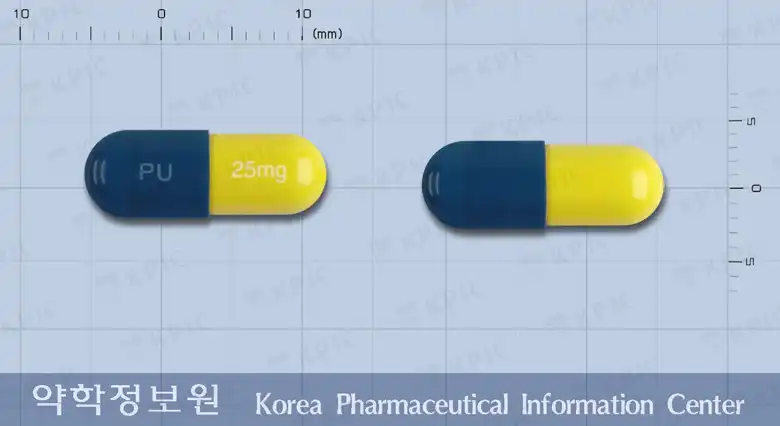
A hard capsule with a dark blue upper part and a yellow lower part containing white powder.
30 capsules/bottle, 100 capsules/bottle
Even with the same ingredient, strength, dosage form and how it is taken can differ.
Viewing nowIndometacin 25mg
Hard capsule · Prescription medication
Korea PMG Co., Ltd.
Indometacin 10mg
Cream · OTC medication
Chodang Pharmaceutical Co., Ltd.
Indometacin 35mg
Patch · OTC medication
Shinshin Pharmaceutical Co., Ltd.
Indometacin 35mg
Patch · OTC medication
Daehwa Pharmaceutical Co., Ltd.
Indometacin 70mg
Ointment · OTC medication
Ohyeon Pharmacophytation Co., Ltd.
Indometacin 70mg
Ointment · OTC medication
Jaeus Pharm Co., Ltd.
Indometacin 10mg
Cream · OTC medication
Taegeuk Pharmaceutical Co., Ltd.
Indometacin 70mg
Ointment · OTC medication
Jaewoo Pharm Co., Ltd.
Even with the same ingredient, the dose and directions can differ by strength and dosage form. Talk to a doctor or pharmacist before switching from a medication you are already taking.
No questions yet.
For anything that needs medical judgment, consult a doctor or pharmacist.
This drug information is based on data provided by the Korea Ministry of Food and Drug Safety.
Consult a doctor or pharmacist for accurate dosage, administration, and usage instructions.